
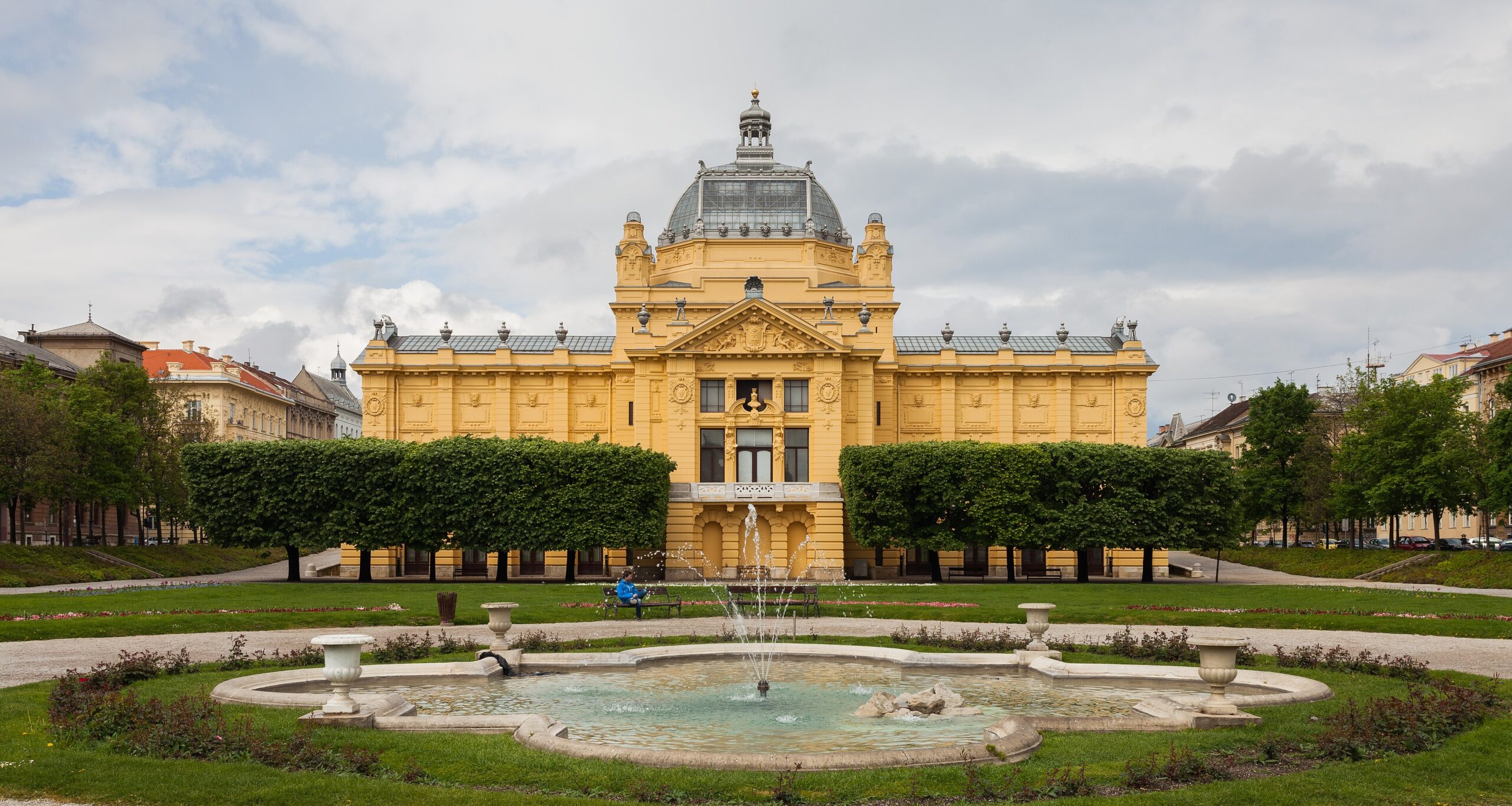

Zagreb, the capital of Croatia, has a medieval Upper Town on its hill and, below it, a Lower Town laid out in the late 1800s around a horseshoe of green squares and parks. Around 1900 the city’s architects filled these streets with theatres, museums and apartment blocks in the Viennese Secession style, Croatia’s own Art Nouveau. Today it is a relaxed café city and an easy start for trips to the coast and to Ljubljana.
Facts checked: November 2026.
Zagreb at a glance
- Best time to go: April to June and September to October; December for the Advent market.
- How long to stay: two or three days.
- Getting there: Zagreb airport (ZAG) has flights from across Europe; trains run from Ljubljana and other cities in the region.
- Money: euro (EUR). Cards are accepted almost everywhere.
- Entry: Croatia is in the EU and the Schengen area. Many non-EU visitors, including British, American, Canadian and Australian citizens, can visit visa-free for up to 90 days in any 180-day period. See Before you go below.
Then: Agram around 1900
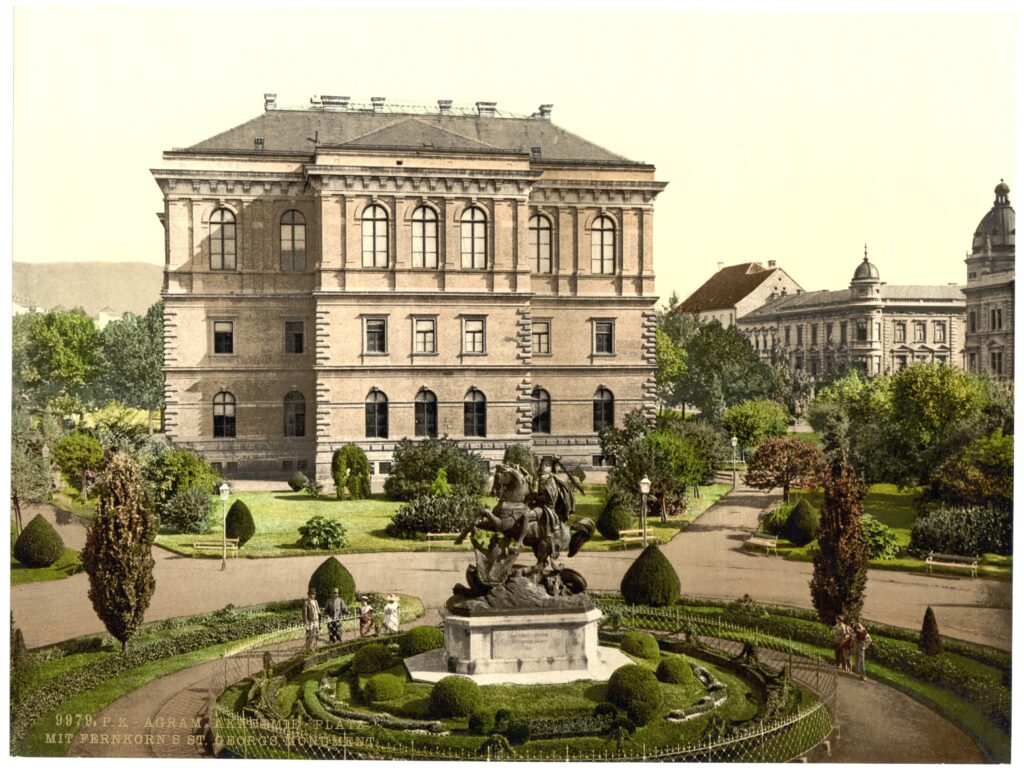

At the end of the 19th century Zagreb, then also known by its German name Agram, was growing fast inside Austria-Hungary. The city planned a chain of squares and gardens in the Lower Town, later called the Green Horseshoe, and lined it with grand public buildings: the Croatian National Theatre of 1895 by Fellner and Helmer, the Art Pavilion of 1898, and museums and schools.
In the years before the First World War, architects trained in Vienna and Prague built in the Secession style, and in 1913 the new university library, today the Croatian State Archives, opened with owls watching from its corners.
Where to stay
- Lower Town (Donji grad): close to the Green Horseshoe, the theatre and the museums.
- Around Ban Jelačić Square: the heart of the city, between the Lower and Upper Towns.
- Upper Town (Gornji grad): quieter cobbled streets on the hill, with views over the roofs.
Stays
Compare places to stay in Zagreb
Opening soon
Secession Zagreb
The Art Pavilion and the Green Horseshoe
See the yellow Art Pavilion and walk the chain of squares and gardens of the Lower Town, past the Croatian National Theatre and the museums.
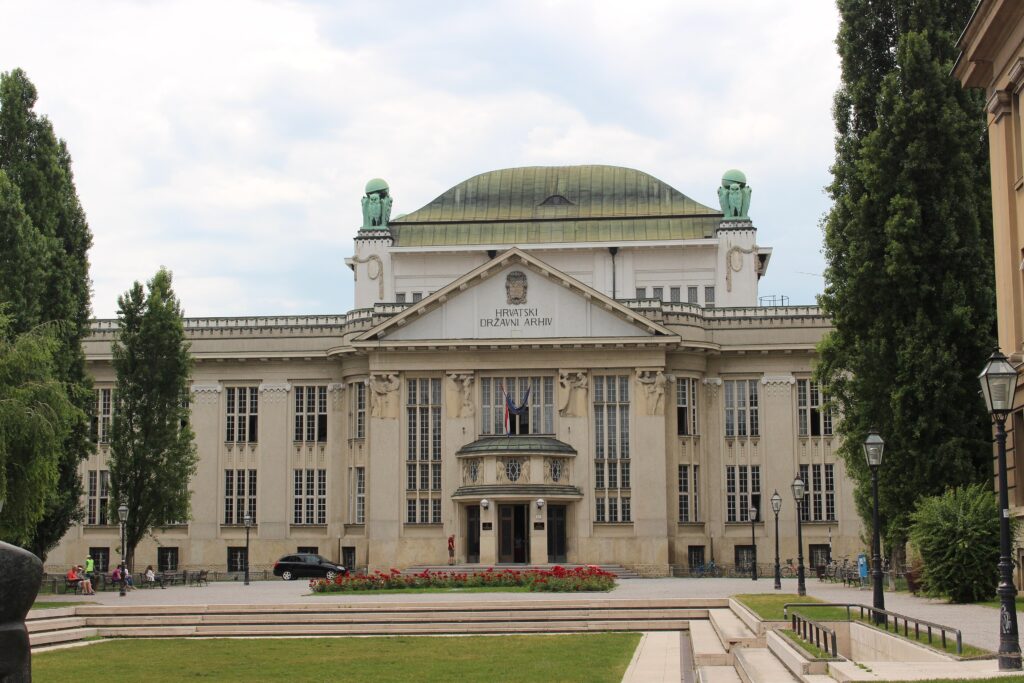

The Croatian State Archives
Admire the Secession building of 1913 with its owls, mosaics and reading room; check the opening times for visits.
The Museum of Arts and Crafts
See furniture, glass and posters from around 1900 in one of the finest collections of Secession design in the region.
The Upper Town and the funicular
Ride the funicular of 1890 up to the Upper Town, then walk to St Mark’s Church with its tiled roof and the Lotrščak Tower.
Tours and activities
Compare tours and activities in Zagreb
Opening soon
Getting there and getting around
Arriving
- By air: Zagreb airport (ZAG) is about 30 minutes from the centre by bus or taxi.
- By train: from Ljubljana in about two and a half hours, and from other cities in the region.
Flights
Compare flights to Zagreb
Opening soon
Around the city
- By tram: blue trams cross the centre and the Lower Town.
- On foot: the Lower Town and Upper Town are close together.
- Car hire is useful for Plitvice and the Adriatic coast.
Car hire
Compare car hire in Croatia
Opening soon
Staying connected
Visitors with an EU phone plan can roam at home prices. Others, including many UK plans, may pay extra, so an eSIM with a data allowance is a simple alternative.
eSIMs
Compare eSIMs for Croatia
Opening soon
Before you go
- Entry rules: EU and EEA citizens only need a valid ID card or passport. Many other nationalities, including British, American, Canadian and Australian citizens, can visit the Schengen area visa-free for up to 90 days in any 180-day period. At the border, the EU’s Entry/Exit System registers non-EU visitors with fingerprints and a photo. ETIAS, an online travel authorisation, is expected to start in 2027 and is not needed yet. Always check the latest official advice, for example GOV.UK travel advice for Croatia, or your own government’s.
- Combine it: our Ljubljana guide is two and a half hours away by train, the Belle Époque seaside of Opatija is about two hours by road, and Budapest and Vienna complete a journey through the Secession cities of the old empire.
Travel Emporium compares offers from trusted travel providers. When you book, you book and pay directly with the provider shown. Some links earn us a commission, at no extra cost to you. How we work