
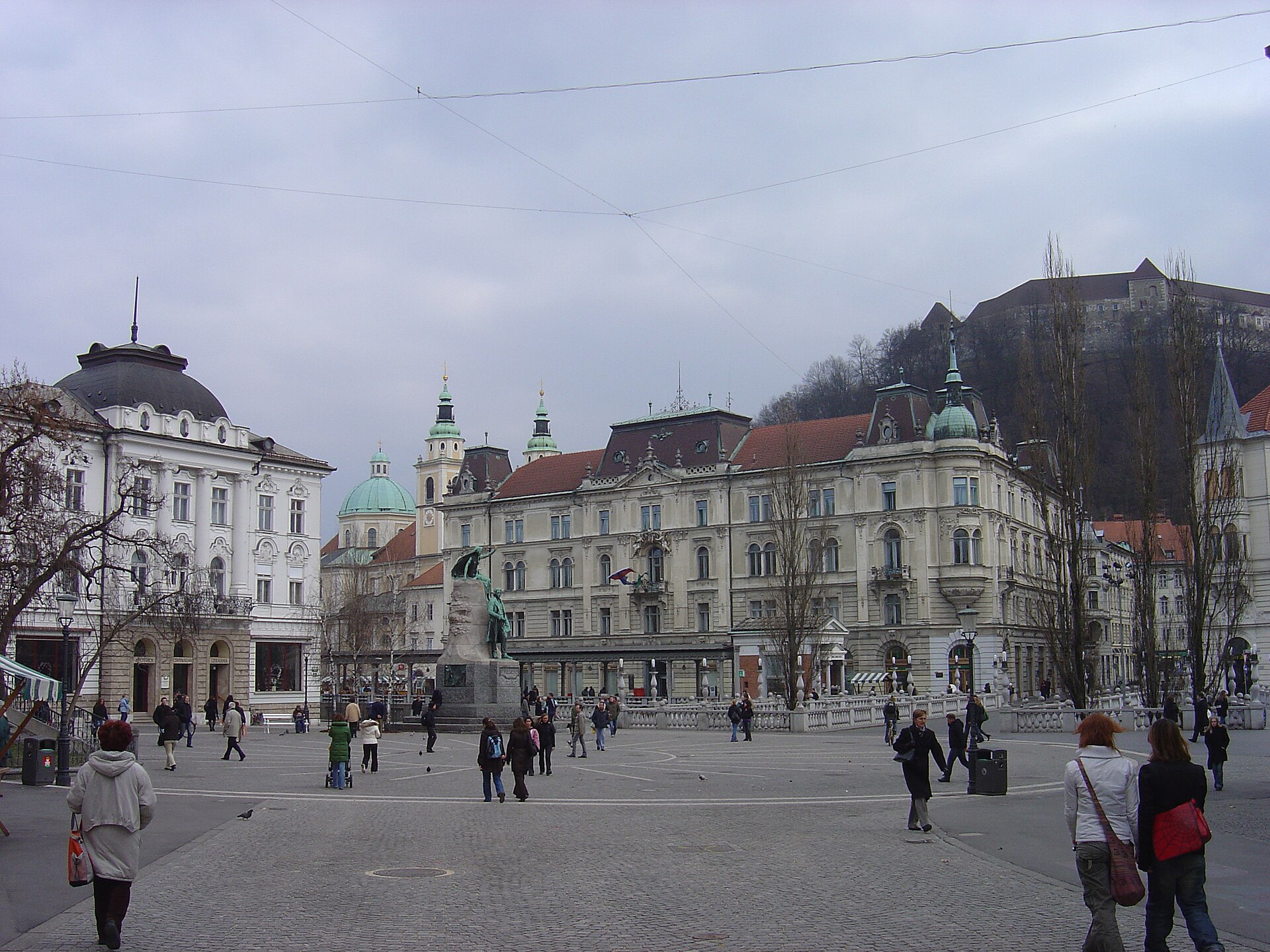

Slovenia’s small, green capital was rebuilt in Art Nouveau after an earthquake in 1895, and between the wars the architect Jože Plečnik gave it bridges, colonnades and a library that are now a UNESCO World Heritage Site. The old town is car-free, the river is lined with cafés, and the Alps and Lake Bled are an hour away.
Facts checked: November 2026.
Ljubljana at a glance
- Best time to go: May to September for café terraces by the river; December for the Christmas lights and markets.
- How long to stay: two days, plus a day trip to Lake Bled or the Postojna Cave.
- Airport: Ljubljana Jože Pučnik Airport (LJU), about 25 kilometres north of the city; Venice, Trieste and Zagreb airports are within a few hours.
- Money: euro (EUR). Cards are accepted almost everywhere.
- Entry: Slovenia is in the EU and the Schengen area. Many non-EU visitors, including British, American, Canadian and Australian citizens, can visit visa-free for up to 90 days in any 180-day period. See Before you go below.
Then: Ljubljana around 1900
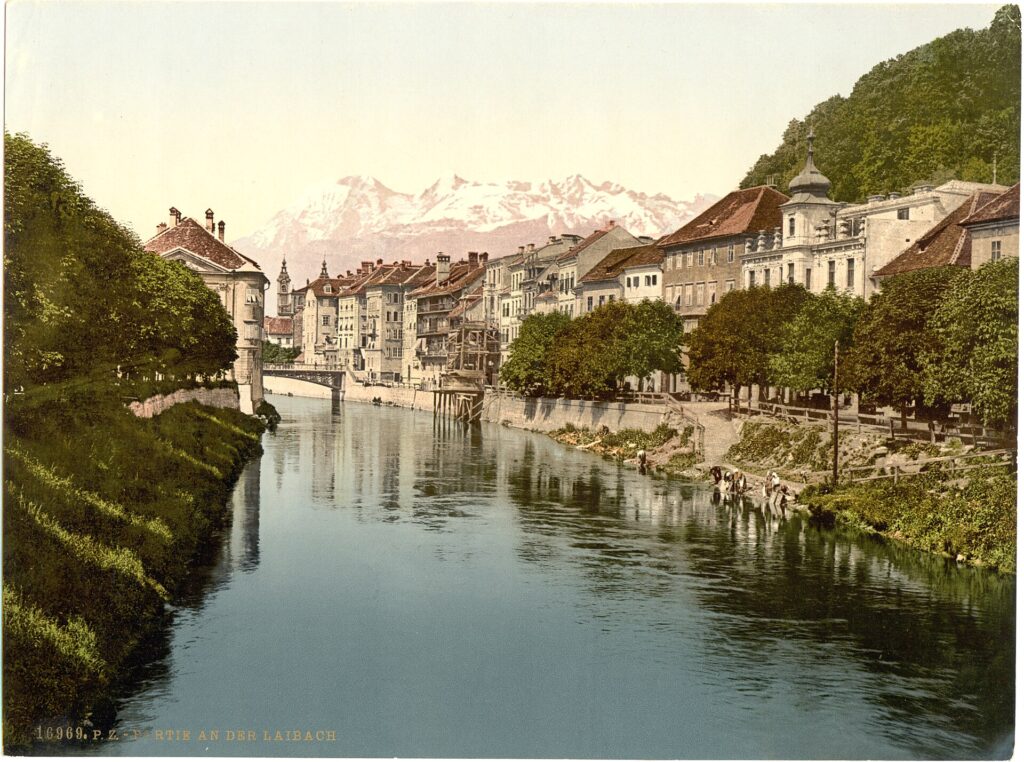

Around 1900 Ljubljana, known in German as Laibach, was the capital of Carniola, a province of Austria-Hungary. In April 1895 an earthquake damaged much of the town. Under its mayor Ivan Hribar it was rebuilt quickly, and many of the new houses were designed in the Vienna Secession style, with flowers, faces and ironwork on their facades.
After the First World War Ljubljana became part of the new Kingdom of Yugoslavia, and Jože Plečnik, who had worked in Vienna and at Prague Castle, came home. Over the next thirty years he reshaped the city with the Triple Bridge, the riverside market, parks, embankments and the National and University Library.
Where to stay
- The old town: car-free streets below the castle, along both banks of the Ljubljanica river.
- Around Prešeren Square and Miklošičeva: the Art Nouveau heart of the city, between the old town and the station.
- Trnovo and Krakovo: quiet, village-like districts by the river, near Plečnik’s own house.
Stays
Compare places to stay in Ljubljana
Opening soon
Art Nouveau and Plečnik’s Ljubljana
Prešeren Square and the Triple Bridge
Ljubljana’s meeting place, framed by Art Nouveau buildings. Plečnik added two footbridges beside the old stone bridge around 1930, creating the Triple Bridge.
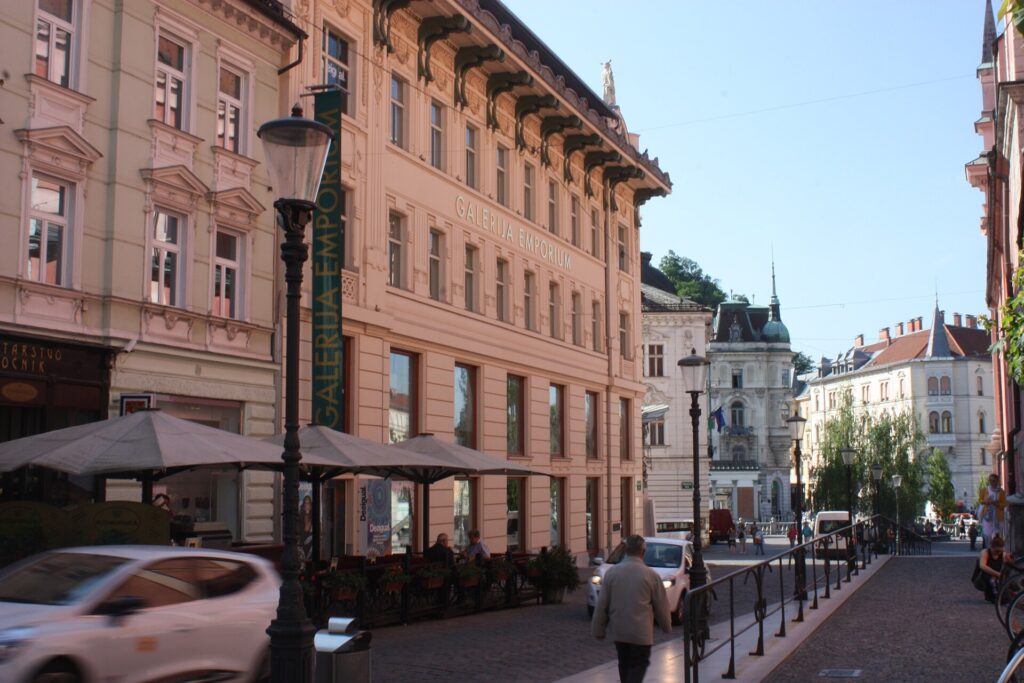

Miklošičeva Street
Walk from Prešeren Square towards the station to see the Urbanc House of 1903, now a department store, and other Secession facades from the years after the earthquake.
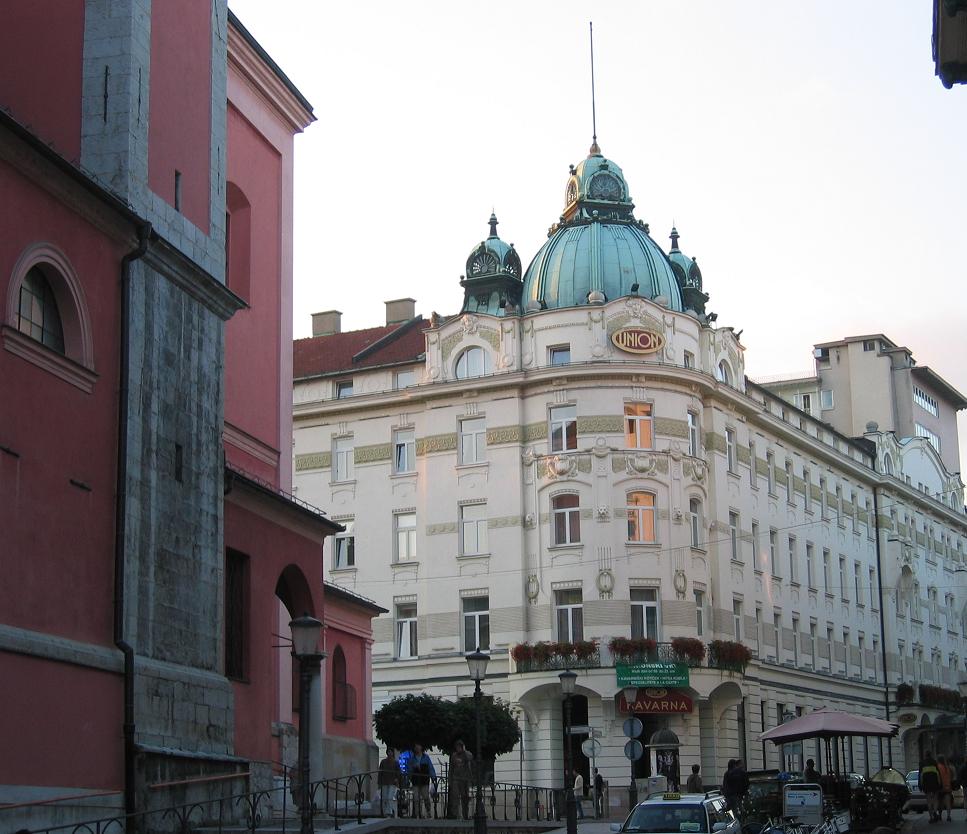

The Grand Hotel Union
The city’s great Art Nouveau hotel, opened in 1905, still welcomes guests. Look into the lobby and the café.
The Cooperative Bank
On Miklošičeva, Ivan Vurnik’s bank of the early 1920s has a facade painted in red, yellow and blue patterns by his wife Helena, an attempt to create a Slovenian national style.

Plečnik’s riverside and library
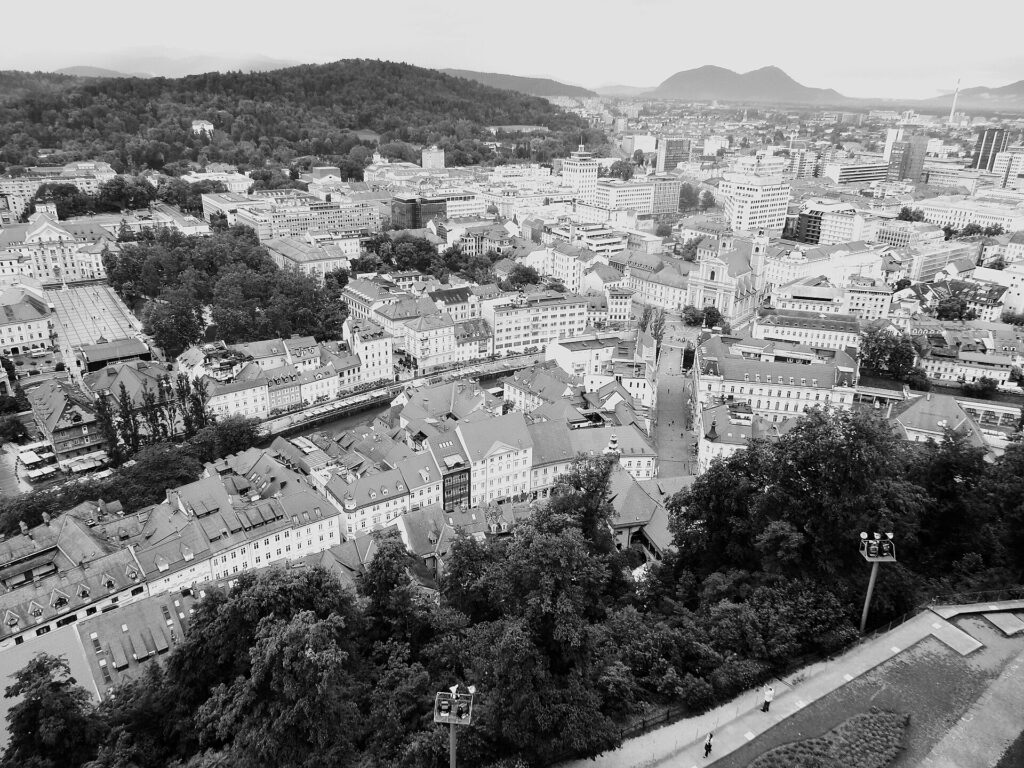
Follow the river past Plečnik’s market colonnade and embankments, then visit the National and University Library, built from 1936 to 1941, with its dark reading room and walls of stone and brick.

Ljubljana Castle
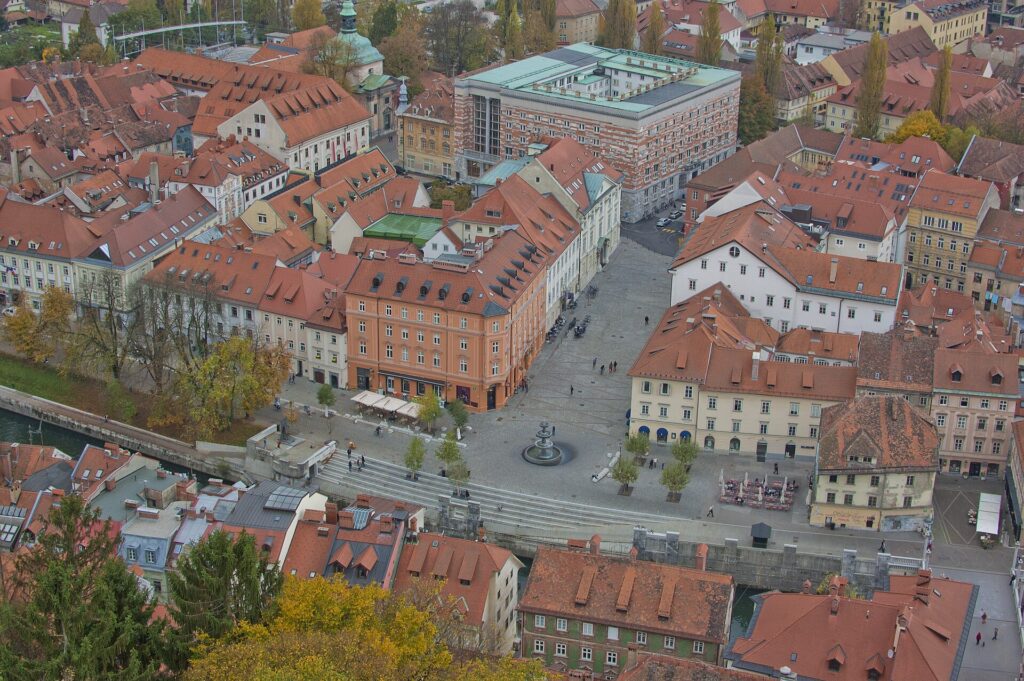
Ride the funicular to the castle for views over the red roofs and, on clear days, the Alps.
Tours and activities
Compare tours and activities in Ljubljana
Opening soon
Getting there and getting around
Arriving
- By air: buses and shuttles run from the airport to the city centre in about half an hour to 45 minutes.
- By train or bus: trains and coaches link Ljubljana with Vienna, Zagreb, Venice and Trieste.
Flights
Compare flights to Ljubljana
Opening soon
Around the city
- On foot or by bike: the centre is compact and car-free, and city bikes are available.
- Car hire is useful for Lake Bled, the Julian Alps and the coast; Slovenian motorways need an electronic vignette, which you buy online before you drive.
Car hire
Compare car hire in Slovenia
Opening soon
Staying connected
Visitors with an EU phone plan can roam at home prices. Others, including many UK plans, may pay extra, so an eSIM with a data allowance is a simple alternative.
eSIMs
Compare eSIMs for Slovenia
Opening soon
Before you go
- Entry rules: EU and EEA citizens only need a valid ID card or passport. Many other nationalities, including British, American, Canadian and Australian citizens, can visit the Schengen area visa-free for up to 90 days in any 180-day period. At the border, the EU’s Entry/Exit System registers non-EU visitors with fingerprints and a photo. ETIAS, an online travel authorisation, is expected to start in 2027 and is not needed yet. Always check the latest official advice, for example GOV.UK travel advice for Slovenia, or your own government’s.
- Combine it: Secession Zagreb is about two and a half hours away by train, and Vienna and Budapest are a day’s journey.
- Library visits: the National and University Library is a working library; check when visitors can see the reading room.
- Plečnik House: the architect’s home in Trnovo is a museum, visited on guided tours.
Travel Emporium compares offers from trusted travel providers. When you book, you book and pay directly with the provider shown. Some links earn us a commission, at no extra cost to you. How we work