
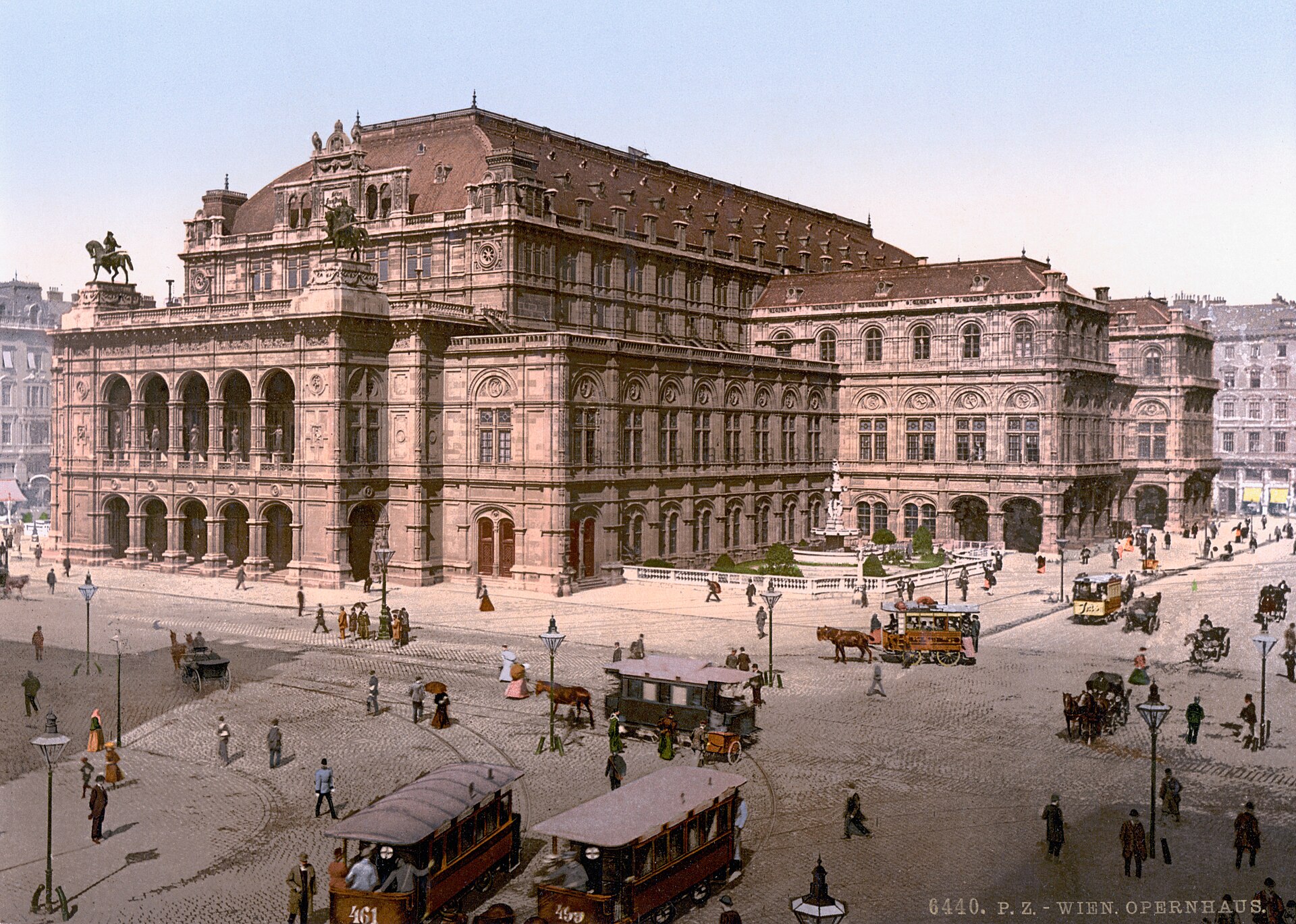

Around 1900 Vienna was the capital of an empire and one of the most exciting cities in Europe: Klimt, Otto Wagner, Freud and Mahler all worked within a few streets of each other. Their gilded buildings, cafés and paintings are still there, alongside the palaces of the Habsburgs, and the city is one of the easiest and safest in Europe to explore.
Facts checked: November 2026.
Vienna at a glance
- Best time to go: April to June and September to October; Advent markets from mid-November to Christmas; the ball season in January and February.
- How long to stay: three or four days.
- Airport: Vienna International (VIE), about 20 km south-east of the centre.
- Money: euro (EUR). Cards are accepted almost everywhere; a few traditional cafés and stalls prefer cash.
- Entry: part of the Schengen area. Many non-EU visitors, including British, American, Canadian and Australian citizens, can visit visa-free for up to 90 days in any 180-day period. See Before you go below.
Then: Vienna 1900
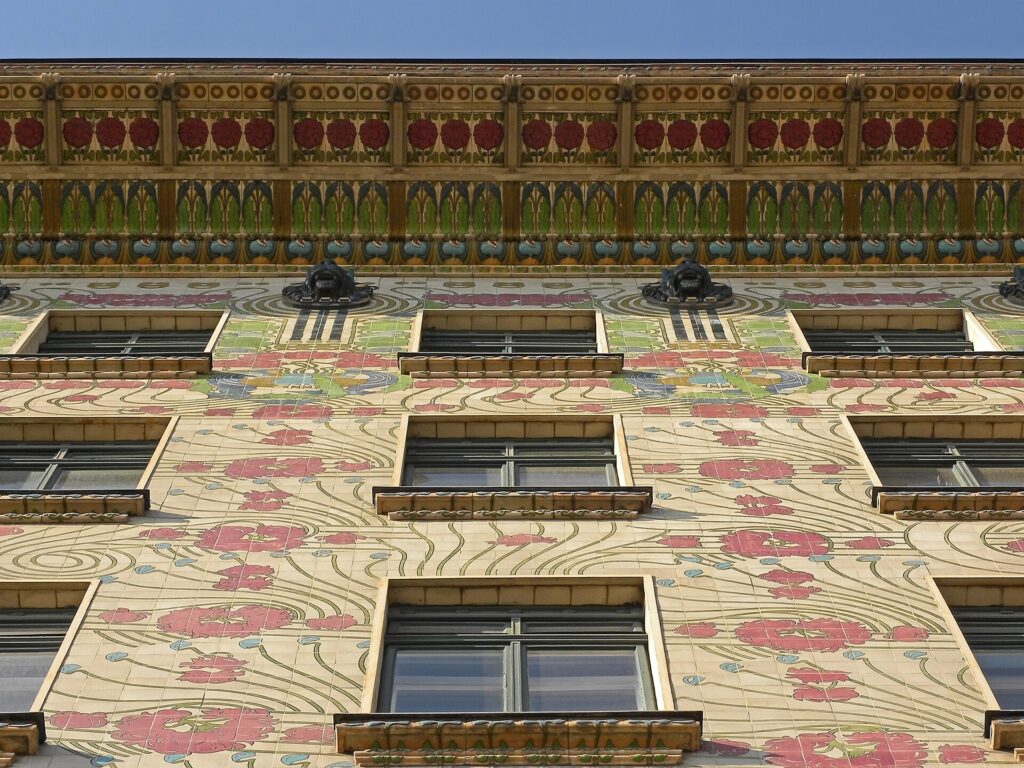

In 1897 a group of young artists led by Gustav Klimt broke away from the conservative artists’ association and founded the Vienna Secession. Their exhibition hall, with its dome of gilded laurel leaves, carries the motto “To every age its art, to art its freedom”. Architect Otto Wagner built stations for the new city railway, apartment houses with tiled and gilded facades, and the Postal Savings Bank, one of the first truly modern buildings in Europe.
The Wiener Werkstätte, founded in 1903, brought the same style to furniture, glass, silver and fashion. This was the Vienna of Klimt’s The Kiss, of Schiele and of the coffee-house intellectuals: a golden age that ended with the First World War and the fall of the monarchy in 1918.
When to go
- Spring (April to June): parks in flower, outdoor café terraces and concerts.
- Summer (July and August): warm, with open-air cinema at the Rathaus; the State Opera takes its summer break.
- Autumn (September and October): the new wine season in the Heurigen wine taverns on the edge of the city.
- Winter (November to February): Advent markets, then the ball season, with the Opera Ball as its highlight.
Where to stay
- Innere Stadt (1st district): inside the Ringstrasse, close to the Hofburg, St Stephen’s Cathedral and the Opera.
- Wieden and Mariahilf (4th and 6th): near the Secession, the Naschmarkt and Wagner’s Majolikahaus, with good cafés and restaurants.
- Neubau (7th): creative, with small shops and the MuseumsQuartier on its doorstep.
- Leopoldstadt (2nd): across the Danube Canal, near the Prater park and its giant Ferris wheel of 1897.
Stays
Compare places to stay in Vienna
Opening soon
Art Nouveau and Secession Vienna
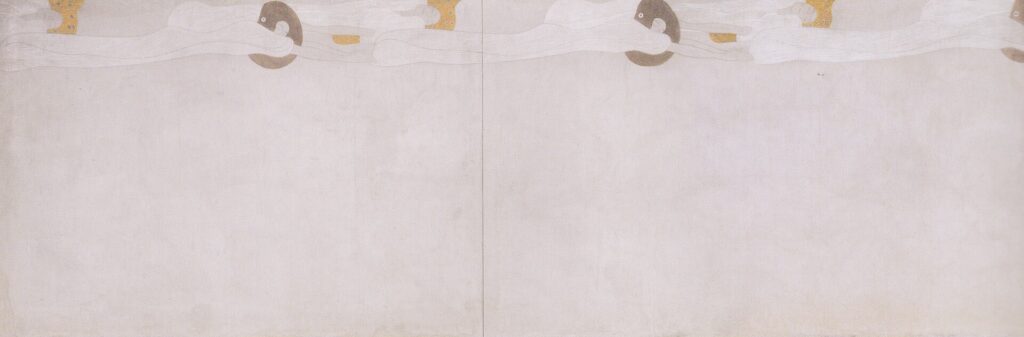

The Secession building
Joseph Maria Olbrich’s exhibition hall of 1897–1898 still shows contemporary art. In the basement is Klimt’s Beethoven Frieze of 1902, painted for an exhibition and now one of the treasures of the city.
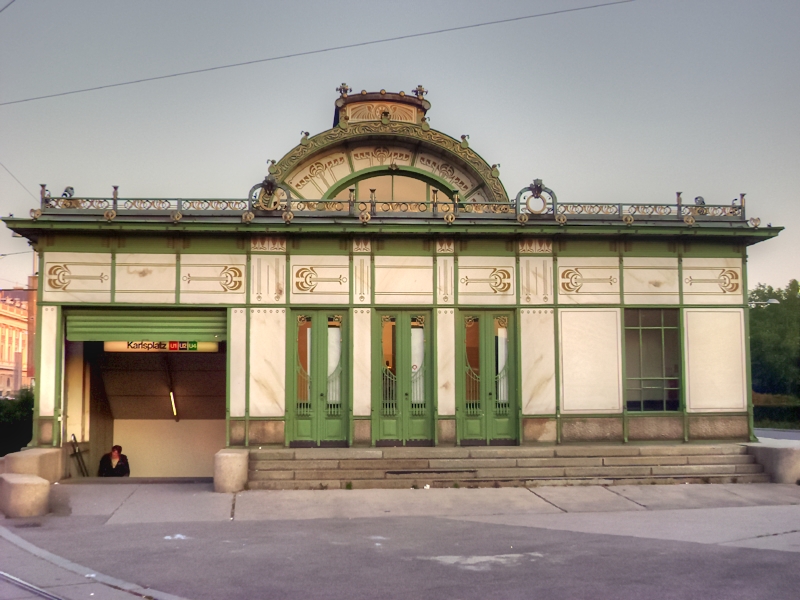

Otto Wagner’s city
See the green and gold Stadtbahn pavilions at Karlsplatz (1899), the Majolikahaus and its neighbour on the Linke Wienzeile, and the Church of St Leopold at Steinhof, with its golden dome high above the city.
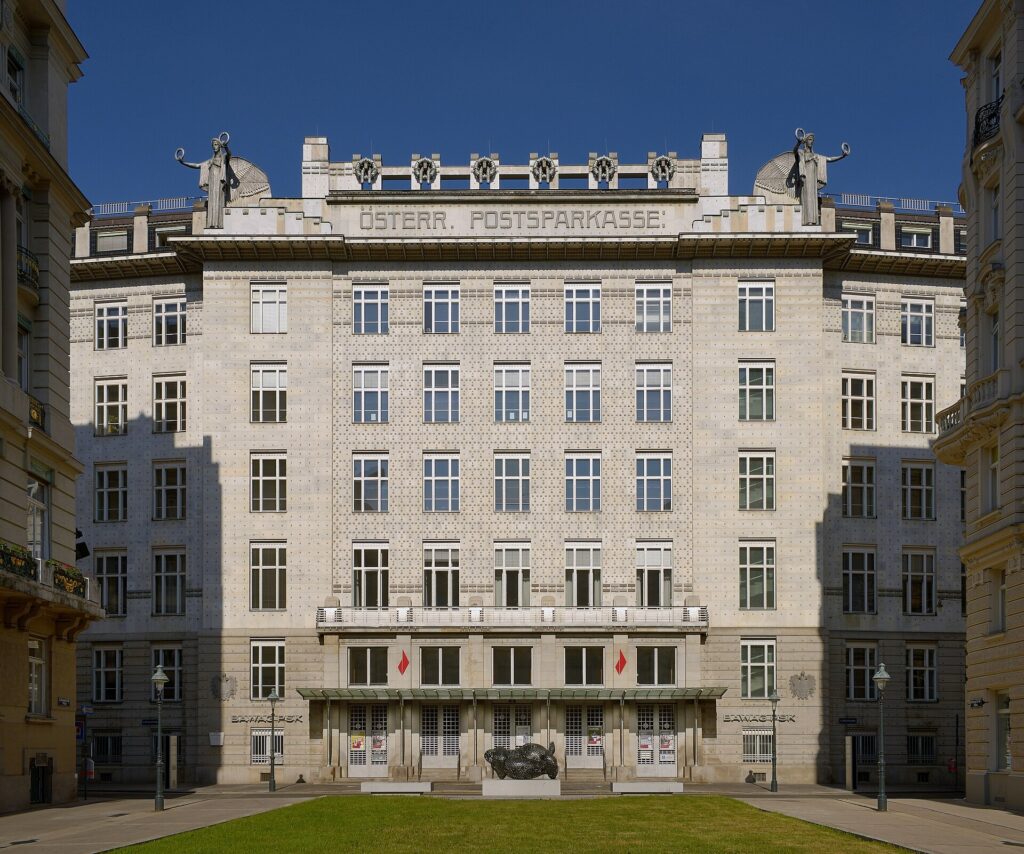

The Postal Savings Bank
Wagner’s bank of 1904–1906 has an aluminium-studded facade and a glass-roofed banking hall that still looks modern today.
Klimt and Schiele
The Upper Belvedere holds Klimt’s The Kiss; the Leopold Museum in the MuseumsQuartier has the world’s largest collection of Egon Schiele; the Wien Museum on Karlsplatz tells the story of the city around 1900.
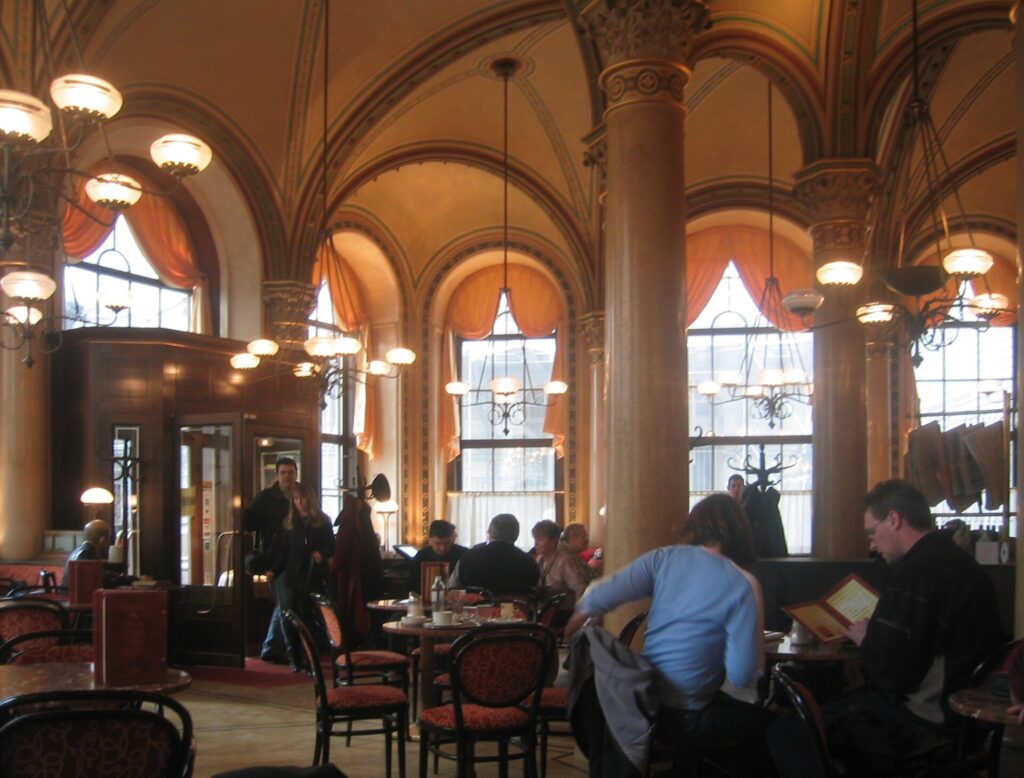

The coffee houses
Viennese coffee-house culture is listed as intangible cultural heritage in Austria’s UNESCO register. Try Café Central, Café Museum (designed by Adolf Loos in 1899) or Café Sperl, and stay as long as you like with a single coffee.
Imperial Vienna
The Hofburg, the Sisi Museum and the Imperial Treasury in the centre, and Schönbrunn Palace and its gardens a short metro ride away.
Tours and activities
Compare tours and activities in Vienna
Opening soon
Getting there and getting around
Arriving
- By air: the City Airport Train (CAT) reaches Wien Mitte in 16 minutes; the S-Bahn is slower and cheaper; and Railjet trains run direct to the main station.
- By train: direct trains from Munich, Prague, Budapest and Zurich, and Nightjet sleepers from cities such as Amsterdam, Brussels, Paris and Hamburg.
Flights
Compare flights to Vienna
Opening soon
Around the city
- Metro, trams and buses are frequent and cover the whole city; a 24-, 48- or 72-hour ticket or the Vienna City Card is good value.
- On foot: the Ringstrasse, with its grand buildings, is best explored on foot or by the tram that circles it.
- Car hire is not needed in the city; it is useful for the Wachau valley and the Alps.
Car hire
Compare car hire in Austria
Opening soon
Staying connected
Visitors with an EU phone plan can roam at home prices. Others, including many UK plans, may pay extra, so an eSIM with a data allowance is a simple alternative.
eSIMs
Compare eSIMs for Austria
Opening soon
Before you go
- Entry rules: EU and EEA citizens only need a valid ID card or passport. Many other nationalities, including British, American, Canadian and Australian citizens, can visit the Schengen area visa-free for up to 90 days in any 180-day period. At the border, the EU’s Entry/Exit System registers non-EU visitors with fingerprints and a photo. ETIAS, an online travel authorisation, is expected to start in 2027 and is not needed yet. Always check the latest official advice, for example GOV.UK travel advice for Austria, or your own government’s.
- Booking ahead: opera, concerts and the balls sell out; book weeks or months ahead.
- City tax: a nightly tax is added to hotel bills.
- Sundays: most shops are closed; museums and cafés are open.
Travel Emporium compares offers from trusted travel providers. When you book, you book and pay directly with the provider shown. Some links earn us a commission, at no extra cost to you. How we work