
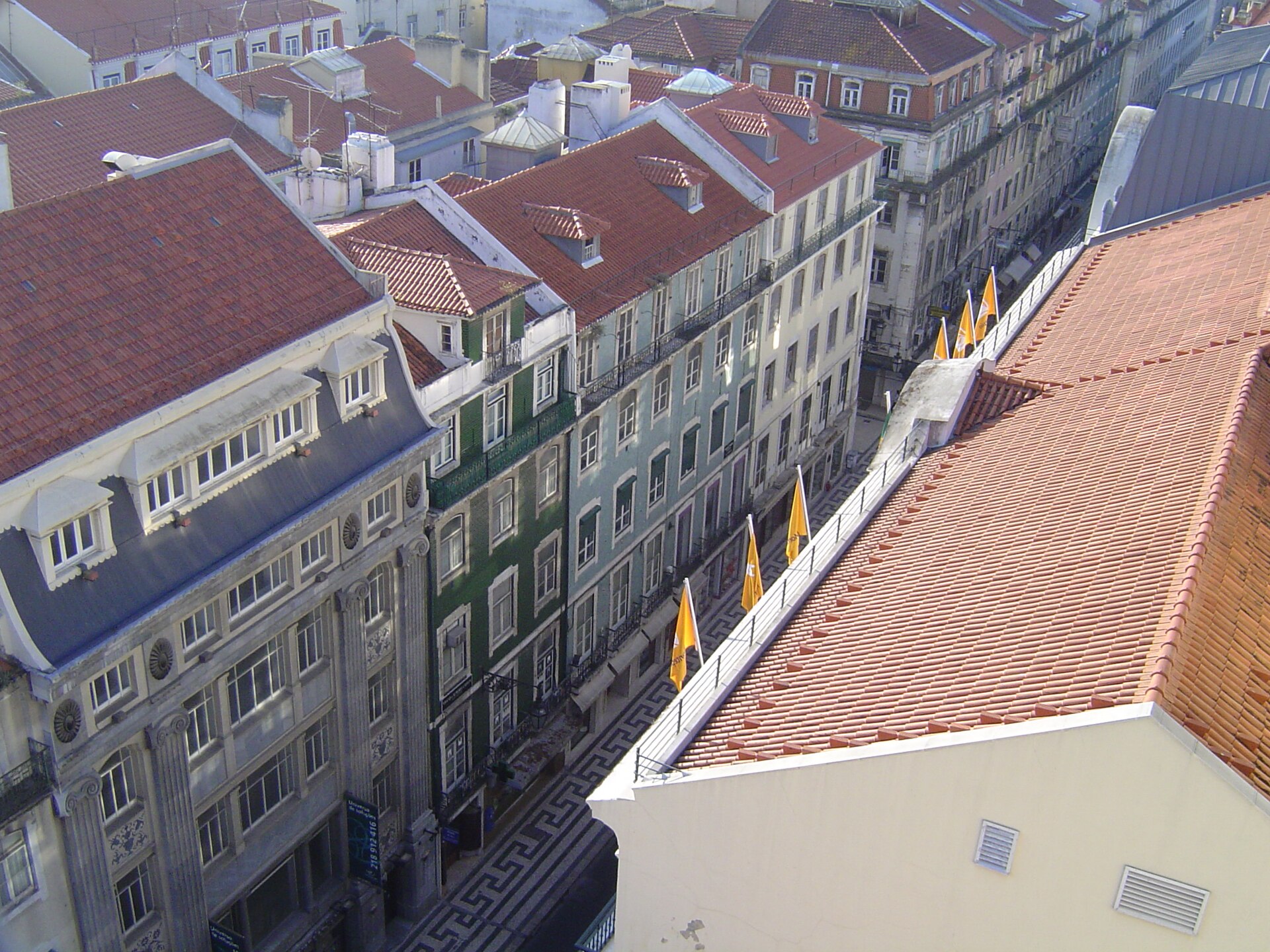
Lisbon climbs its seven hills above the river Tagus, and around 1900 it found clever ways to get up them: iron lifts, funiculars and yellow trams. The same years gave the city its grand cafés, its tiled shopfronts and, in the 1930s, Art Deco cinemas and theatres along the new avenues. Add the light, the river views, custard tarts and the sound of fado, and it is easy to see why so many visitors come back.
Facts checked: November 2026.
Lisbon at a glance
- Best time to go: March to June and September to October. July and August are hot and busy; winters are mild.
- How long to stay: three or four days, with a day trip to Sintra or the coast.
- Getting there: Lisbon airport (LIS) is close to the city and linked to the centre by metro; trains from Porto take about 3 hours.
- Money: euro (EUR). Cards are accepted almost everywhere; keep a little cash for small cafés.
- Entry: Portugal is in the EU and the Schengen area. Many non-EU visitors, including British, American, Canadian and Australian citizens, can visit visa-free for up to 90 days in any 180-day period. See Before you go below.
Then: Lisbon around 1900
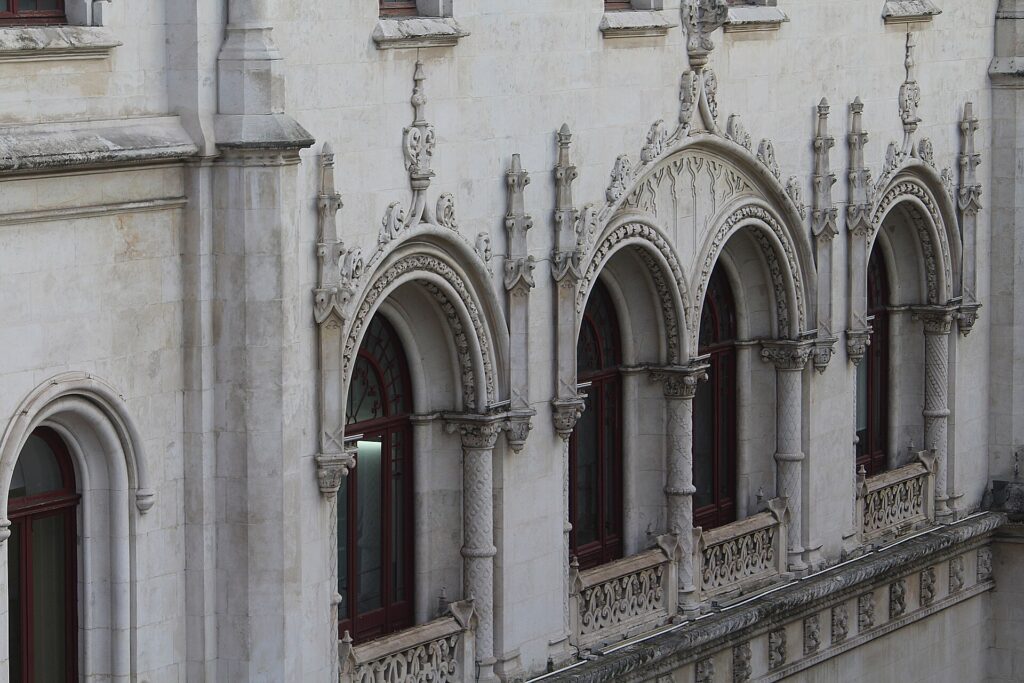


After the earthquake of 1755, the lower town, the Baixa, was rebuilt on a grid of straight streets. By the end of the 19th century the city was spreading up the hills and along the river, and engineers connected the levels: Rossio station opened in 1890 behind its Neo-Manueline facade, and the Santa Justa lift followed in 1902.
In the 1920s and 1930s new avenues ran north from the centre, and architects such as Cassiano Branco brought Art Deco to the city, with cinemas, theatres and apartment blocks in clean, geometric lines.
Where to stay
- Baixa and Chiado: the flat centre and the elegant shopping streets above it, close to the cafés, the river and the lifts.
- Alfama and Graça: the old Moorish quarter and its hilltop neighbour, with steep lanes, viewpoints and fado bars.
- Avenida da Liberdade and Príncipe Real: the grand avenue and a leafy district of gardens and independent shops.
Stays
Compare places to stay in Lisbon
Opening soon
Belle Époque and Art Deco Lisbon
The Elevador de Santa Justa
The iron lift of 1902 by Raoul Mesnier du Ponsard, linking the Baixa with the Carmo square above. Queues can be long; come early, or walk up through Chiado and visit the viewing platform from the top.

A Brasileira and the Chiado cafés
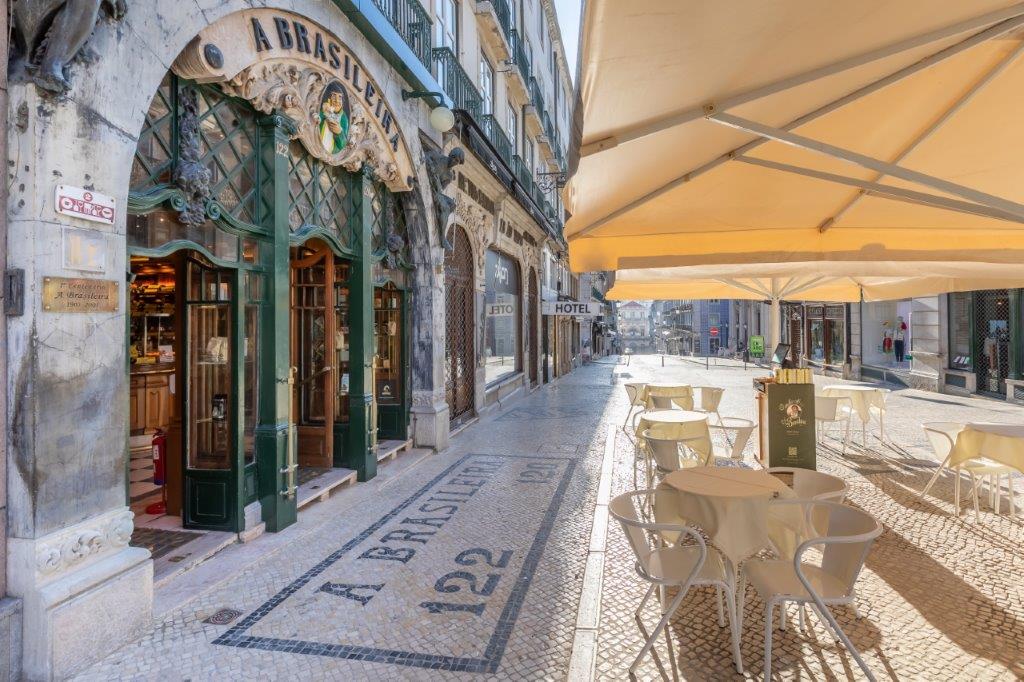
The café opened in 1905 to sell Brazilian coffee, and its mirrored, wood-panelled room became a meeting place for writers; a bronze statue of the poet Fernando Pessoa sits at a table outside.

The Eden theatre and the Art Deco avenues
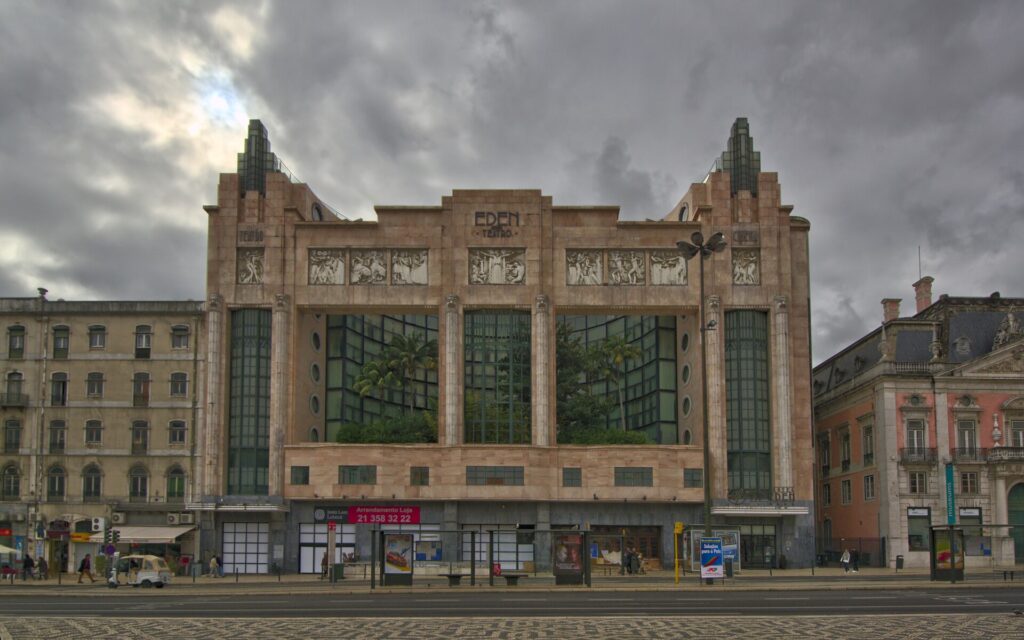
The former Eden theatre on Praça dos Restauradores, designed by Cassiano Branco in the 1930s, keeps its Art Deco facade; the building is now a hotel. Walk north along Avenida da Liberdade and the avenues beyond for more buildings of the period.
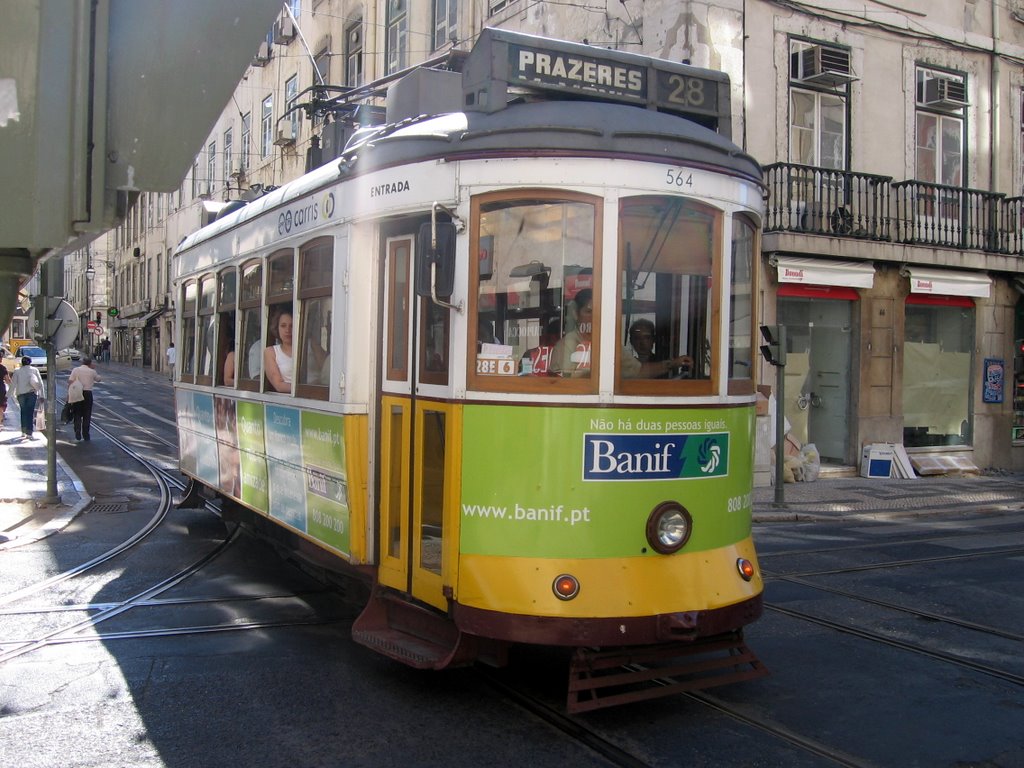

The historic trams
Lisbon’s small yellow trams still climb the hills. Line 28 runs through Graça, Alfama, the Baixa and Estrela. The old funiculars belong to the same network, but check which ones are running before you go.
Tours and activities
Compare tours and activities in Lisbon
Opening soon
Getting there and getting around
Arriving
- By air: Lisbon airport (LIS) is about 7 kilometres from the centre; the red metro line runs into the city in about 25 minutes.
- By train: fast trains from Porto and the Algarve arrive at Santa Apolónia and Oriente stations.
Flights
Compare flights to Lisbon
Opening soon
Around the city
- On foot in the centre, with good shoes for the hills and the slippery stone pavements, and by metro, tram and lift for the rest; a rechargeable card covers them all.
- Car hire is not needed in the city; it is useful for the Alentejo, the Algarve and the coast north of Lisbon.
Car hire
Compare car hire in Portugal
Opening soon
Staying connected
Visitors with an EU phone plan can roam at home prices. Others, including many UK plans, may pay extra, so an eSIM with a data allowance is a simple alternative.
eSIMs
Compare eSIMs for Portugal
Opening soon
Before you go
- Entry rules: EU and EEA citizens only need a valid ID card or passport. Many other nationalities, including British, American, Canadian and Australian citizens, can visit the Schengen area visa-free for up to 90 days in any 180-day period. At the border, the EU’s Entry/Exit System registers non-EU visitors with fingerprints and a photo. ETIAS, an online travel authorisation, is expected to start in 2027 and is not needed yet. Always check the latest official advice, for example GOV.UK travel advice for Portugal, or your own government’s.
- Further north: Aveiro, with its canals and Arte Nova houses, is an easy stop by train on the way to Porto; see our Aveiro and Porto guides.
- Tourist tax: Lisbon charges a tourist tax per person per night, paid at your accommodation.
- Pickpockets: take care on the busiest trams, especially line 28, and in crowded viewpoints.
Travel Emporium compares offers from trusted travel providers. When you book, you book and pay directly with the provider shown. Some links earn us a commission, at no extra cost to you. How we work