
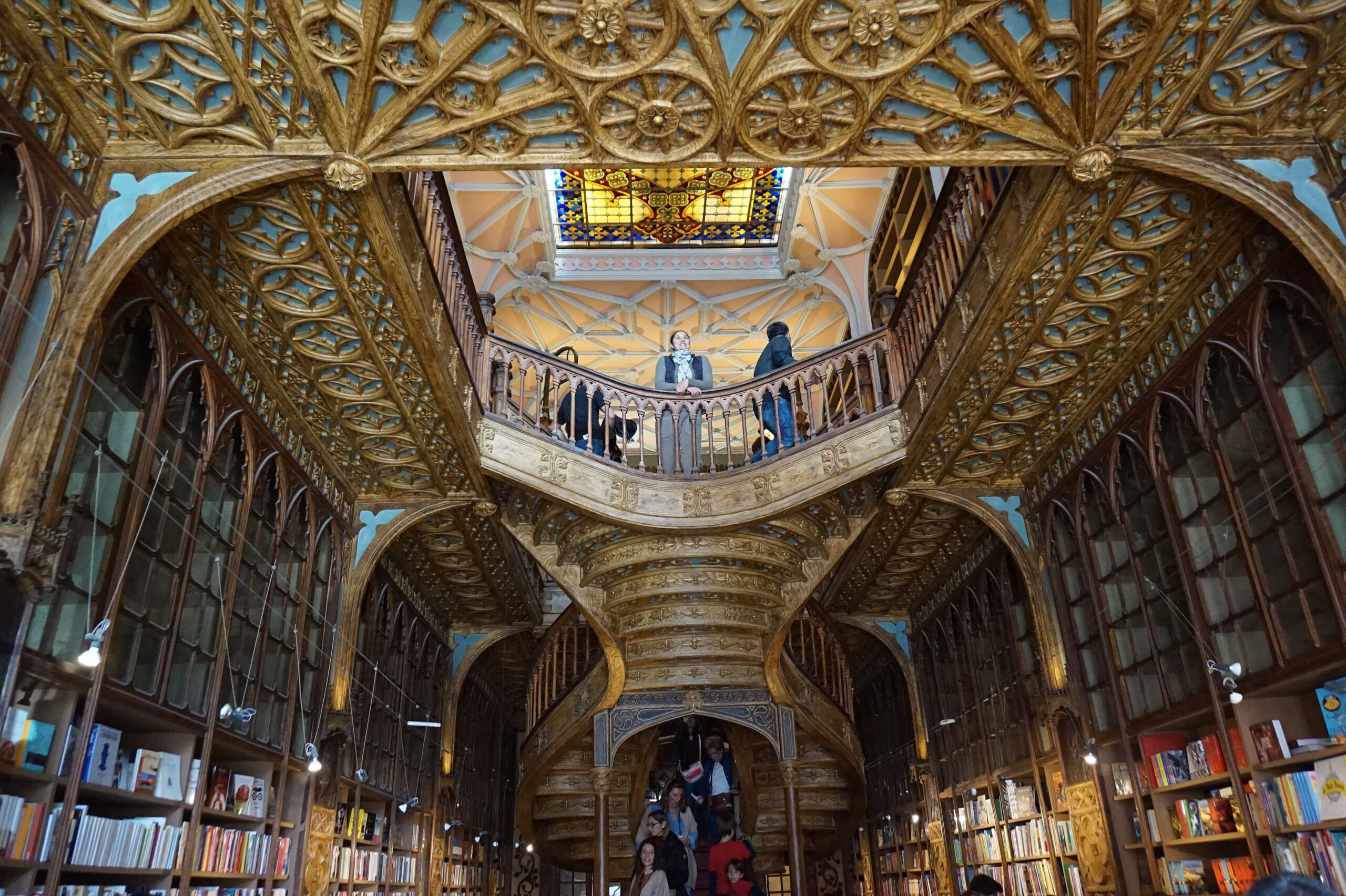

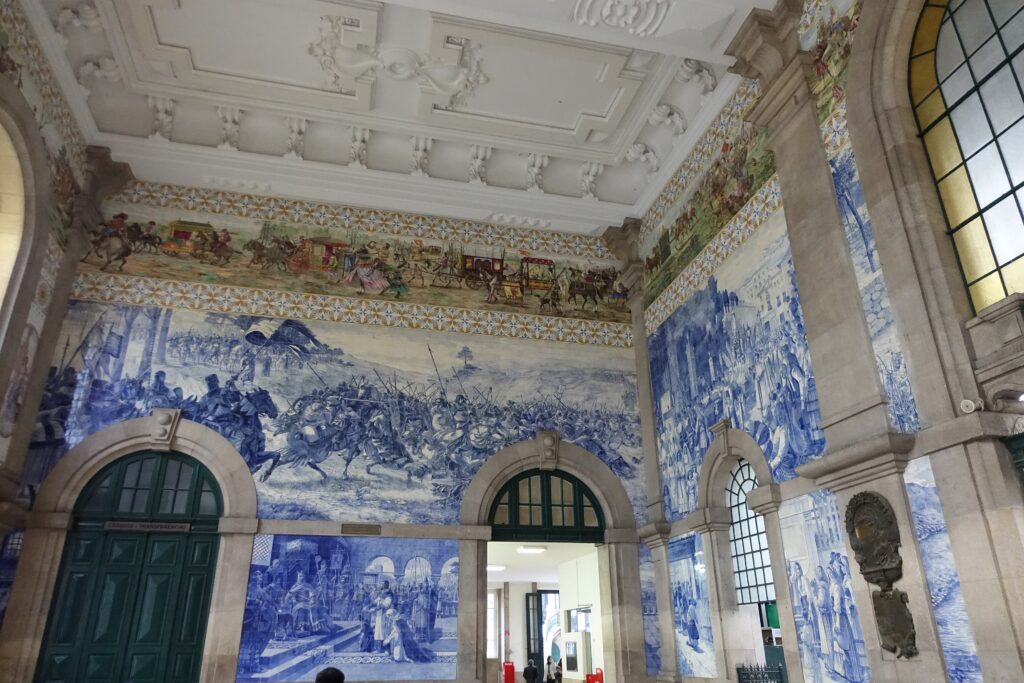
Porto tumbles down its hills to the Douro river, a city of port wine lodges, steep lanes, bridges and churches covered in blue and white tiles. In the early 20th century it added a sparkling layer of Art Nouveau: the carved staircase of the Livraria Lello bookshop, the mirrors of the Café Majestic and the tiled hall of São Bento station. It is one of the most atmospheric cities in Europe, and an easy train ride from Lisbon.
Facts checked: November 2026.
Porto at a glance
- Best time to go: April to October; spring and autumn are mild and less crowded than summer.
- How long to stay: three or four days, longer with the Douro Valley.
- Getting there: Porto Airport (OPO) has flights from across Europe and is linked to the city by metro; trains from Lisbon take about 3 hours.
- Money: euro (EUR). Cards are accepted almost everywhere; keep a little cash for small cafés.
- Entry: Portugal is in the EU and the Schengen area. Many non-EU visitors, including British, American, Canadian and Australian citizens, can visit visa-free for up to 90 days in any 180-day period. See Before you go below.
Then: Porto at the turn of the century

Around 1900 Porto was a rich merchant city, trading in port wine across the world. Its new streets filled with shops and cafés in the Arte Nova style: the Livraria Lello opened in 1906 with a carved double staircase and a stained-glass skylight, and the Café Majestic opened on Rua de Santa Catarina in 1921.
São Bento station opened in 1916, its great hall lined with some 20,000 blue and white tiles by Jorge Colaço, showing battles, royal processions and country life.
Where to stay
- The Ribeira and the historic centre: by the river, in the UNESCO World Heritage old town.
- Around Aliados and Bolhão: central, close to the cafés, shops and São Bento station.
- Vila Nova de Gaia: across the river, among the port wine lodges, with views of the old town.
Stays
Compare places to stay in Porto
Opening soon
Art Nouveau and historic Porto
Livraria Lello
Climb the famous staircase of one of the most beautiful bookshops in the world. Entry is by timed ticket, usually counted towards a book; book ahead in high season.
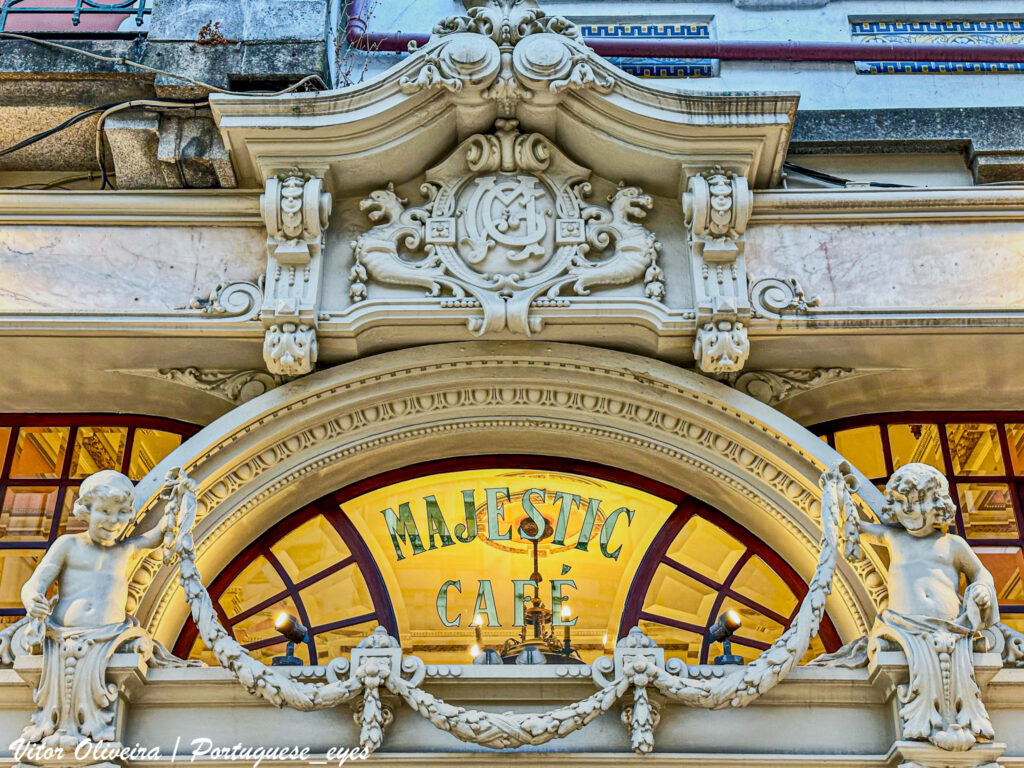

Café Majestic
Take coffee and a pastry among the mirrors, carved wood and cherubs of Porto’s grandest café.
São Bento station and the Bolhão market
See the tiled hall of the station, then the restored market of 1914, full of fish, flowers and cafés.
The port lodges and the river
Cross the Dom Luís I bridge to taste port in the lodges of Vila Nova de Gaia, or take a boat trip under the six bridges.
Tours and activities
Compare tours and activities in Porto
Opening soon
Getting there and getting around
Arriving
- By air: Porto Airport (OPO), on the metro’s purple line to the centre.
- By train: fast trains from Lisbon in about 3 hours, and trains up the Douro Valley from São Bento.
Trains
Compare train tickets in Portugal
Opening soon
Around the city
- On foot: the centre is compact but very hilly.
- By metro, tram and funicular: historic trams run along the river, and the Guindais funicular climbs from the Ribeira.
- Car hire is useful for the Douro Valley and the Minho.
Car hire
Compare car hire in Portugal
Opening soon
Staying connected
Visitors with an EU phone plan can roam at home prices. Others, including many UK plans, may pay extra, so an eSIM with a data allowance is a simple alternative.
eSIMs
Compare eSIMs for Portugal
Opening soon
Before you go
- Entry rules: EU and EEA citizens only need a valid ID card or passport. Many other nationalities, including British, American, Canadian and Australian citizens, can visit the Schengen area visa-free for up to 90 days in any 180-day period. At the border, the EU’s Entry/Exit System registers non-EU visitors with fingerprints and a photo. ETIAS, an online travel authorisation, is expected to start in 2027 and is not needed yet. Always check the latest official advice, for example GOV.UK travel advice for Portugal, or your own government’s.
- Tourist tax: Porto charges a tourist tax per person per night, paid at your accommodation.
- Combine it: see our Lisbon and Aveiro guides, both on the same railway line.
Travel Emporium compares offers from trusted travel providers. When you book, you book and pay directly with the provider shown. Some links earn us a commission, at no extra cost to you. How we work