
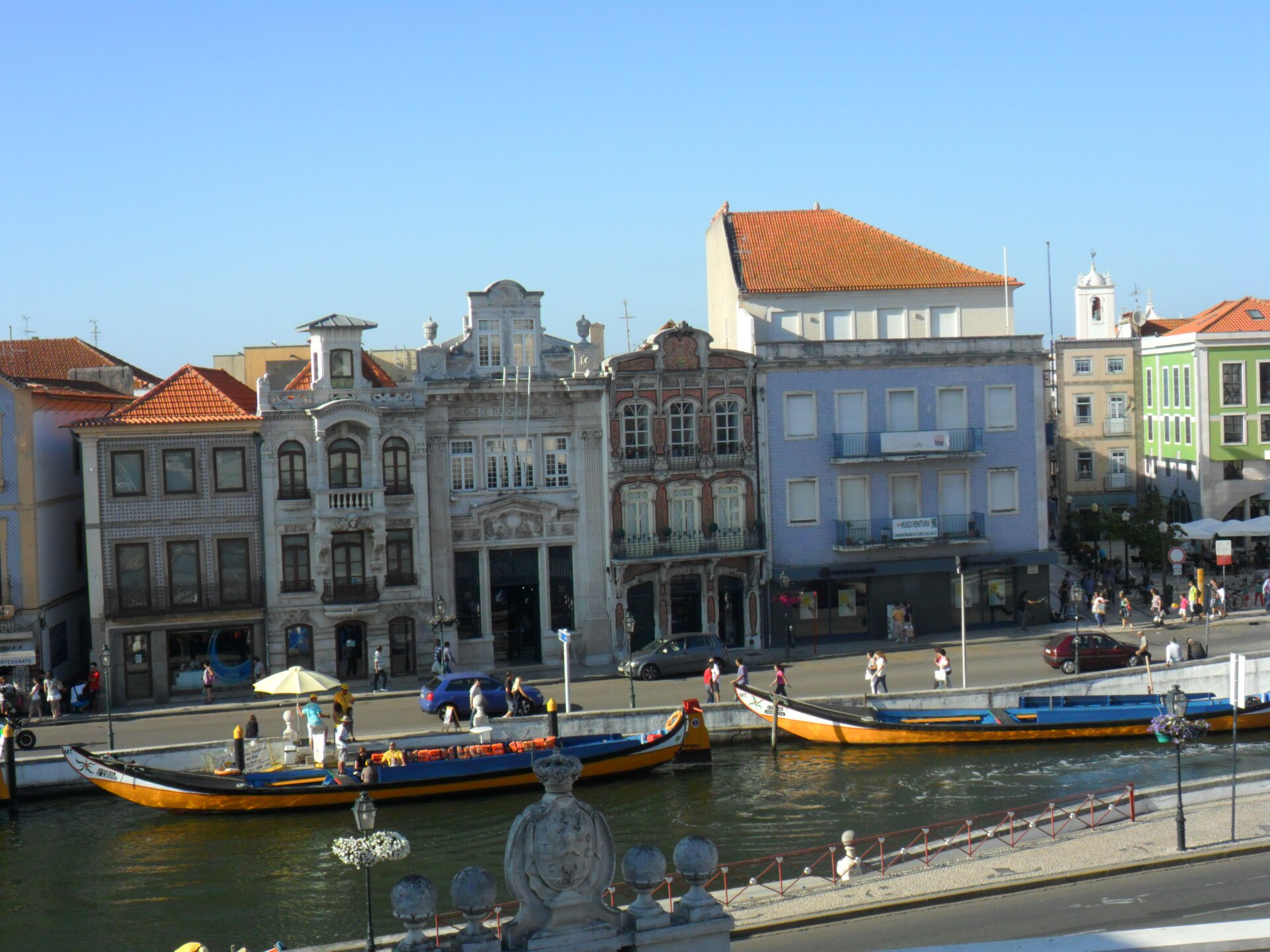

Aveiro is a small, cheerful city on a lagoon south of Porto, crossed by canals where painted moliceiro boats carry visitors past rows of Art Nouveau houses. In the early 20th century its merchants, many of them back from Brazil, built in Arte Nova, Portugal’s own Art Nouveau, with curving ironwork, flowers in stone and glazed tiles. Add a station covered in blue azulejos, sweet ovos moles and the striped beach houses of Costa Nova, and Aveiro is one of the easiest and most charming day trips in Portugal.
Facts checked: November 2026.
Aveiro at a glance
- Best time to go: May to September for the beaches; spring and autumn for quieter canals.
- How long to stay: one or two days, or a day trip from Porto.
- Getting there: trains from Porto in about 40 minutes to an hour, and from Lisbon in about 2 hours 30 minutes; Porto airport is about an hour away by road.
- Money: euro (EUR). Cards are accepted almost everywhere.
- Entry: Portugal is in the EU and the Schengen area. Many non-EU visitors, including British, American, Canadian and Australian citizens, can visit visa-free for up to 90 days in any 180-day period. See Before you go below.
Then: Arte Nova on the lagoon
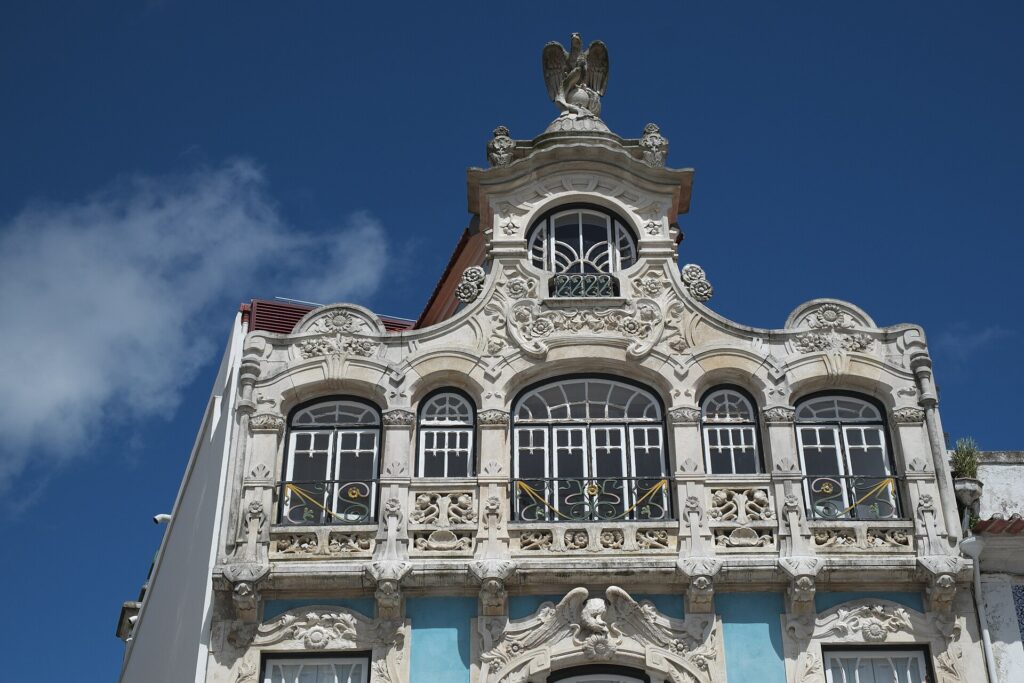

Around 1900 Aveiro lived from salt, fishing and seaweed, which the moliceiro boats gathered from the lagoon to fertilise the fields. Merchants and emigrants who had made money in Brazil came home and built houses in the new style from Paris and Brussels.
The Portuguese called it Arte Nova. In Aveiro it took on a local look, with azulejo tiles, wrought-iron balconies and stone carved with lilies and seaweed. The best of these houses line the main canal and the streets around it, and one of them, the Casa do Major Pessoa of about 1907, is now the city’s Art Nouveau museum.
Where to stay
- Around the main canal: the centre, with the Arte Nova houses, the fish market and the cafés.
- Near the station: convenient for trains to Porto and Lisbon, a short walk from the canals.
- Costa Nova and Barra: the beaches about a 20-minute drive away, with the striped houses and the lighthouse.
Stays
Compare places to stay in Aveiro
Opening soon
Arte Nova and heritage Aveiro
The Arte Nova Museum
The Casa do Major Pessoa, with its stone flowers and iron balconies, holds a small museum of Aveiro’s Art Nouveau and a tea room on the ground floor.
The canals and the moliceiros
Take a short ride in a moliceiro, the long, painted boat once used to collect seaweed. The tours start on the main canal and pass the Arte Nova houses and the old salt warehouses.
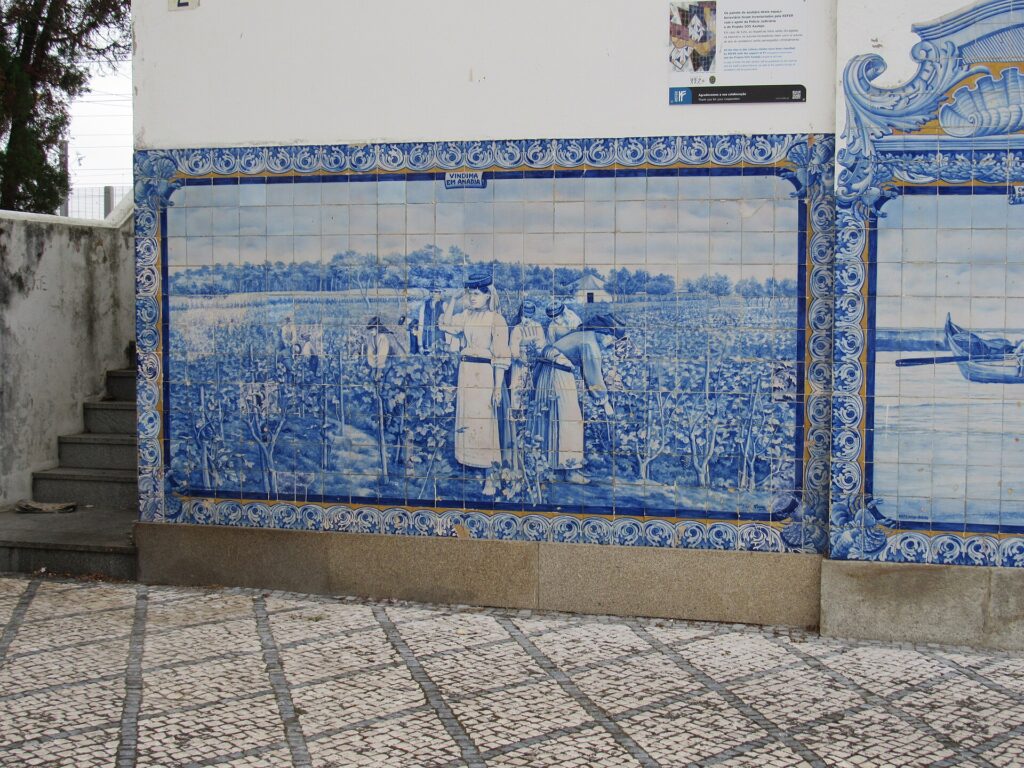

The old railway station
The station of 1916, covered in blue and white azulejo panels showing scenes of the region. The trains now leave from a newer building next door, but the old station is worth the short walk.
Costa Nova and Ílhavo
Costa Nova’s beach houses, painted in stripes of colour, face the lagoon on one side and the Atlantic on the other. Nearby Ílhavo has a maritime museum and the Vista Alegre porcelain factory with its museum.
Tours and activities
Compare tours and activities in Aveiro
Opening soon
Getting there and getting around
Arriving
- By train: frequent trains from Porto, and fast Alfa Pendular and Intercidades trains from Lisbon and Coimbra; see our Lisbon guide.
- By air: Porto airport is the nearest; take the metro into Porto and the train from Campanhã station.
Flights
Compare flights to Porto
Opening soon
Around the city
- On foot for the centre and the canals, and by bus to Costa Nova and Barra.
- Car hire is useful for the beaches, Ílhavo and the coast to the south.
Car hire
Compare car hire in Portugal
Opening soon
Staying connected
Visitors with an EU phone plan can roam at home prices. Others, including many UK plans, may pay extra, so an eSIM with a data allowance is a simple alternative.
eSIMs
Compare eSIMs for Portugal
Opening soon
Before you go
- Entry rules: EU and EEA citizens only need a valid ID card or passport. Many other nationalities, including British, American, Canadian and Australian citizens, can visit the Schengen area visa-free for up to 90 days in any 180-day period. At the border, the EU’s Entry/Exit System registers non-EU visitors with fingerprints and a photo. ETIAS, an online travel authorisation, is expected to start in 2027 and is not needed yet. Always check the latest official advice, for example GOV.UK travel advice for Portugal, or your own government’s.
- Try ovos moles: the local sweet of egg yolk and sugar in thin wafers shaped like seashells and fish.
- Combine it: Aveiro pairs well with Lisbon and Porto on a rail trip through Portugal.
Travel Emporium compares offers from trusted travel providers. When you book, you book and pay directly with the provider shown. Some links earn us a commission, at no extra cost to you. How we work