
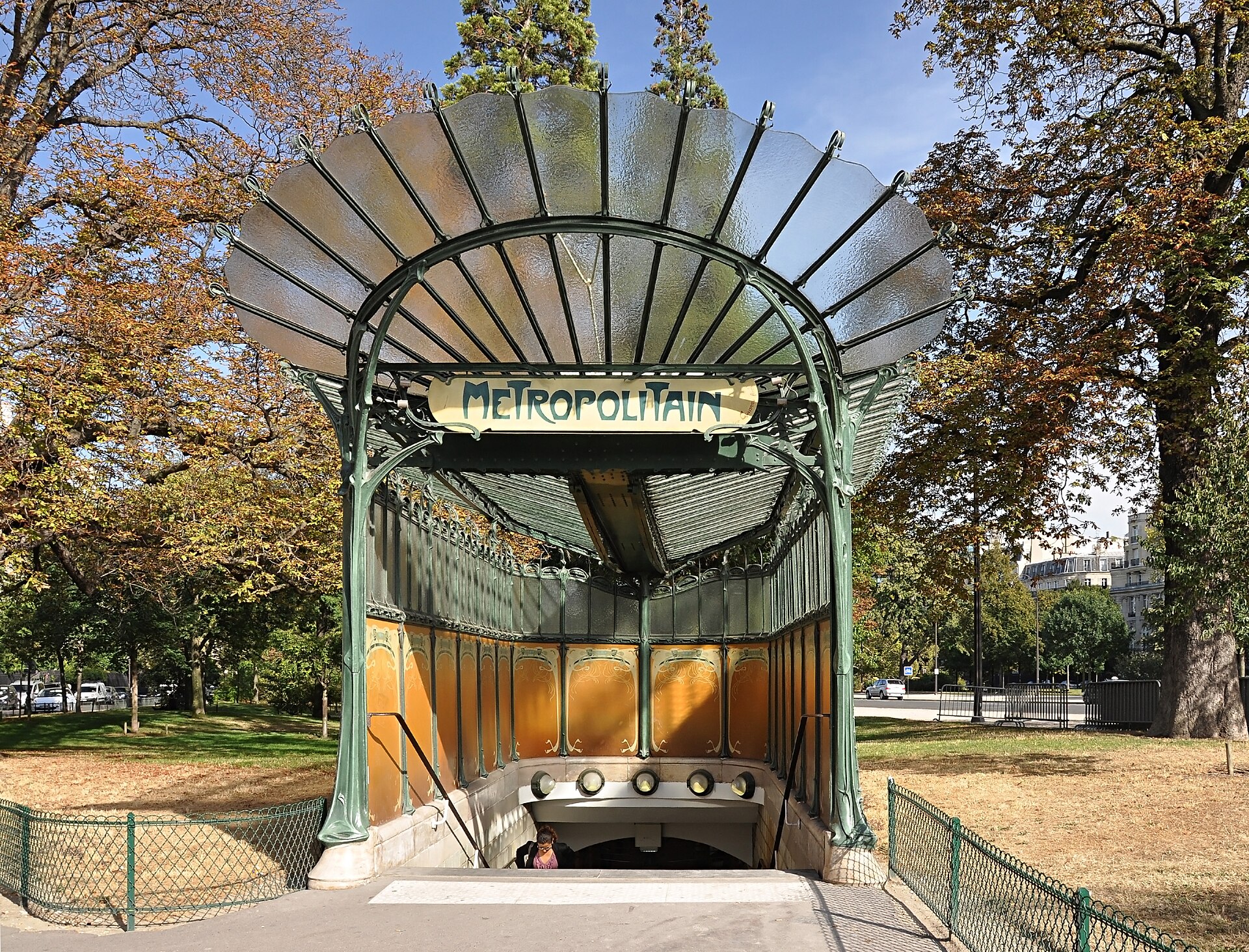

Paris gave the world both great styles of the golden age. In 1900 its new metro opened with Hector Guimard’s Art Nouveau entrances of green iron and glass; in 1925 its Exhibition of Decorative Arts launched the style we now call Art Deco. Between the two lie department-store domes, station restaurants and palaces of glass, all still part of everyday life in one of the most visited cities in the world.
Facts checked: November 2026.
Paris at a glance
- Best time to go: April to June and September to October; August is quiet as many Parisians go on holiday, and December brings the Christmas windows of the department stores.
- How long to stay: four days, plus a day trip to Versailles or Giverny.
- Airports: Paris Charles de Gaulle (CDG) and Paris Orly (ORY).
- Money: euro (EUR). Cards are accepted almost everywhere. Service is included in restaurant bills; rounding up is a kind extra.
- Entry: France is in the EU and the Schengen area. Many non-EU visitors, including British, American, Canadian and Australian citizens, can visit visa-free for up to 90 days in any 180-day period. See Before you go below.
Then: Paris from 1900 to 1925
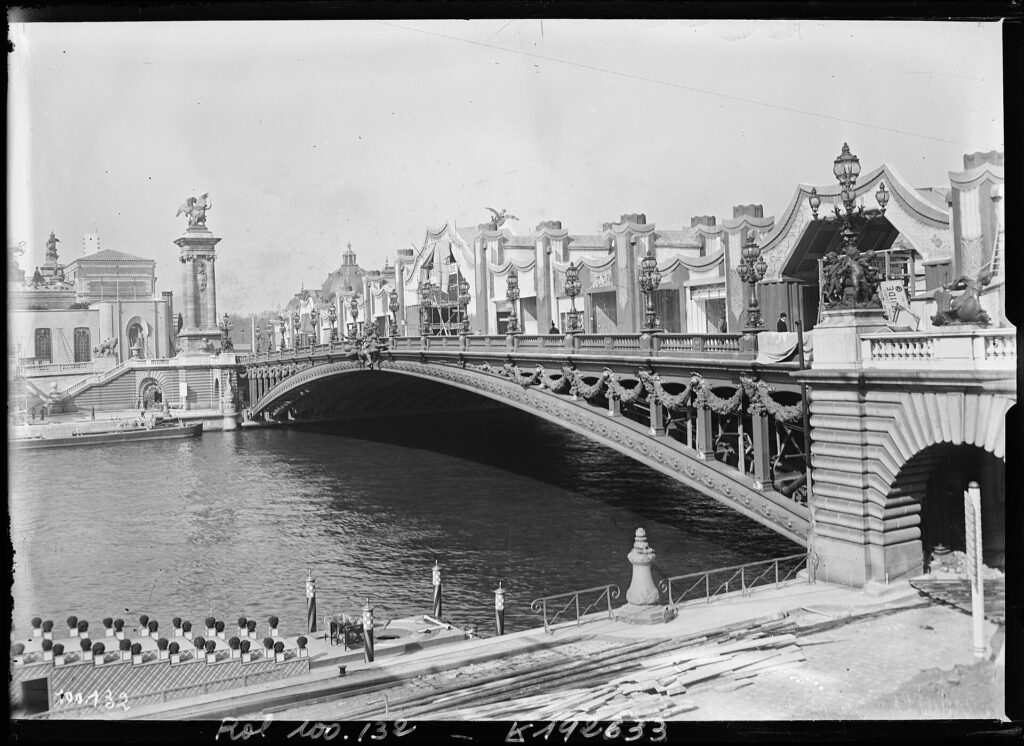

For the Universal Exhibition of 1900, Paris built the Grand Palais, the Petit Palais, the Pont Alexandre III, the Gare d’Orsay and its first metro line. Guimard’s entrances, with lamps like lily stems, made Art Nouveau part of the street. Department stores such as the Galeries Lafayette and La Samaritaine followed with domes and facades of glass, iron and enamel.
After the First World War the mood changed. The International Exhibition of Modern Decorative and Industrial Arts of 1925 filled the banks of the Seine with pavilions of geometric shapes, lacquer, chrome and glass. Decades later its name gave us the term Art Deco, and in 1937 another exhibition left Paris the Palais de Chaillot and the Palais de Tokyo.
Where to stay
- Le Marais: medieval lanes, galleries, cafés and the Place des Vosges, close to everything.
- Saint-Germain-des-Prés and the Latin Quarter: literary cafés, bookshops and the Luxembourg Gardens.
- Opéra and the Grands Boulevards: near the Galeries Lafayette, the Palais Garnier and good transport links.
- Montmartre: village streets below the Sacré-Cœur, with views over the city.
Stays
Compare places to stay in Paris
Opening soon
Art Nouveau and Art Deco Paris
The Guimard metro entrances
Look for the green ironwork and “Métropolitain” lettering at stations such as Porte Dauphine, which keeps one of the original glass-roofed entrances, and Abbesses in Montmartre.
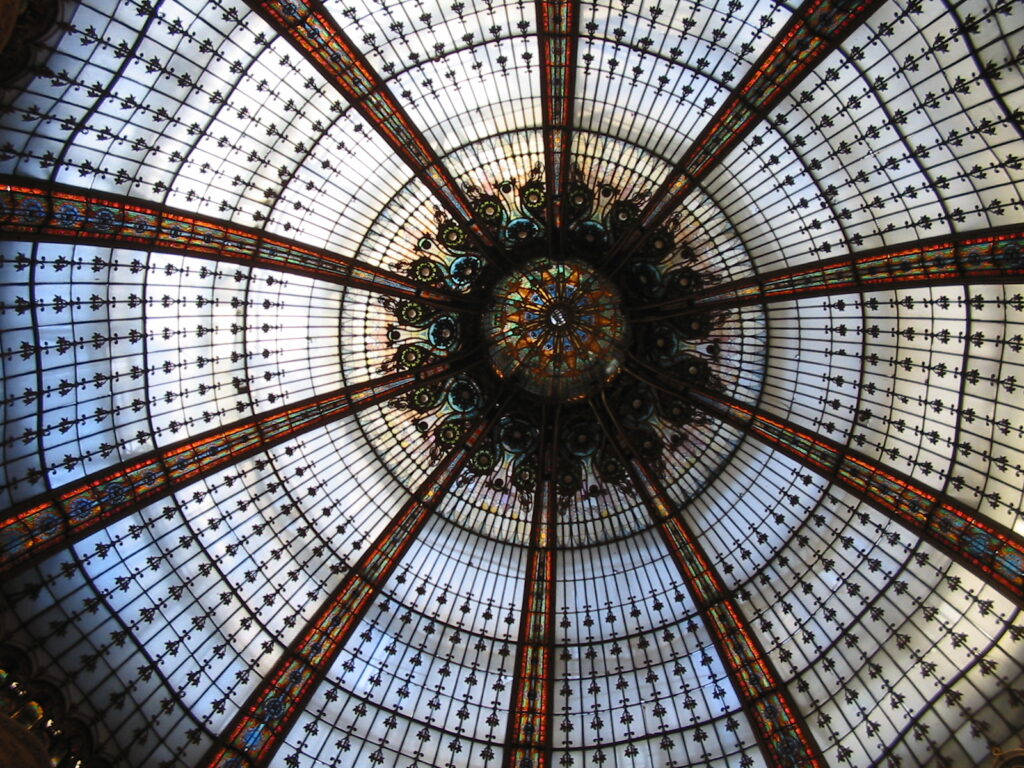

The Galeries Lafayette
The department store on Boulevard Haussmann, with its great stained-glass dome of 1912. Look up from the ground floor, then ride to the rooftop terrace for a free view over the Opéra and the city.
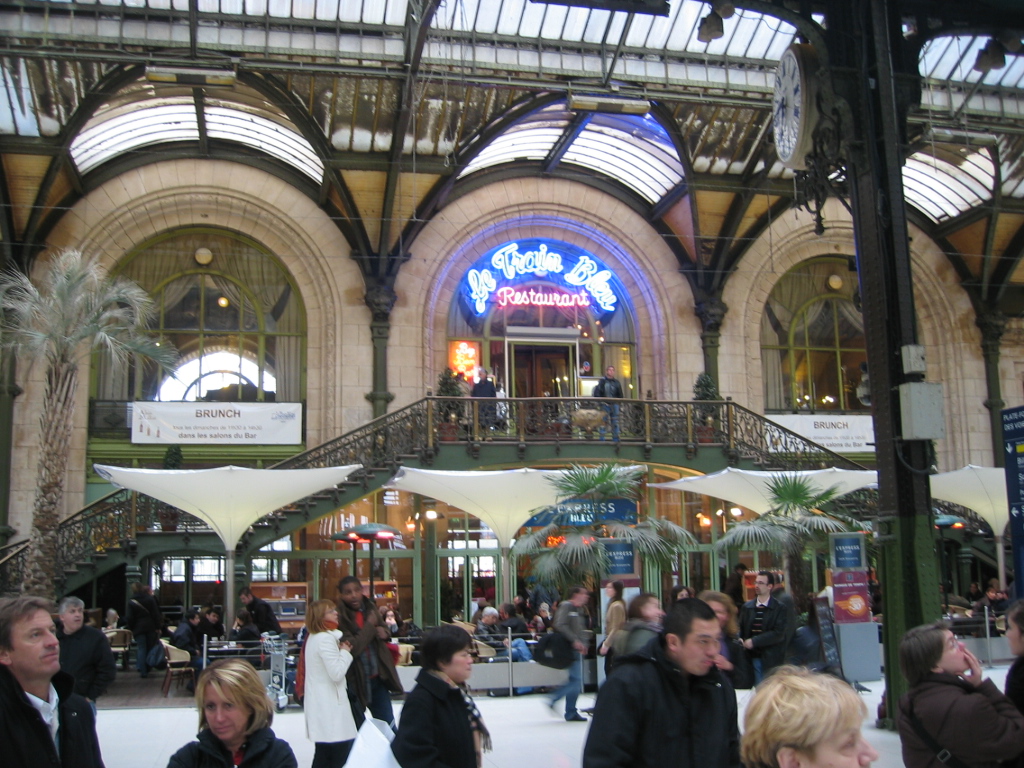

Le Train Bleu
The restaurant at the Gare de Lyon, opened in 1901 and named after the luxury train to the Riviera, with gilded ceilings and paintings of the cities on the line. Book a table, or have a drink in the bar before your train.
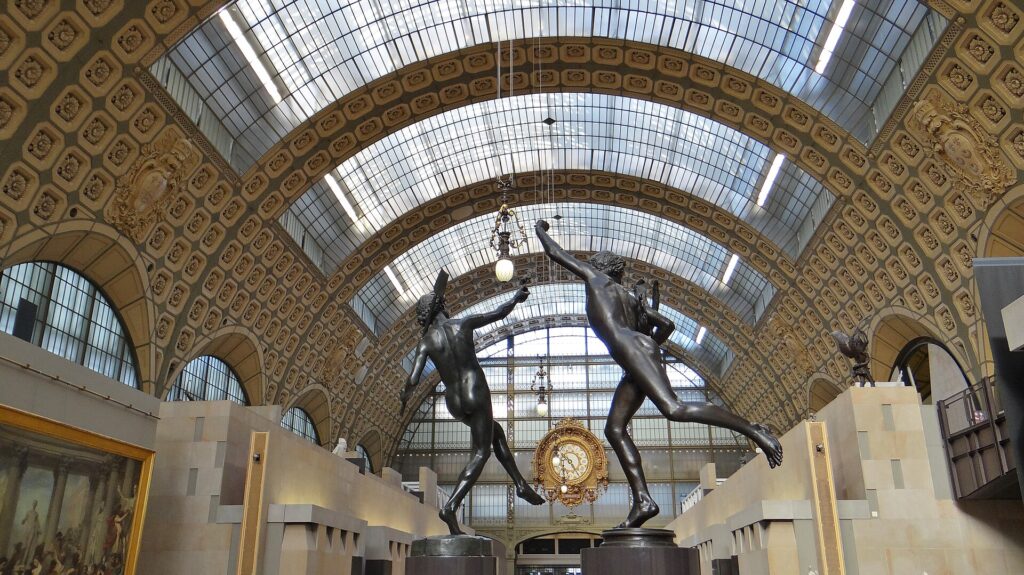

The Musée d’Orsay
The railway station of 1900 is now one of the world’s great museums, with Impressionist paintings and rooms of Art Nouveau furniture and glass. Nearby, the Musée des Arts Décoratifs in the Louvre shows furniture and objects from 1900 to the 1930s.
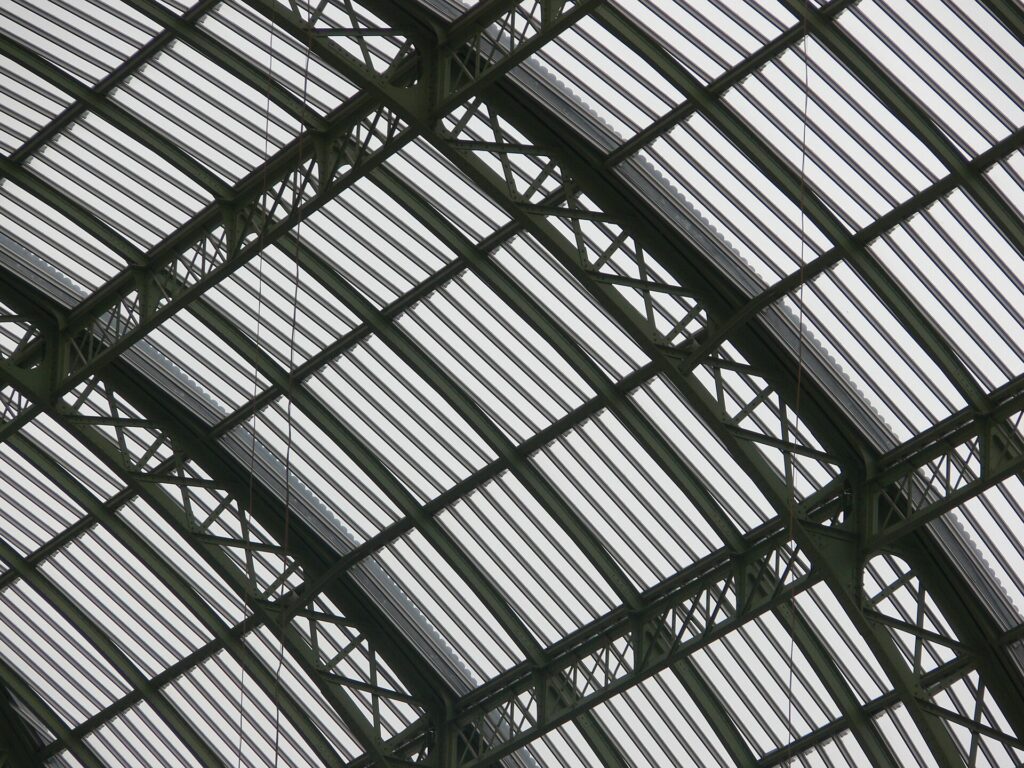

The Grand Palais
Built for the 1900 exhibition, its nave under a vast roof of iron and glass reopened in 2025 after four years of restoration, for exhibitions, fairs and events.
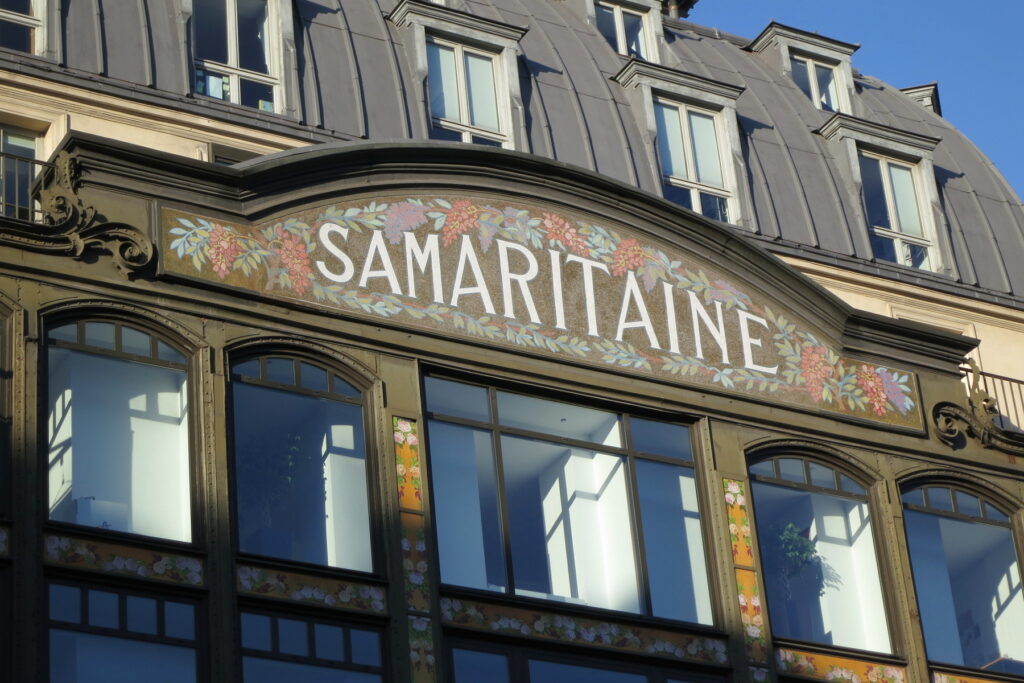

La Samaritaine
The department store by the Pont Neuf, with an Art Nouveau facade, ironwork and painted peacocks from the early 1900s and Art Deco additions of the 1920s. It reopened in 2021 after a long restoration.

The Palais de Chaillot
Built for the 1937 exhibition, with gilded statues and a terrace that frames the best view of the Eiffel Tower. Next door, the Palais de Tokyo of the same year now houses modern art.
Tours and activities
Compare tours and activities in Paris
Opening soon
Getting there and getting around
Arriving
- By air: from Charles de Gaulle, the RER B train runs to Gare du Nord and the centre in about 35 minutes; from Orly, take metro line 14. Buy the special airport ticket for these journeys.
- By train: Eurostar trains from London St Pancras reach Gare du Nord in about two and a half hours, and high-speed trains link Paris with the rest of France and Europe.
Flights
Compare flights to Paris
Opening soon
Around the city
- The metro reaches almost everywhere; one ticket covers the metro, RER and trains within the Paris region, apart from the airports.
- On foot or by bike: the centre is compact, and Vélib’ bikes are available all over the city.
- Car hire is not needed in Paris; it is useful for Normandy, the Loire Valley and Champagne.
Car hire
Compare car hire in France
Opening soon
Staying connected
Visitors with an EU phone plan can roam at home prices. Others, including many UK plans, may pay extra, so an eSIM with a data allowance is a simple alternative.
eSIMs
Compare eSIMs for France
Opening soon
Before you go
- Entry rules: EU and EEA citizens only need a valid ID card or passport. Many other nationalities, including British, American, Canadian and Australian citizens, can visit the Schengen area visa-free for up to 90 days in any 180-day period. At the border, the EU’s Entry/Exit System registers non-EU visitors with fingerprints and a photo. ETIAS, an online travel authorisation, is expected to start in 2027 and is not needed yet. Always check the latest official advice, for example GOV.UK travel advice for France, or your own government’s.
- Tickets: book the big museums and the Eiffel Tower online for a time slot; many museums close one day a week, usually Monday or Tuesday.
- Pickpockets: take care on the metro and around the busiest sights.
- Combine it: Reims, Lille and Nancy are easy day trips or short stays by TGV, and Le Train Bleu once left from the Gare de Lyon for the Riviera.
Travel Emporium compares offers from trusted travel providers. When you book, you book and pay directly with the provider shown. Some links earn us a commission, at no extra cost to you. How we work