
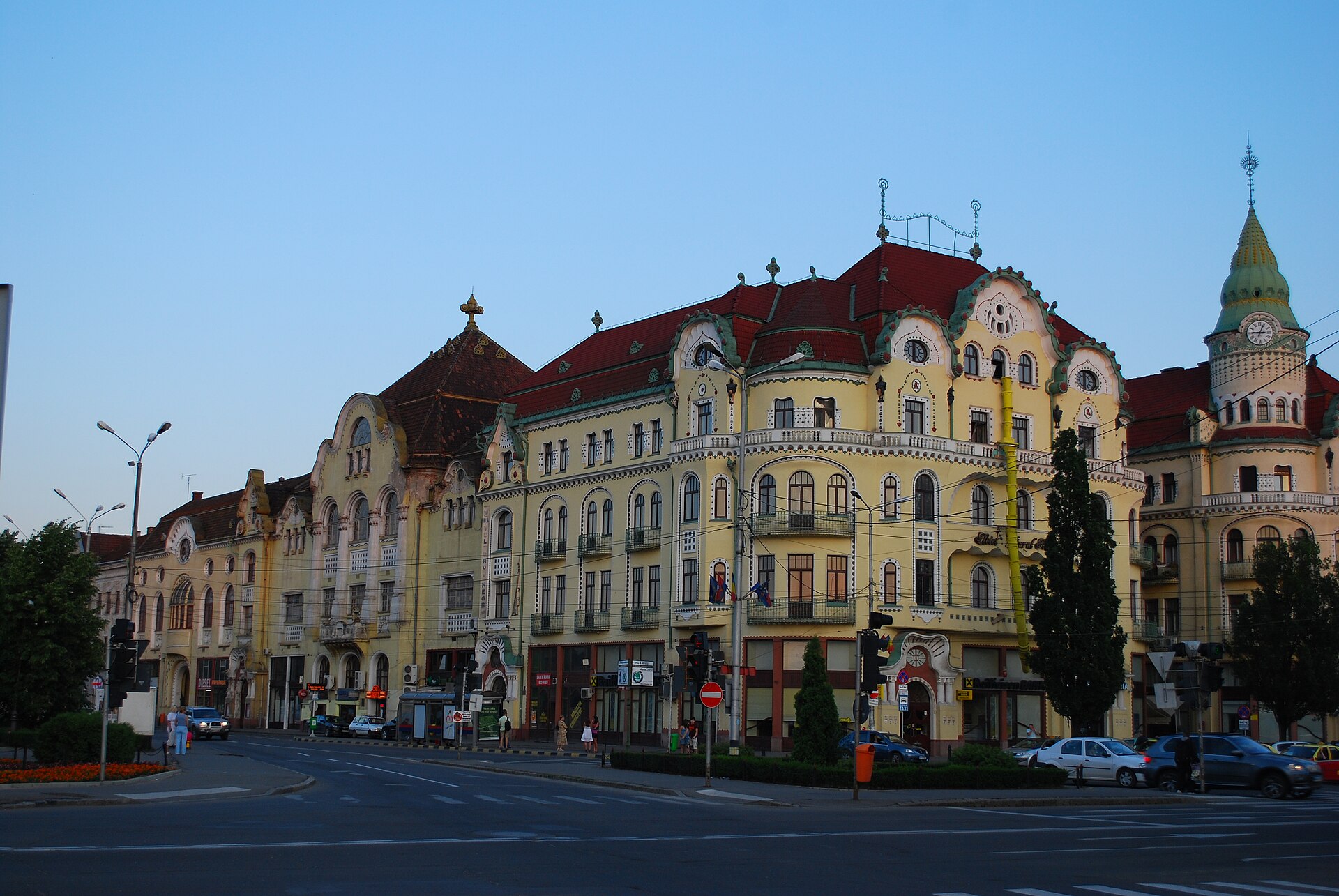

Around 1900 Oradea, then the Hungarian city of Nagyvárad, grew rich on trade and spent its money on palaces, banks and shopping passages in the new Secession style. More than a century later the city has restored them one by one, and today its centre is one of the finest Art Nouveau ensembles in Central Europe, with glass-roofed arcades, coloured facades and a lively café life along the river Crișul Repede. It is easy to reach from Budapest or Cluj-Napoca and still far quieter than either.
Facts checked: November 2026.
Oradea at a glance
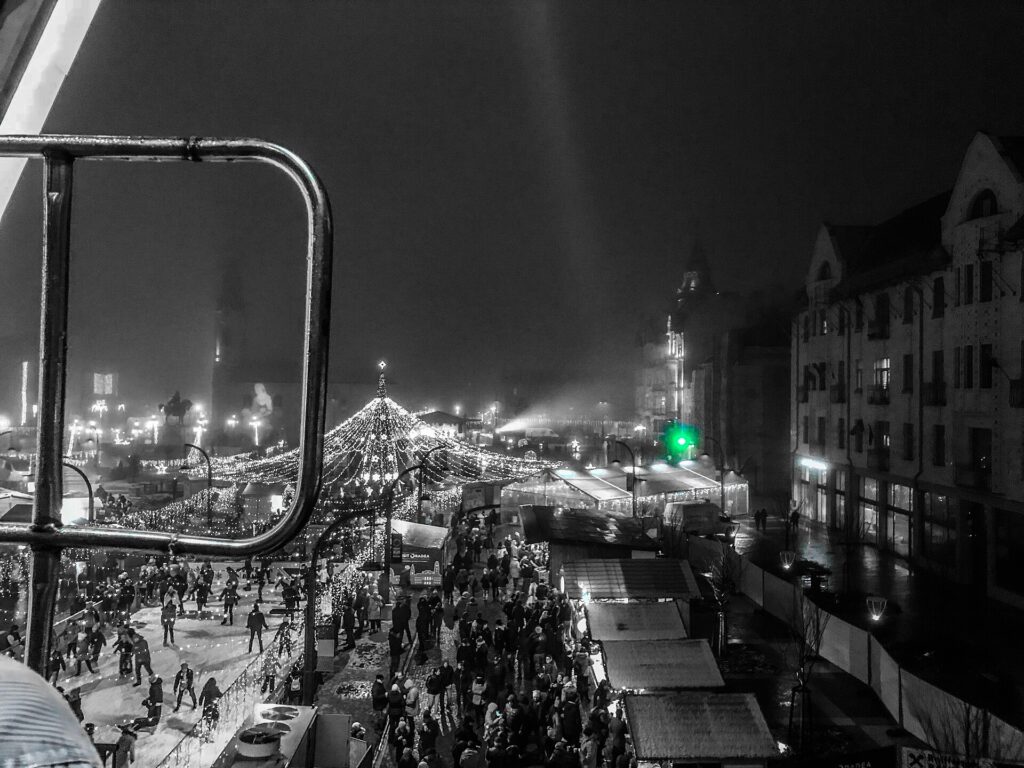
- Best time to go: May to September for café terraces; December for the Christmas market on Union Square.
- How long to stay: two days, or three with a day at the thermal spa of Băile Felix.
- Getting there: direct trains link Oradea with Budapest and Cluj-Napoca; Oradea has a small airport, and Debrecen airport in Hungary is about an hour away by road.
- Money: Romanian leu (RON). Cards are widely accepted.
- Entry: Romania is in the EU and, since 01 January 2025, fully in the Schengen area. Many non-EU visitors, including British, American, Canadian and Australian citizens, can visit visa-free for up to 90 days in any 180-day period. See Before you go below.
Then: Nagyvárad around 1900
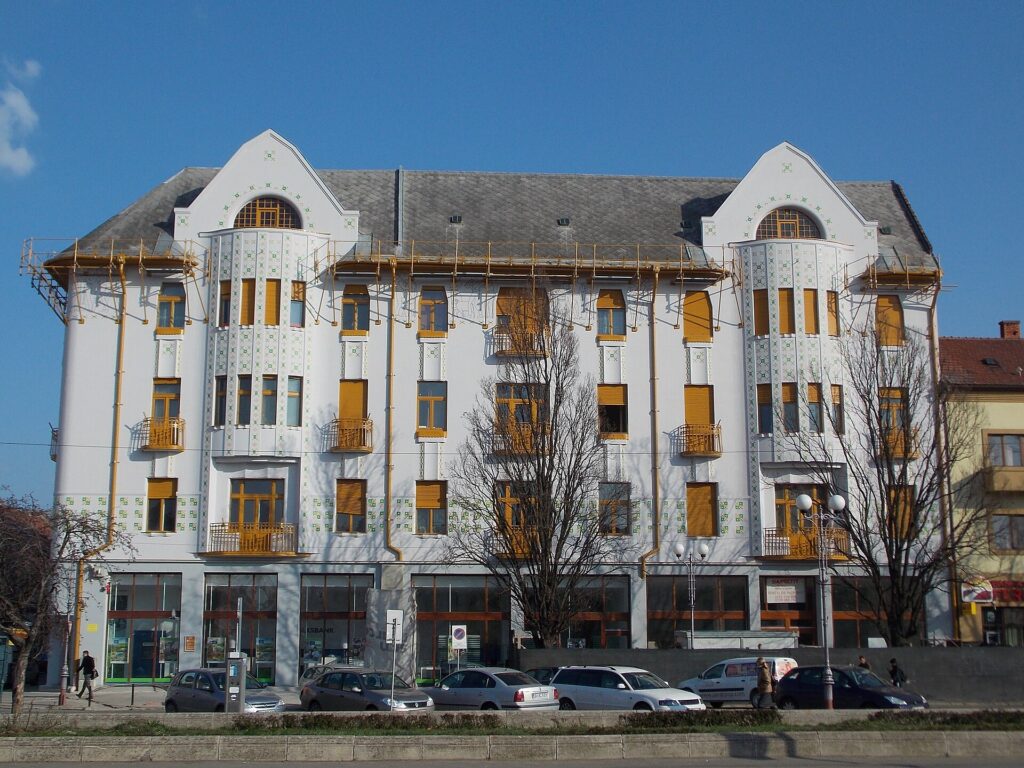

Around 1900 Nagyvárad was a prosperous city of the Kingdom of Hungary, with a large Jewish merchant community, busy newspapers and literary cafés; the poet Endre Ady worked here as a young journalist. Between about 1900 and the First World War its builders and architects, many trained in Budapest, covered the centre in the Hungarian Secession: curving gables, glazed tiles, ironwork and stained glass.
After 1918 the city became part of Romania and took the name Oradea. Much of the old fabric survived the 20th century, and since the 2010s the city has restored street after street, so the Art Nouveau centre looks better now than it has for a hundred years.
Where to stay
- The centre: around Union Square and the pedestrian Republic Street, close to the palaces, cafés and the river.
- Near the fortress: quieter streets a short walk from the centre.
- Băile Felix: the spa resort south-east of the city, for thermal pools and a slower pace.
Stays
Compare places to stay in Oradea
Opening soon
Art Nouveau and heritage Oradea
The Black Eagle Palace
The Vulturul Negru, built in 1907 and 1908 by Marcell Komor and Dezső Jakab, the architects of the City Hall in Subotica. Walk through its glass-roofed arcade, which links three streets beneath a stained-glass eagle, and stop for coffee under the roof.

Union Square
The great square on the river, framed by Secession palaces and the City Hall. You can climb the City Hall tower for a view over the rooftops; check the opening times locally.

The Moon Church
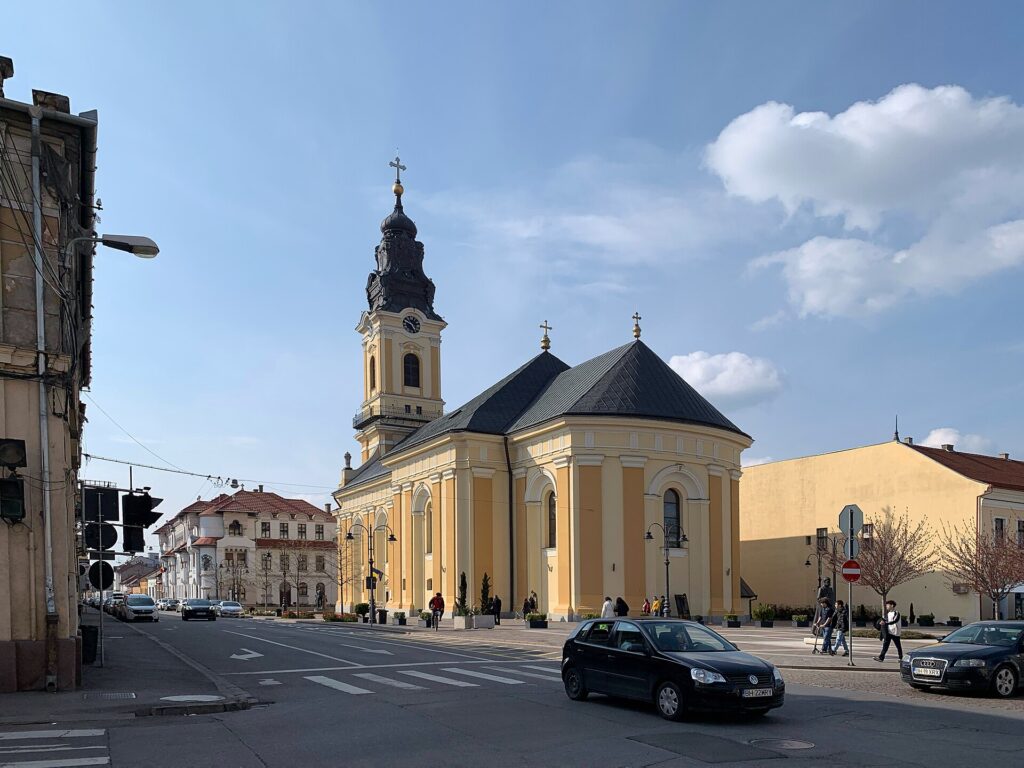
The Orthodox church of the 1780s on Union Square, whose clock shows the phases of the moon with a turning sphere: much older than the palaces around it, and a favourite landmark.
The Darvas-La Roche House
A town house of around 1910, now a museum of Art Nouveau with restored rooms, furniture and glass. It is the best place to see how a well-to-do family of Nagyvárad lived before the First World War.
Republic Street and the fortress
The pedestrian Strada Republicii is lined with Secession houses, shops and cafés. At its end, cross to the star-shaped Oradea Fortress, restored with museums, exhibitions and summer events.
Tours and activities
Compare tours and activities in Oradea
Opening soon
Getting there and getting around
Arriving
- By train: direct trains run from Budapest and from Cluj-Napoca to Oradea station, north of the centre.
- By air: Oradea airport has a small number of routes; Debrecen in Hungary and Cluj-Napoca have more. For more choice, fly to Budapest and continue by train; see our Budapest guide.
Flights
Compare flights to Oradea and Budapest
Opening soon
Around the city
- On foot for the centre, and by tram for the station and the outer districts.
- Car hire is not needed in the city; it is useful for Băile Felix and the Apuseni mountains.
Car hire
Compare car hire in Romania
Opening soon
Staying connected
Visitors with an EU phone plan can roam at home prices. Others, including many UK plans, may pay extra, so an eSIM with a data allowance is a simple alternative.
eSIMs
Compare eSIMs for Romania
Opening soon
Before you go
- Entry rules: EU and EEA citizens only need a valid ID card or passport. Many other nationalities, including British, American, Canadian and Australian citizens, can visit the Schengen area visa-free for up to 90 days in any 180-day period. At the border, the EU’s Entry/Exit System registers non-EU visitors with fingerprints and a photo. ETIAS, an online travel authorisation, is expected to start in 2027 and is not needed yet. Always check the latest official advice, for example GOV.UK travel advice for Romania, or your own government’s.
- Make it a journey: combine this city with its neighbours on our Hungarian Art Nouveau by train route.
- Opening days: many museums close on Mondays; check before you go.
- Combine it: Oradea pairs well with Budapest, and with Szeged for more Hungarian Art Nouveau.
Travel Emporium compares offers from trusted travel providers. When you book, you book and pay directly with the provider shown. Some links earn us a commission, at no extra cost to you. How we work