
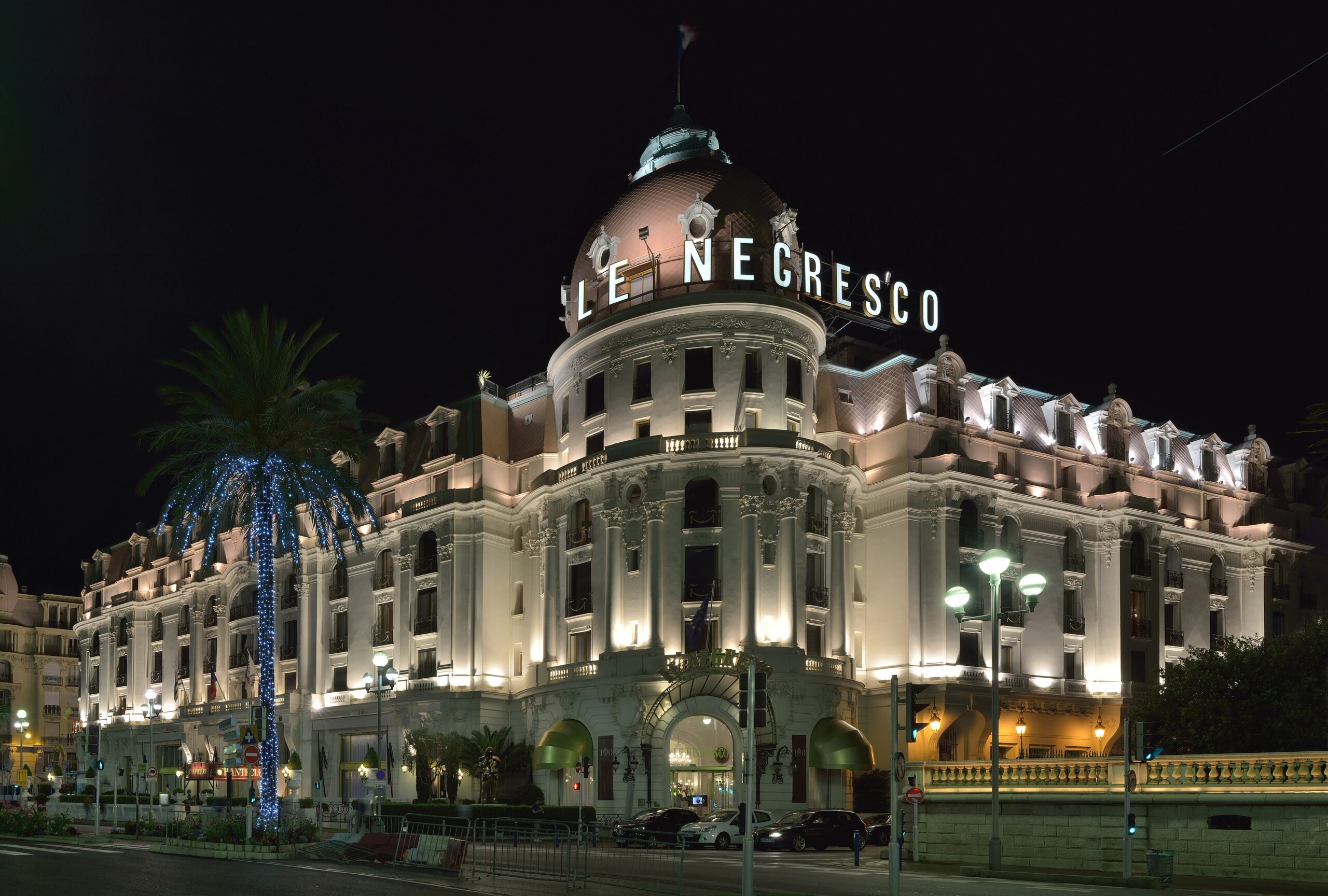

Nice is the capital of the French Riviera, between the Alps and the Mediterranean. From the 1860s British, Russian and European visitors came for its mild winters, and the town filled with palace hotels, villas and a promenade along the bay. The domed Hotel Negresco of 1913, Queen Victoria’s Excelsior Régina and the Art Deco front of the Palais de la Méditerranée still line its streets, and since 2021 Nice has been on the UNESCO World Heritage list as a winter resort town of the Riviera.
Facts checked: November 2026.
Nice at a glance
- Best time to go: April to June and September to October; July and August are hot and busy; winters are mild.
- How long to stay: three or four days, with trips along the coast.
- Getting there: Nice Côte d’Azur airport is a short tram ride from the centre; TGV trains from Paris take about six hours.
- Money: euro (EUR). Cards are accepted almost everywhere.
- Entry: France is in the EU and the Schengen area. Many non-EU visitors, including British, American, Canadian and Australian citizens, can visit visa-free for up to 90 days in any 180-day period. See Before you go below.
Then: the winter capital of Europe
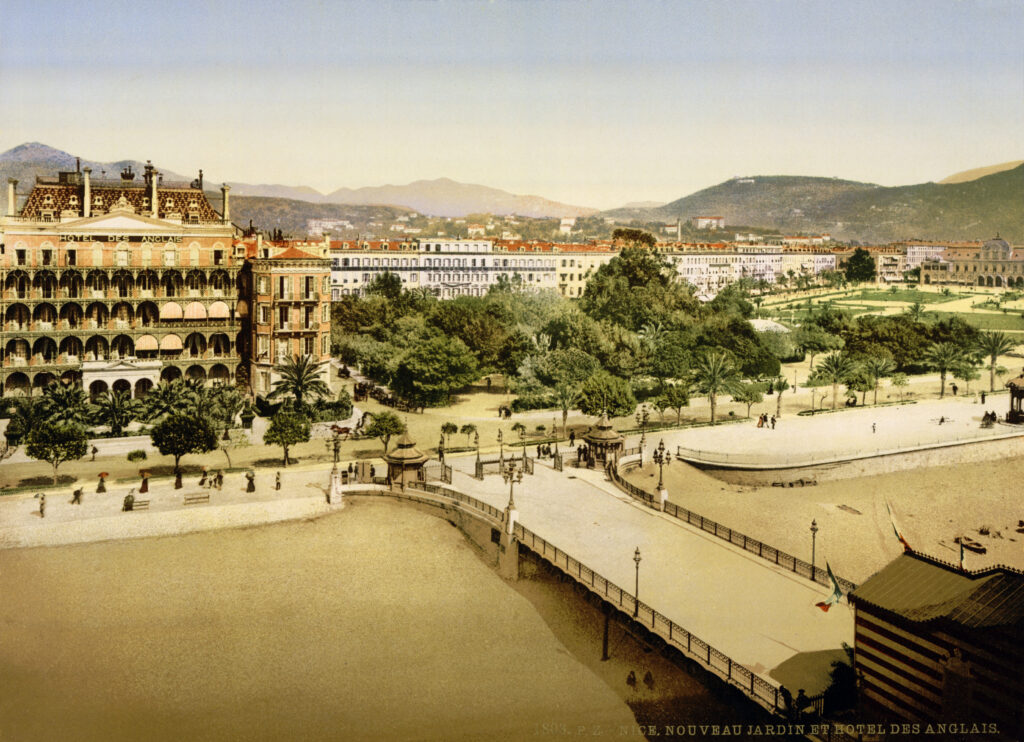

In the 19th century Nice became the winter home of Europe’s wealthy. The Promenade des Anglais, first laid out by the English colony, grew into a boulevard of hotels and villas along the Baie des Anges, and Queen Victoria spent several winters in the Excelsior Régina on the hill of Cimiez at the end of the 1890s.
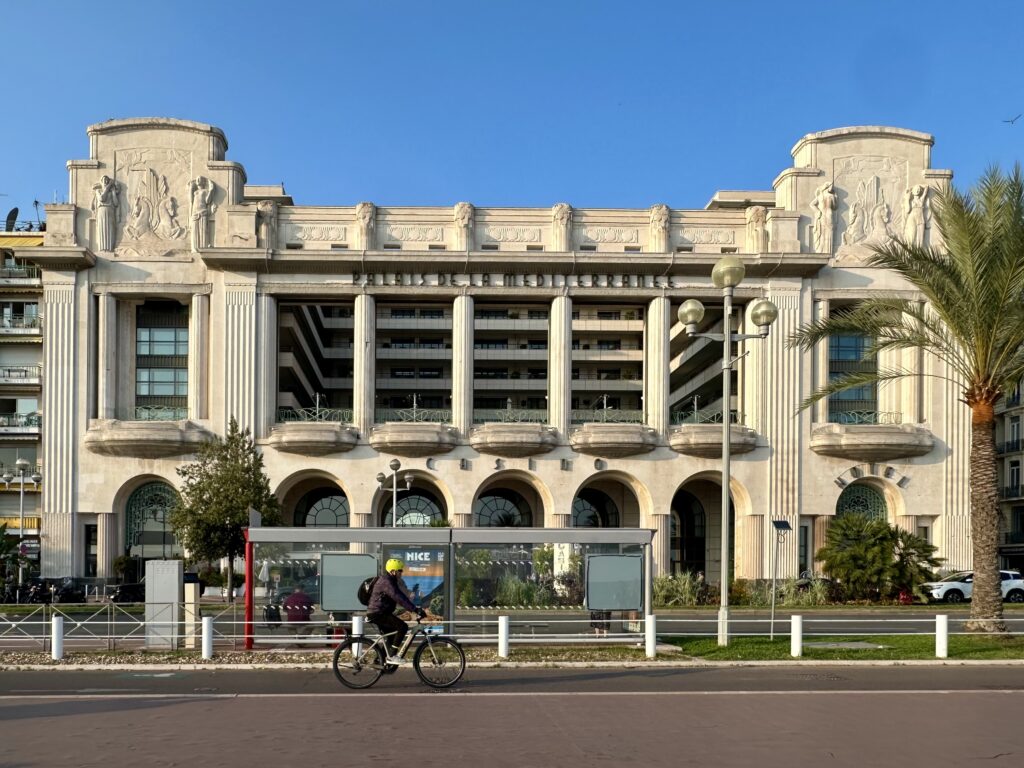
In 1913 the Romanian-born hotelier Henri Negresco opened his palace hotel on the promenade, designed by Édouard Niermans under a pink dome. Between the wars the Riviera turned to summer and to Art Deco: the Palais de la Méditerranée casino opened on the promenade in 1929, and its white facade still stands.
Where to stay
- The Promenade des Anglais: palace hotels and sea views along the bay.
- The Carré d’Or and Jean Médecin: central streets between the station, the shops and the sea.
- Old Nice: narrow streets, markets and restaurants below the castle hill.
- Cimiez: quiet Belle Époque villas and palaces on the hill.
Stays
Compare places to stay in Nice
Opening soon
Belle Époque and Art Deco Nice
The Hotel Negresco
See the domed palace of 1913 on the Promenade des Anglais, a historic monument that is still a hotel.

The Palais de la Méditerranée
Admire the Art Deco facade of the casino of 1929, kept when the building behind it was rebuilt as a hotel.
Cimiez and the Régina
Walk up to the Excelsior Régina built for Queen Victoria’s visits, where Henri Matisse later lived and worked, and visit the Musée Matisse nearby.
The Russian Cathedral
See the onion domes of the Russian Orthodox Cathedral of Saint Nicholas, consecrated in 1912 for the Russian winter visitors.
Tours and activities
Compare tours and activities in Nice
Opening soon
Getting there and getting around
Arriving
- By air: Nice Côte d’Azur airport has flights across Europe; tram line 2 runs to the centre.
- By train: TGV trains from Paris in about six hours, and regional trains along the coast from Cannes, Monaco and Menton.
Flights
Compare flights to Nice
Opening soon
Around the city
- On foot and by tram: the centre, the old town and the promenade are walkable, and two tram lines cross the city.
- By train or bus along the coast to Villefranche, Monaco and Menton.
- Car hire is useful for the hill villages and the Corniche roads.
Car hire
Compare car hire in France
Opening soon
Staying connected
Visitors with an EU phone plan can roam at home prices. Others, including many UK plans, may pay extra, so an eSIM with a data allowance is a simple alternative.
eSIMs
Compare eSIMs for France
Opening soon
Before you go
- Entry rules: EU and EEA citizens only need a valid ID card or passport. Many other nationalities, including British, American, Canadian and Australian citizens, can visit the Schengen area visa-free for up to 90 days in any 180-day period. At the border, the EU’s Entry/Exit System registers non-EU visitors with fingerprints and a photo. ETIAS, an online travel authorisation, is expected to start in 2027 and is not needed yet. Always check the latest official advice, for example GOV.UK travel advice for France, or your own government’s.
- Beaches: most of the beach in Nice is pebbles, so beach shoes are useful.
- Combine it: our Le Train Bleu journey follows the old sleeper from Paris to the Riviera, and for another Belle Époque riviera, see Opatija.
Travel Emporium compares offers from trusted travel providers. When you book, you book and pay directly with the provider shown. Some links earn us a commission, at no extra cost to you. How we work