

Around 1900 Bucharest was nicknamed Little Paris, for its boulevards, its domed banks and palaces and its café life. Between the two world wars it added a second layer: Art Deco and modernist blocks along the new boulevards, a telephone palace that was the city’s first tall building, and a triumphal arch in stone. Much was lost later, but enough survives to make a walk through the centre a lesson in style, with good food, parks and low prices on the side.
Facts checked: November 2026.
Bucharest at a glance
- Best time to go: May, June, September and October. Summers are hot and winters can be cold and snowy.
- How long to stay: two or three days, with a day trip into the Carpathians.
- Getting there: direct flights from many European cities to Henri Coandă airport (OTP), north of the city.
- Money: Romanian leu (RON). Cards are accepted almost everywhere; keep some cash for markets.
- Entry: Romania is in the EU and, since 01 January 2025, fully in the Schengen area. Many non-EU visitors, including British, American, Canadian and Australian citizens, can visit visa-free for up to 90 days in any 180-day period. See Before you go below.
Then: Bucharest around 1900
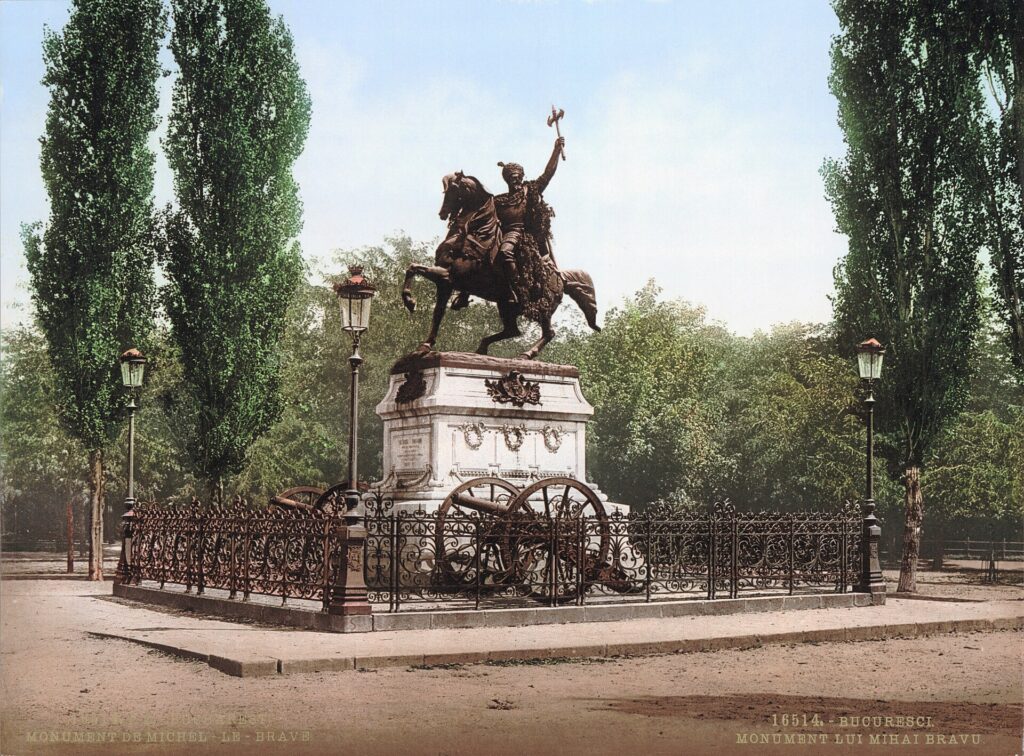

In the late 19th century the young Romanian state wanted a capital to match the great cities of the West. Its architects had often trained in Paris, and French architects worked here too, so banks, ministries and a concert hall rose in the Beaux-Arts style of the day along Calea Victoriei, the city’s grandest street.
After the First World War Romania doubled in size, and Bucharest grew again. In the 1930s new boulevards were lined with modern apartment blocks, cinemas and offices, many of them in Art Deco and early modernist styles, and the telephone palace of 1933 rose above them all.
Where to stay
- The old town: the streets around Lipscani, full of bars, restaurants and restored merchants’ houses; lively and sometimes noisy at night.
- Calea Victoriei and Piața Romană: central, between the old town and the parks, close to the Athenaeum and the interwar boulevards.
- Dorobanți and Primăverii: leafy northern districts near the big parks, with villas from the interwar years.
Stays
Compare places to stay in Bucharest
Opening soon
Belle Époque and Art Deco Bucharest
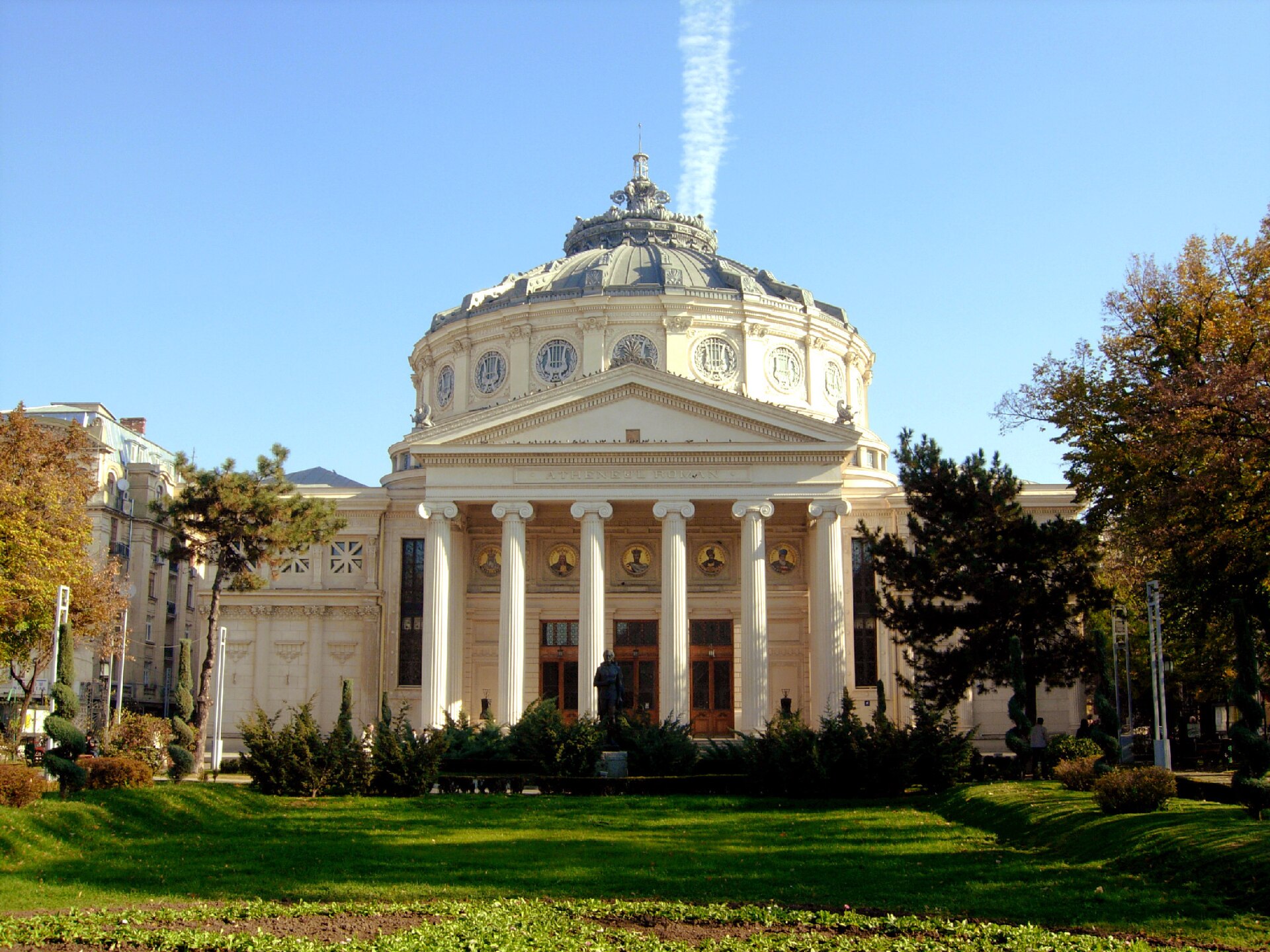
The Romanian Athenaeum
The domed concert hall of 1888 by the French architect Albert Galleron, home of the George Enescu Philharmonic. Inside, a painted frieze tells the history of Romania; the best way to see it is to go to a concert.
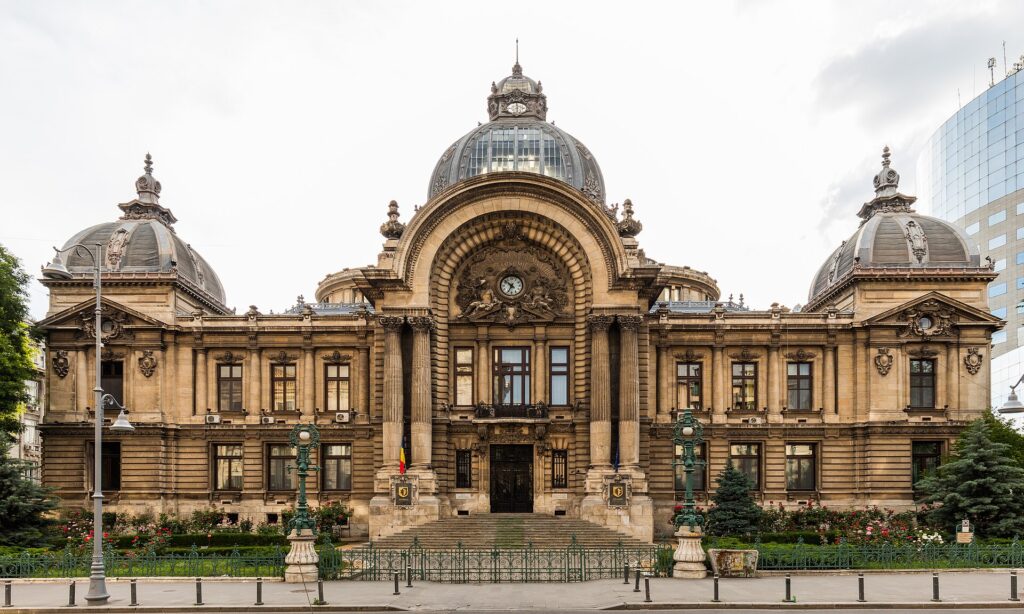

The CEC Palace
The savings bank of 1900 by Paul Gottereau, with a glass and metal dome over its central hall, on Calea Victoriei. It is one of the symbols of Little Paris.
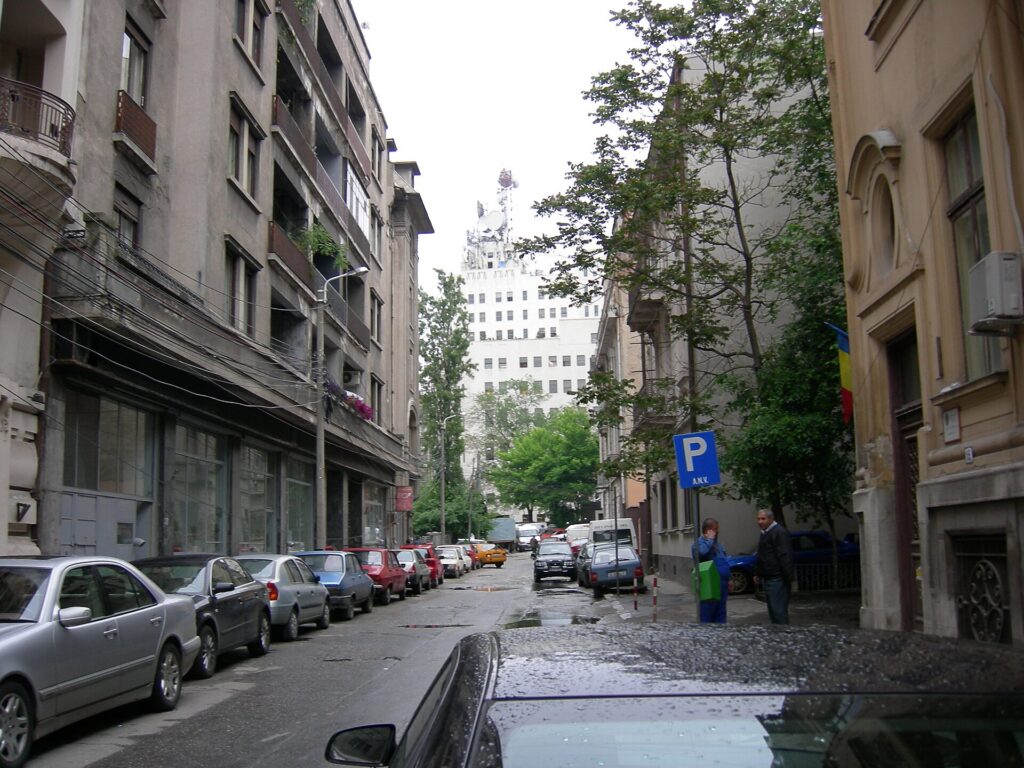

The Palatul Telefoanelor
The telephone palace of 1931 to 1933, a tower of Art Deco and modernist lines on Calea Victoriei, and for many years the tallest building in the city. From here, walk to the Magheru and Bălcescu boulevards for the apartment blocks and cinemas of the 1930s.
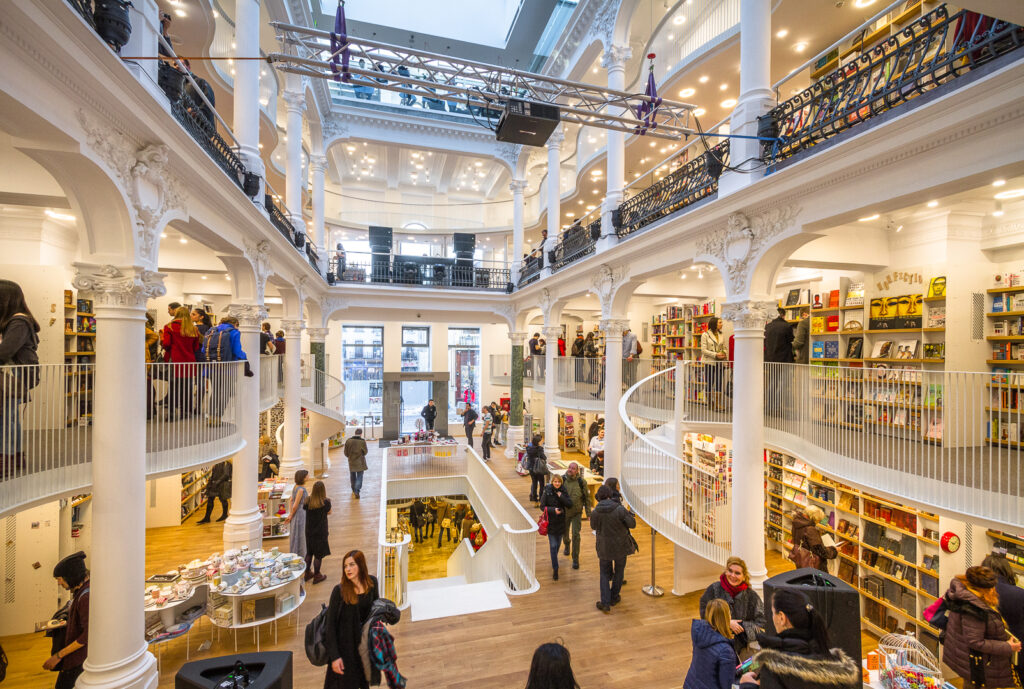

The old town and Cărturești Carusel
A bookshop in a restored 19th-century building in the old town, with white galleries rising around a light-filled hall. Nearby are the Stavropoleos church and the old inns of the merchants’ quarter.
The Arch of Triumph and the parks
Bucharest’s own Arc de Triomphe, rebuilt in stone in 1936, stands at the start of the parks in the north of the city. Nearby, the open-air Village Museum, founded in 1936, brings together old houses, churches and windmills from all over Romania.
Tours and activities
Compare tours and activities in Bucharest
Opening soon
Getting there and getting around
Arriving
- By air: Henri Coandă airport (OTP) is about 17 kilometres north of the centre. A train runs from the airport to the main station, Gara de Nord, and an express bus runs into the centre.
- By train: international and overnight trains arrive at Gara de Nord.
Flights
Compare flights to Bucharest
Opening soon
Around the city
- On foot for the old town and Calea Victoriei, and by metro for longer trips; ride-hailing apps are widely used.
- Car hire is not needed in the city, where traffic is heavy; it is useful for the Carpathian mountains, Peleș Castle in Sinaia and Transylvania.
Car hire
Compare car hire in Romania
Opening soon
Staying connected
Visitors with an EU phone plan can roam at home prices. Others, including many UK plans, may pay extra, so an eSIM with a data allowance is a simple alternative.
eSIMs
Compare eSIMs for Romania
Opening soon
Before you go
- Entry rules: EU and EEA citizens only need a valid ID card or passport. Many other nationalities, including British, American, Canadian and Australian citizens, can visit the Schengen area visa-free for up to 90 days in any 180-day period. At the border, the EU’s Entry/Exit System registers non-EU visitors with fingerprints and a photo. ETIAS, an online travel authorisation, is expected to start in 2027 and is not needed yet. Always check the latest official advice, for example GOV.UK travel advice for Romania, or your own government’s.
- Taxis: use a ride-hailing app or an official taxi rank, and avoid drivers who approach you at the airport or the station.
- Opening days: many museums close on Mondays, and some also on Tuesdays.
- Combine it: for Romanian Art Nouveau, see our Oradea guide; Budapest and Istanbul were the next stops of the Orient Express.
Travel Emporium compares offers from trusted travel providers. When you book, you book and pay directly with the provider shown. Some links earn us a commission, at no extra cost to you. How we work