
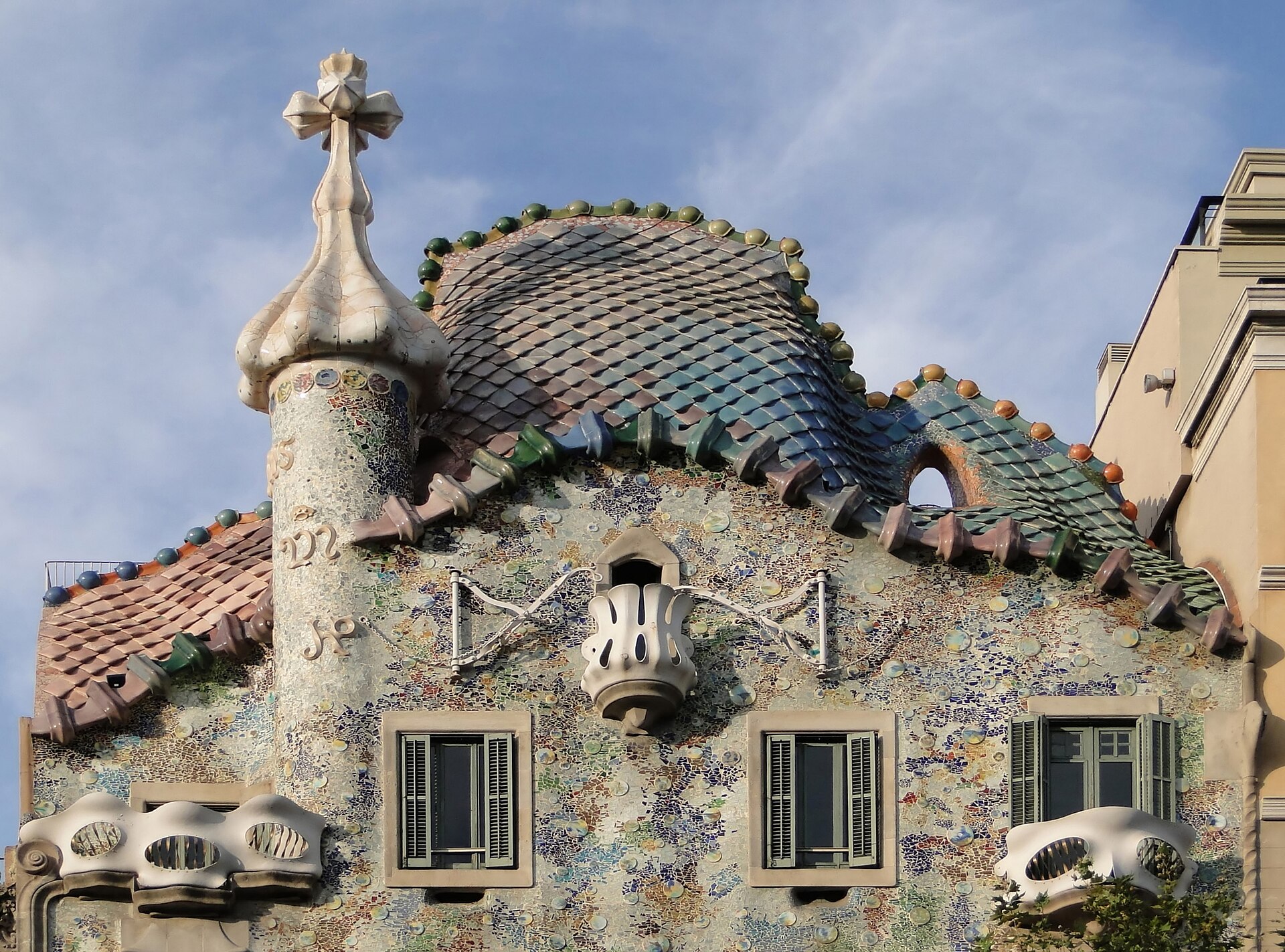

Around 1900 Barcelona was growing fast, rich from industry and proud of its Catalan culture, and its architects answered with Modernisme, the Catalan form of Art Nouveau. Antoni Gaudí, Lluís Domènech i Montaner and Josep Puig i Cadafalch filled the new Eixample district with houses of mosaic, wrought iron and stained glass. Add the Gothic Quarter, the beaches and the food, and Barcelona is one of the great city breaks of Europe.
Facts checked: November 2026.
Barcelona at a glance
- Best time to go: May to June and September to October; July and August are hot and very busy.
- How long to stay: three to four days, plus a day trip to Montserrat, Girona or the Costa Brava.
- Airport: Barcelona-El Prat (BCN), about 15 kilometres south-west of the centre.
- Money: euro (EUR). Cards are accepted almost everywhere. The city tourist tax, added to hotel bills, was doubled in 2026.
- Entry: Spain is in the EU and the Schengen area. Many non-EU visitors, including British, American, Canadian and Australian citizens, can visit visa-free for up to 90 days in any 180-day period. See Before you go below.
Then: Barcelona around 1900
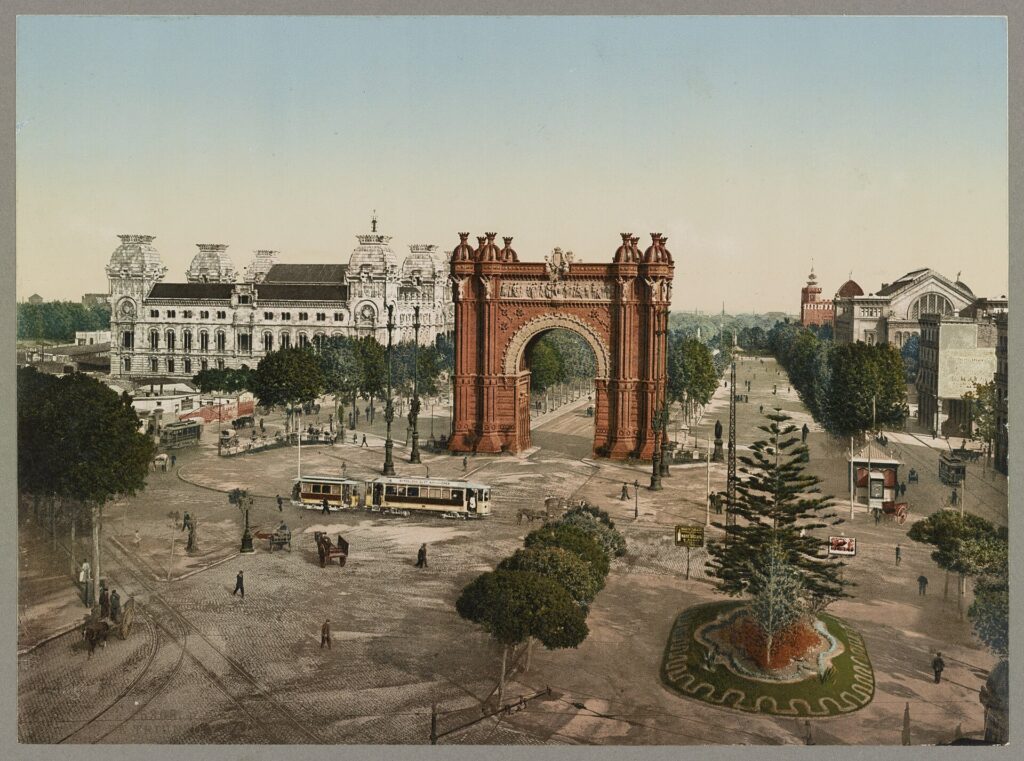

In 1888 Barcelona held a Universal Exhibition, entered through the brick Arc de Triomf, and announced itself as a modern city. The old walls had come down, and the grid of the Eixample was spreading across the plain towards the hills. Its new bourgeois families competed to build the most daring houses.
Modernisme took ideas from Gothic, Moorish and natural forms and joined them to Catalan crafts: tiles, mosaic, ironwork and glass. Its greatest figure, Gaudí, began work on the Sagrada Família in 1883 and gave the rest of his life to it until his death in 1926. A hundred years later, in 2026, the central tower of the basilica was completed.
Where to stay
- The Eixample: elegant streets around Passeig de Gràcia, in the middle of the Modernisme city.
- The Gothic Quarter and El Born: medieval lanes, squares and tapas bars, close to everything; lively at night.
- Gràcia: a former village with small squares, cafés and Park Güell up the hill.
- Barceloneta and Poblenou: by the sea, with beaches and seafood restaurants.
Stays
Compare places to stay in Barcelona
Opening soon
Modernisme Barcelona
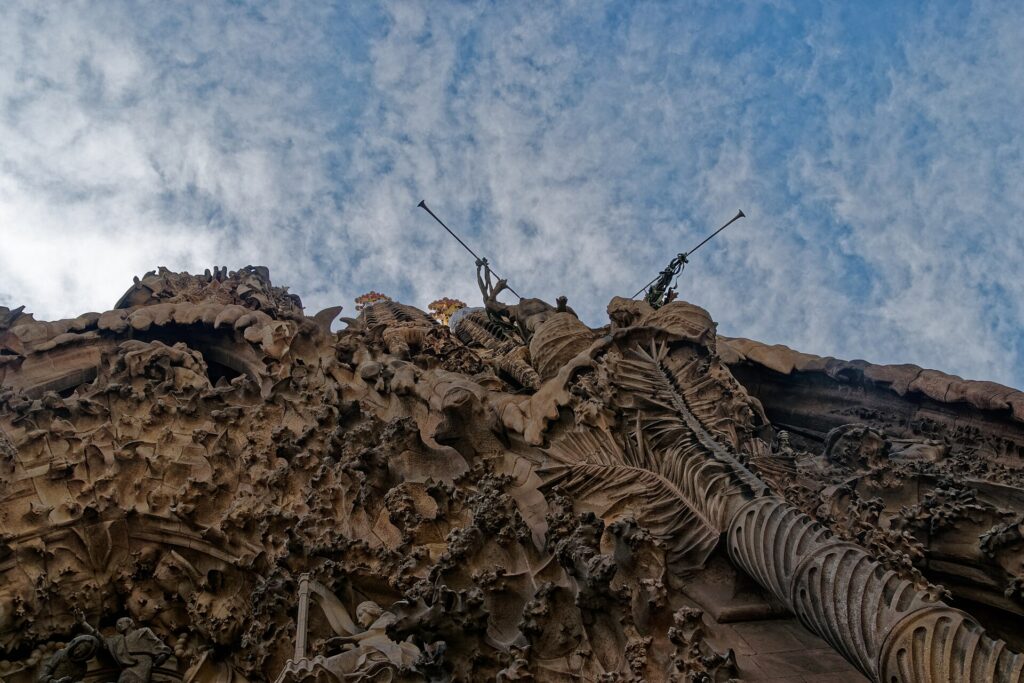

The Sagrada Família
Gaudí’s basilica, still being built after more than 140 years. With the Tower of Jesus Christ completed in 2026 at 172.5 metres, it is now the tallest church in the world. Book a timed ticket well ahead, and go inside to see the forest of columns lit by stained glass.
Casa Batlló and the Block of Discord
On Passeig de Gràcia, Gaudí’s Casa Batlló, remodelled between 1904 and 1906, has a facade of bones, scales and coloured glass. Next door stand Casa Amatller by Puig i Cadafalch and Casa Lleó Morera by Domènech i Montaner: three masters on a single block.
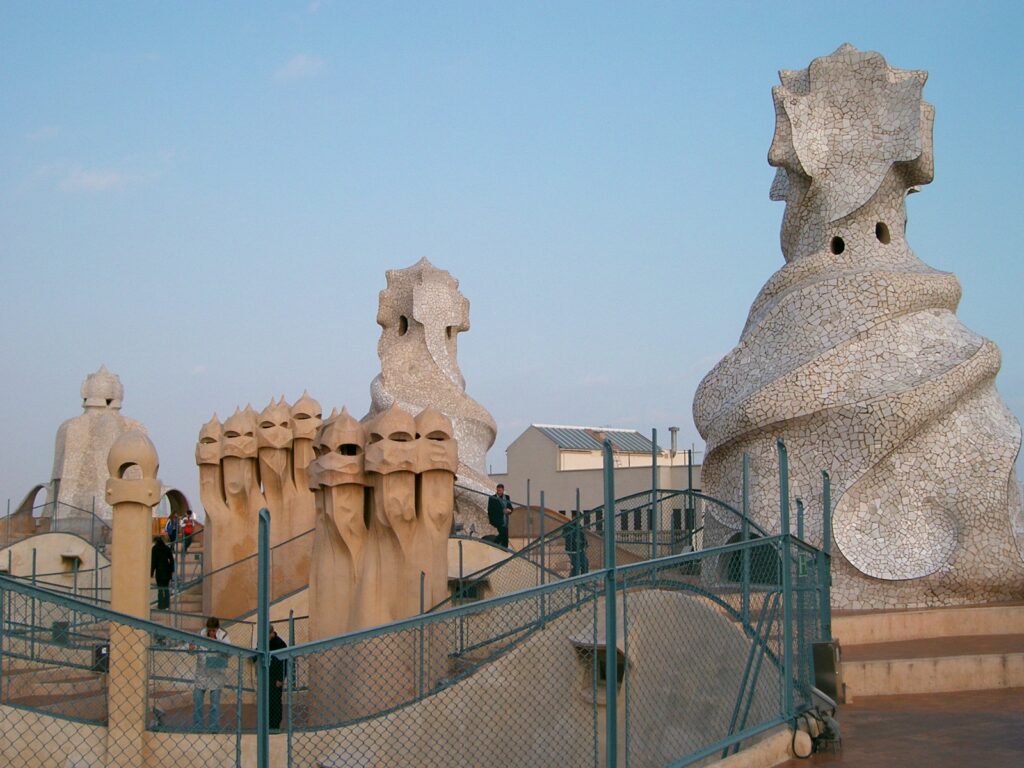

Casa Milà, La Pedrera
Gaudí’s wave-fronted apartment house of 1906 to 1912, further up the same avenue. The highlight is the roof, with its chimneys like helmeted warriors.
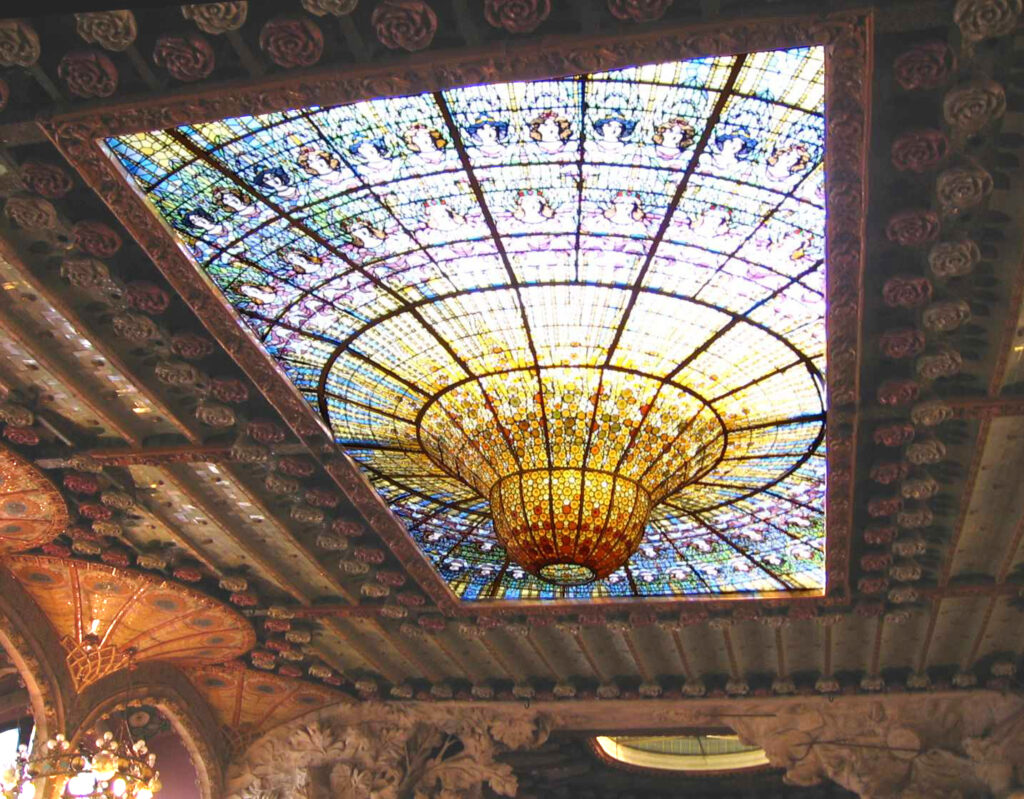

The Palau de la Música Catalana
Domènech i Montaner’s concert hall of 1905 to 1908, a UNESCO World Heritage Site, with a great skylight of stained glass. Take a guided tour, or better, book a concert.
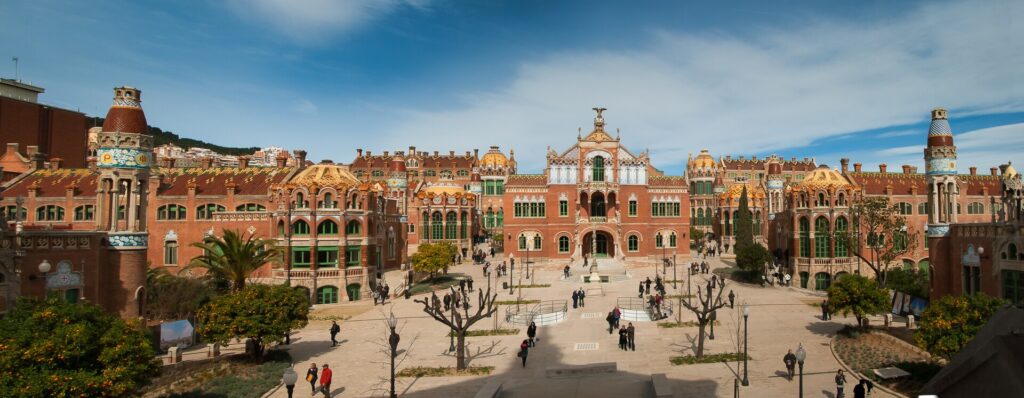

The Hospital de Sant Pau
A garden city of pavilions with tiled domes, built by Domènech i Montaner from 1902 to 1930. It worked as a hospital until 2009 and is now open to visitors.
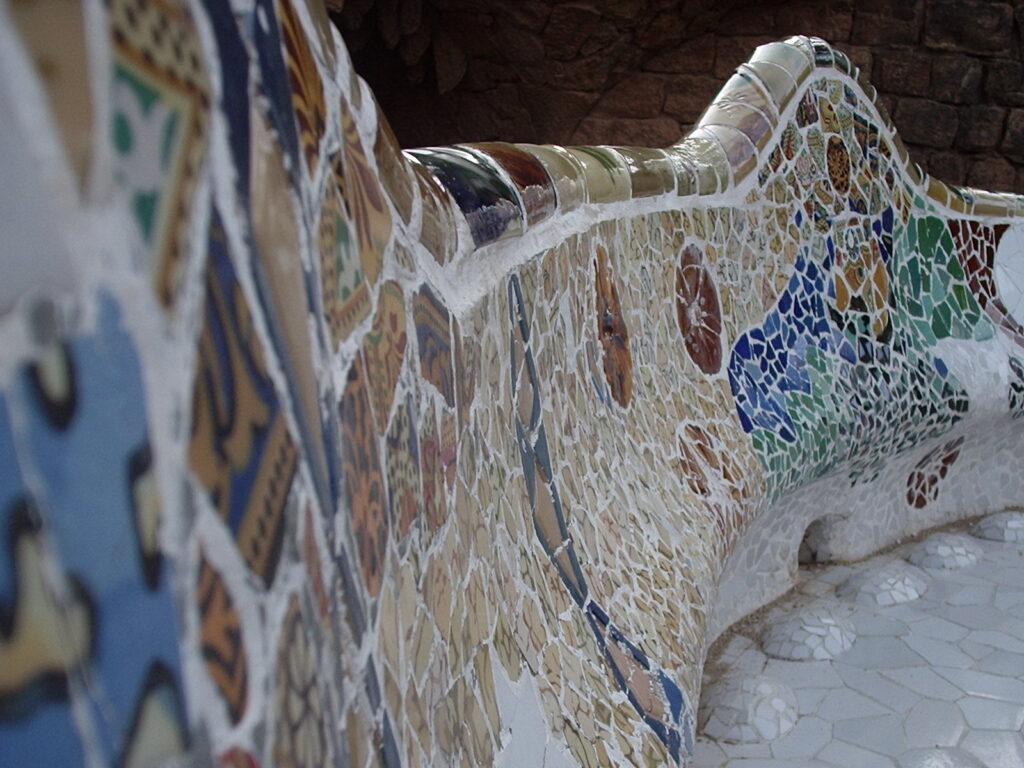

Park Güell
Gaudí’s hillside park of 1900 to 1914, with the long mosaic bench, the dragon on the steps and views over the city. Entry to the monumental area is by timed ticket.
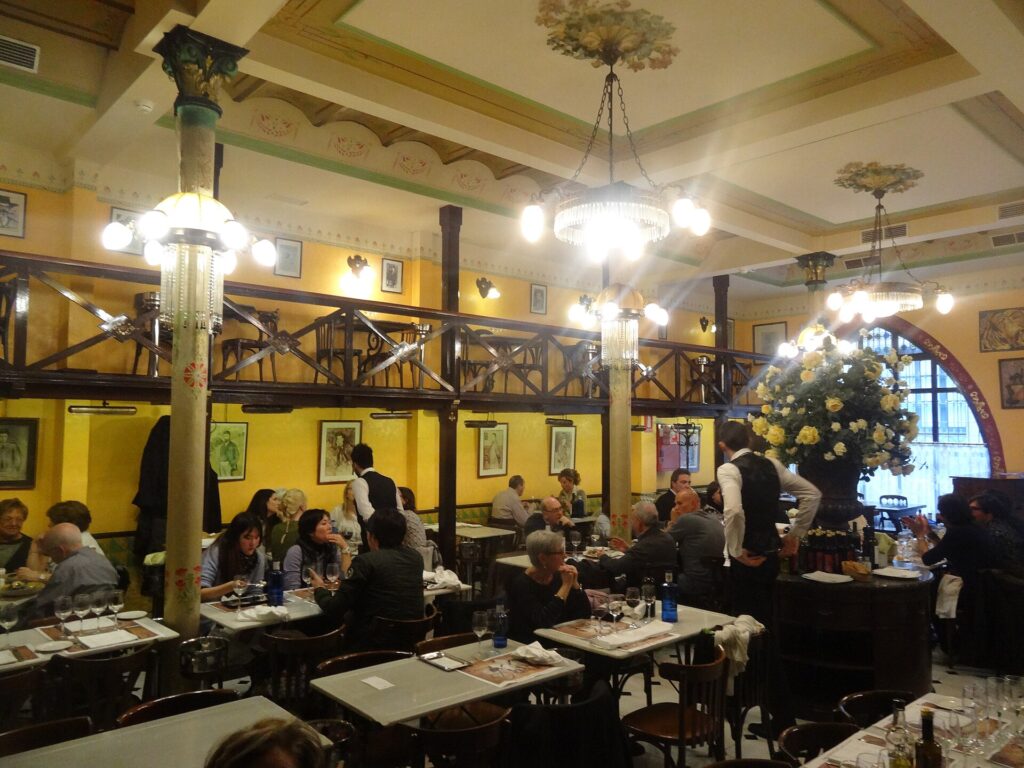

Els Quatre Gats
The café that opened in 1897 in Casa Martí by Puig i Cadafalch, where the artists of Modernisme met and the young Picasso held his first exhibition. It still serves coffee and meals.
Tours and activities
Compare tours and activities in Barcelona
Opening soon
Getting there and getting around
Arriving
- By air: the Aerobús runs from both terminals to Plaça de Catalunya; the R2 Nord train and metro line 9 are cheaper alternatives.
- By train: high-speed trains from Madrid take about two and a half to three hours, and direct trains run from Paris and the south of France.
Flights
Compare flights to Barcelona
Opening soon
Around the city
- On foot for the Gothic Quarter and the Eixample, and by metro for everything else; a T-casual ticket gives ten trips.
- Car hire is not needed in the city; it is useful for the Costa Brava and the Catalan countryside.
Car hire
Compare car hire in Spain
Opening soon
Staying connected
Visitors with an EU phone plan can roam at home prices. Others, including many UK plans, may pay extra, so an eSIM with a data allowance is a simple alternative.
eSIMs
Compare eSIMs for Spain
Opening soon
Before you go
- Entry rules: EU and EEA citizens only need a valid ID card or passport. Many other nationalities, including British, American, Canadian and Australian citizens, can visit the Schengen area visa-free for up to 90 days in any 180-day period. At the border, the EU’s Entry/Exit System registers non-EU visitors with fingerprints and a photo. ETIAS, an online travel authorisation, is expected to start in 2027 and is not needed yet. Always check the latest official advice, for example GOV.UK travel advice for Spain, or your own government’s.
- Tickets: book the Sagrada Família, Casa Batlló, La Pedrera and Park Güell online in advance, especially in summer.
- Pickpockets: keep valuables close on La Rambla, in the metro and on the beach.
- Combine it: Valencia, with its tiled station and market halls, is about three hours away on our Barcelona to Valencia by train journey.
Travel Emporium compares offers from trusted travel providers. When you book, you book and pay directly with the provider shown. Some links earn us a commission, at no extra cost to you. How we work