
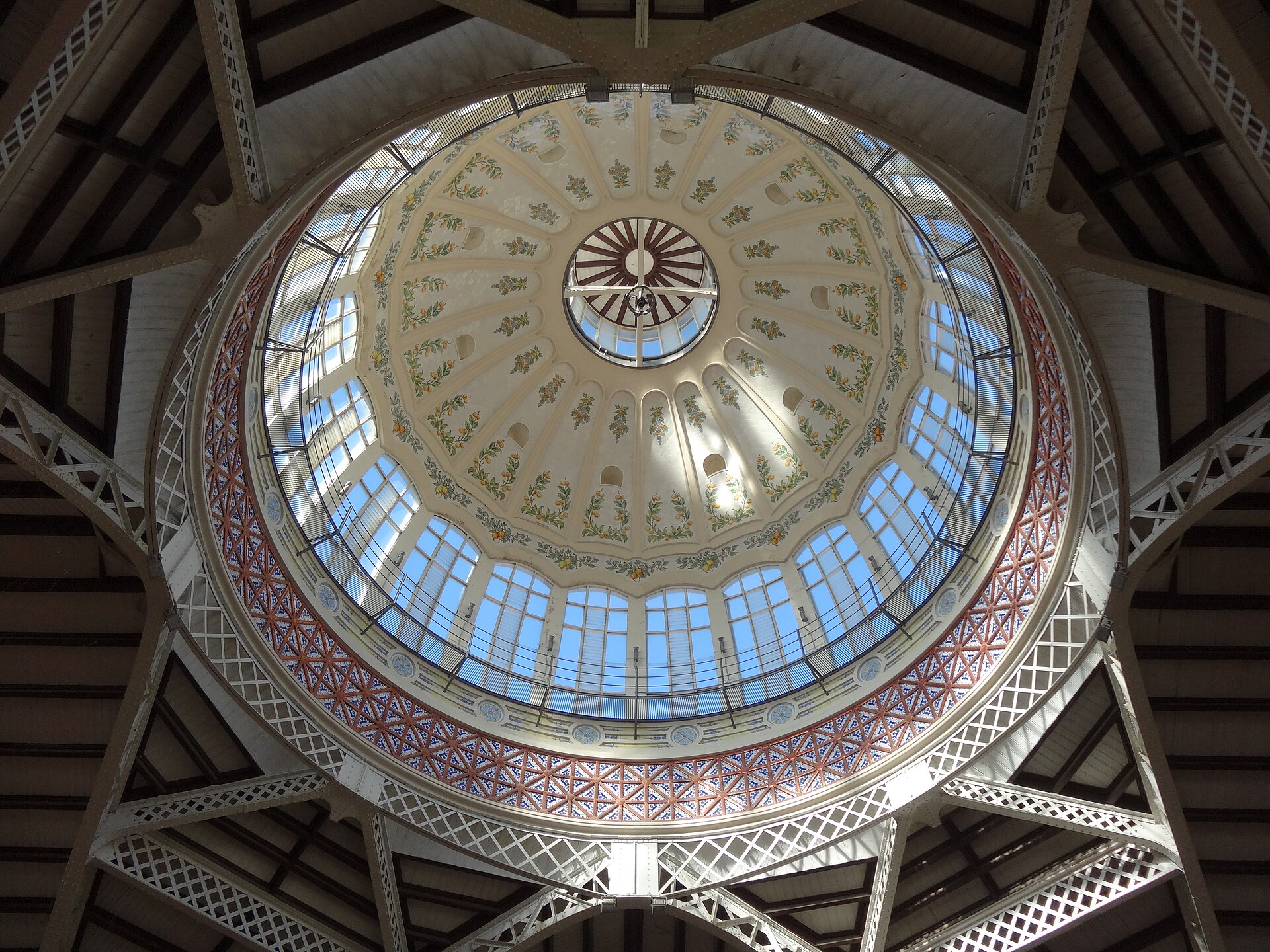

Valencia grew rich on oranges, silk and rice, and in the early 20th century it spent that wealth on buildings of glass, iron and glazed tiles. Its northern station is decorated with ceramic oranges, its central market is one of the largest covered markets in Europe, and its local version of Art Nouveau, Valencian Modernisme, is everywhere once you start looking. Add a Gothic silk exchange, a park in an old riverbed, the beach and the home of paella, and Spain’s third city is an easy place to love.
Facts checked: November 2026.
Valencia at a glance
- Best time to go: March to June and September to November. July and August are hot; Las Fallas fills the city with fireworks and giant figures from 01 to 19 March.
- How long to stay: three days, or more with the beach.
- Getting there: high-speed trains from Madrid in about 1 hour 40 minutes and from Barcelona in about 3 hours; Valencia airport (VLC) is linked to the centre by metro.
- Money: euro (EUR). Cards are accepted almost everywhere.
- Entry: Spain is in the EU and the Schengen area. Many non-EU visitors, including British, American, Canadian and Australian citizens, can visit visa-free for up to 90 days in any 180-day period. See Before you go below.
Then: Valencia around 1900
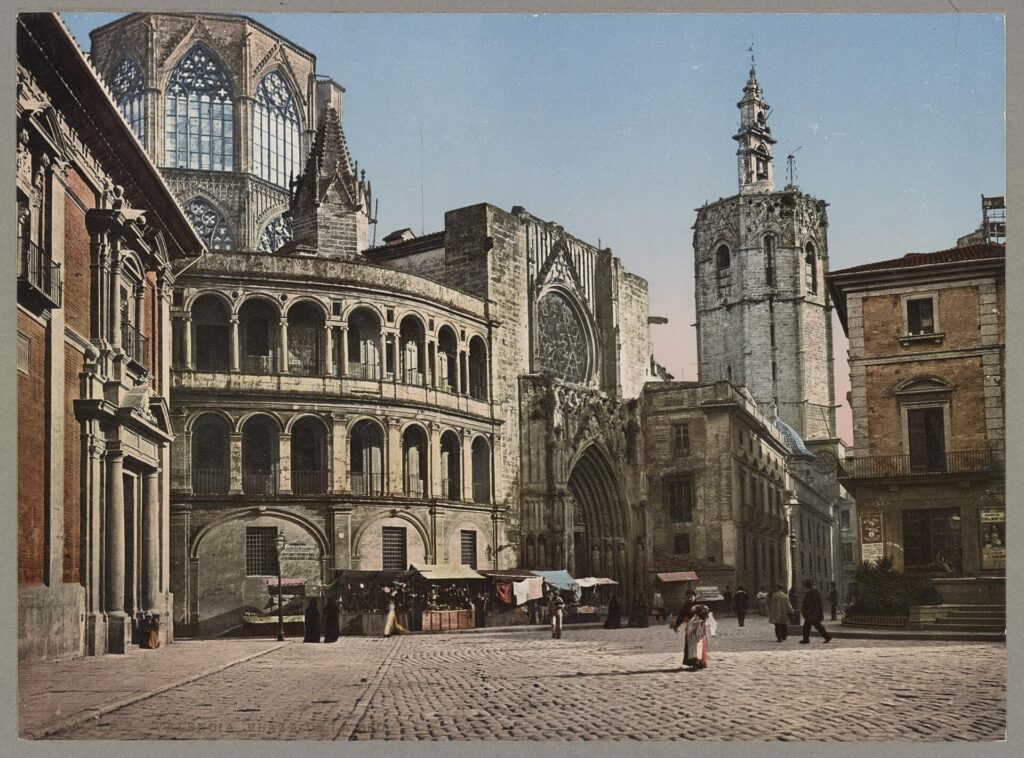

Around 1900 Valencia was a busy port surrounded by orange groves and rice fields. The orange trade with northern Europe brought money into the city, the old walls had been pulled down, and a new district, the Ensanche, was laid out to the south.
Its architects took up the new style of the day and gave it a local accent: brick, iron and glass decorated with the glazed tiles for which the region had long been famous. Between about 1906 and 1928 the city built a new station and two great market halls, and they still define its character today.
Where to stay
- Ciutat Vella: the old town around the cathedral, the market and the Lonja, with the El Carmen quarter for bars and street art.
- Ruzafa and the Ensanche: south of the centre, near the station and the Mercado de Colón, with restaurants, cafés and Modernista apartment blocks.
- The beach: El Cabanyal and Malvarrosa, an old fishermen’s quarter with tiled houses and a long sandy beach.
Stays
Compare places to stay in Valencia
Opening soon
Art Nouveau and heritage Valencia

Estació del Nord
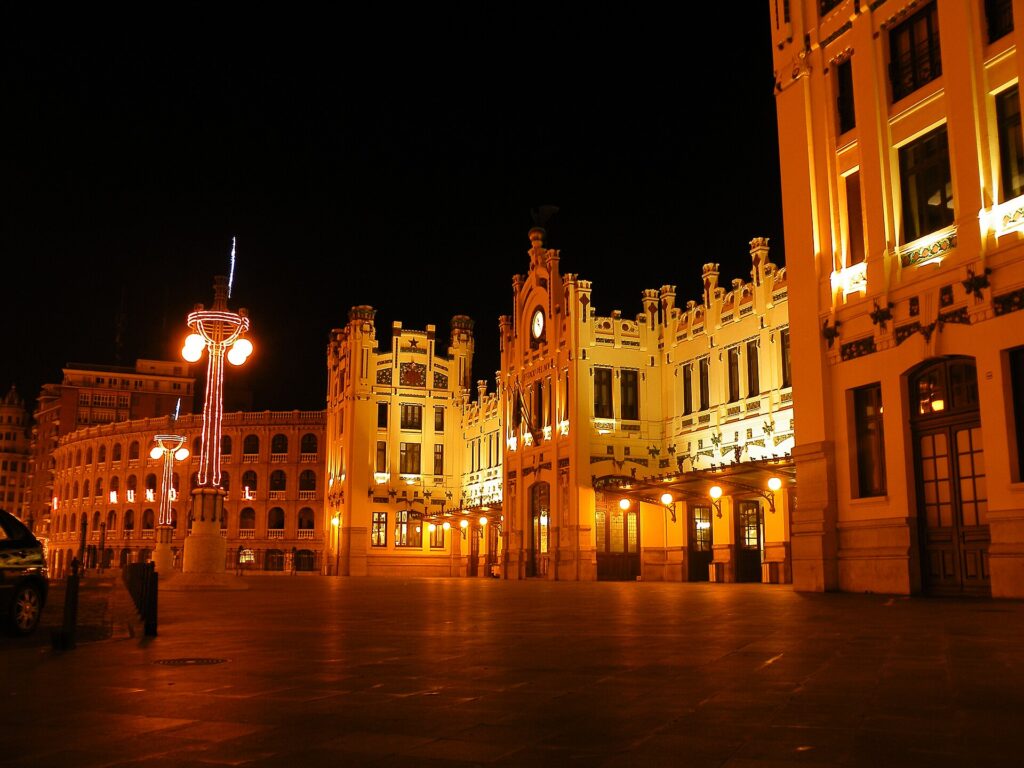
The North Station of 1906 to 1917 by Demetrio Ribes, decorated inside and out with ceramic oranges, orange blossom and mosaic panels. Local and regional trains still use it; the high-speed trains arrive at Joaquín Sorolla station, a short walk to the south.
Mercado Central
A market hall of 1914 to 1928 under iron and glass domes, with stained glass and tiles, and one of the largest covered markets in Europe. Come in the morning for fruit, ham, fish and the rice used for paella. It is closed on Sundays.

Mercado de Colón
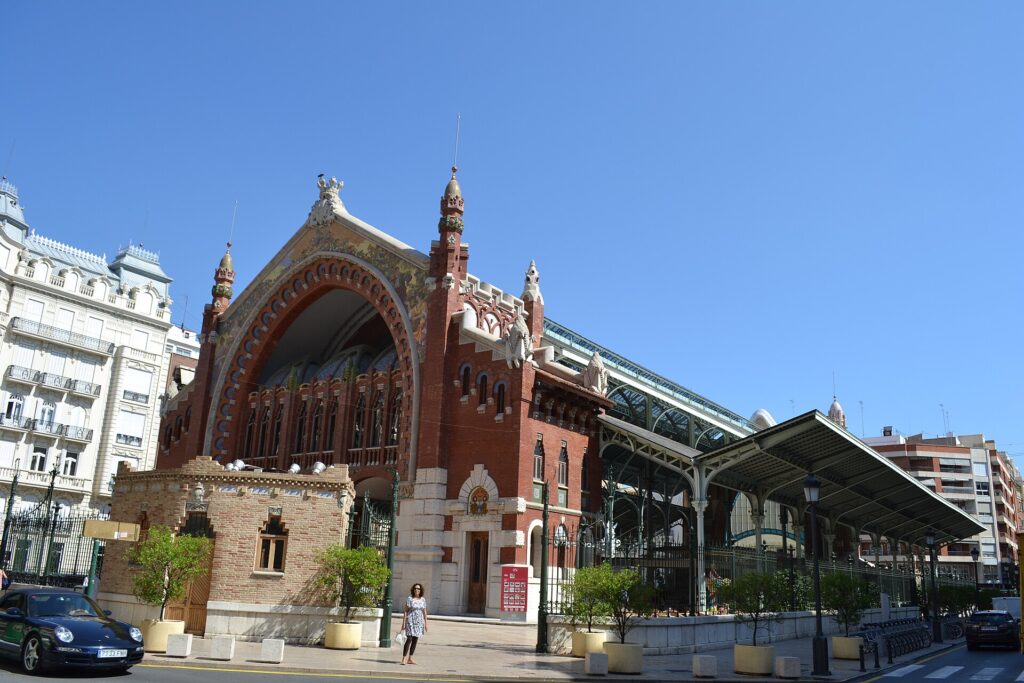
The smaller sister market of 1914 to 1916 by Francisco Mora, in the Ensanche, with a brick and iron hall and bright ceramic decoration. Today it is full of cafés and restaurants, a good place for an horchata.
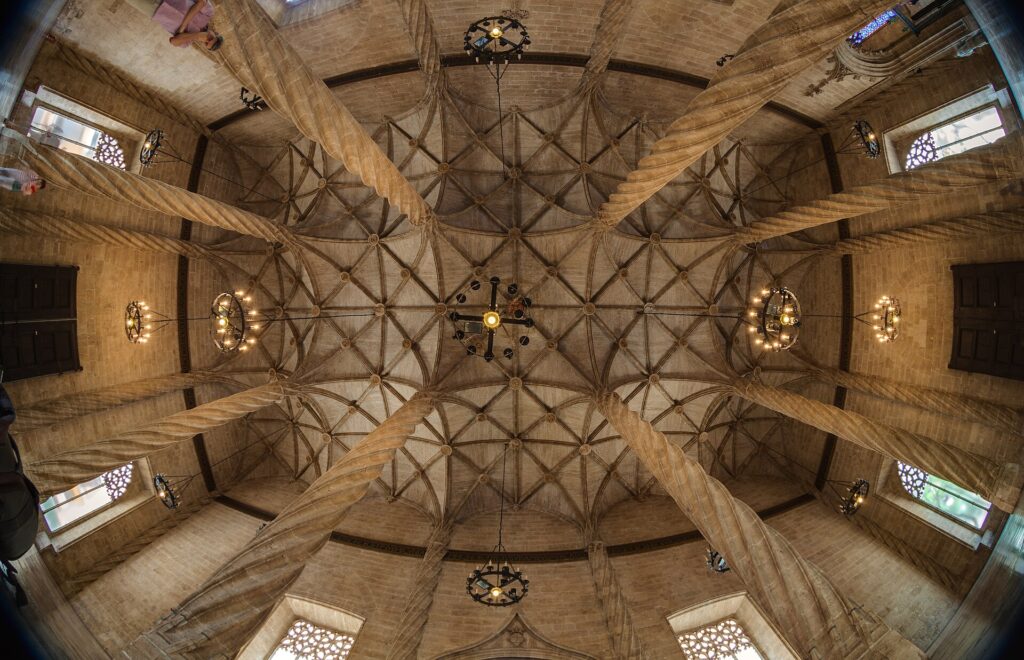

La Lonja de la Seda
The silk exchange of the late 15th century, a UNESCO World Heritage Site, with a hall of twisted stone columns like palm trees. It is much older than our other stops, but it shows where the city’s wealth began.
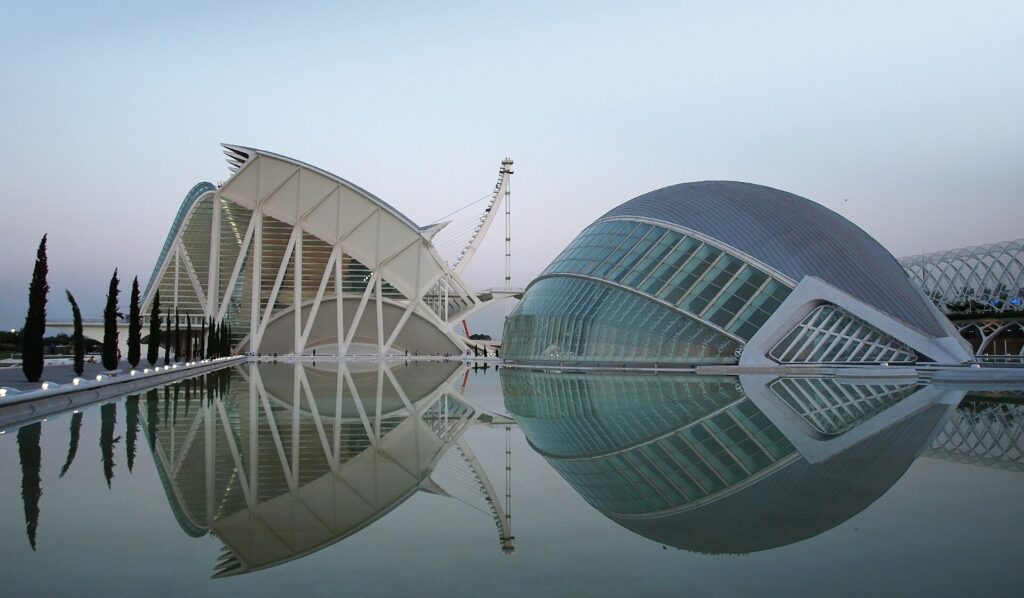

The Turia gardens and the City of Arts and Sciences
After a flood in 1957, the river Turia was moved around the city and its old bed became a park of about nine kilometres. Walk or cycle it to its end at the City of Arts and Sciences, the white buildings by Santiago Calatrava and Félix Candela, with a science museum, an opera house and an aquarium.
Tours and activities
Compare tours and activities in Valencia
Opening soon
Getting there and getting around
Arriving
- By train: high-speed trains from Madrid and Barcelona arrive at Valencia Joaquín Sorolla.
- By air: Valencia airport (VLC) is about 8 kilometres from the centre; metro lines 3 and 5 run into the city.
Flights
Compare flights to Valencia
Opening soon
Around the city
- On foot for the old town and the Ensanche, by bike along the Turia gardens, and by metro or tram for the beach.
- Car hire is not needed in the city; it is useful for the Albufera lagoon, the rice fields and the coast.
Car hire
Compare car hire in Spain
Opening soon
Staying connected
Visitors with an EU phone plan can roam at home prices. Others, including many UK plans, may pay extra, so an eSIM with a data allowance is a simple alternative.
eSIMs
Compare eSIMs for Spain
Opening soon
Before you go
- Entry rules: EU and EEA citizens only need a valid ID card or passport. Many other nationalities, including British, American, Canadian and Australian citizens, can visit the Schengen area visa-free for up to 90 days in any 180-day period. At the border, the EU’s Entry/Exit System registers non-EU visitors with fingerprints and a photo. ETIAS, an online travel authorisation, is expected to start in 2027 and is not needed yet. Always check the latest official advice, for example GOV.UK travel advice for Spain, or your own government’s.
- Las Fallas: during the festival in March, hotels fill up early and prices rise, and some streets close for the fireworks.
- Opening days: the Mercado Central is closed on Sundays, and many museums close on Mondays.
Travel Emporium compares offers from trusted travel providers. When you book, you book and pay directly with the provider shown. Some links earn us a commission, at no extra cost to you. How we work