

Antwerp was one of the richest ports in the world around 1900, and it spent its money on show. Its central station is so grand that locals call it the railway cathedral, the streets of Zurenborg are a catalogue of Art Nouveau, and in 1932 it built the first skyscraper on the European continent, the Art Deco Boerentoren. Add Rubens, diamonds, fashion and some of the best beer in Belgium, and the city deserves more than a day.
Facts checked: November 2026.
Antwerp at a glance
- Best time to go: April to October; December brings a Christmas market on the Grote Markt.
- How long to stay: two days, or a day trip from Brussels.
- Getting there: trains from Brussels in about 40 minutes and direct trains from Brussels Airport; high-speed trains from Amsterdam and Rotterdam.
- Money: euro (EUR). Cards are accepted almost everywhere.
- Entry: Belgium is in the EU and the Schengen area. Many non-EU visitors, including British, American, Canadian and Australian citizens, can visit visa-free for up to 90 days in any 180-day period. See Before you go below.
Then: Antwerp around 1900
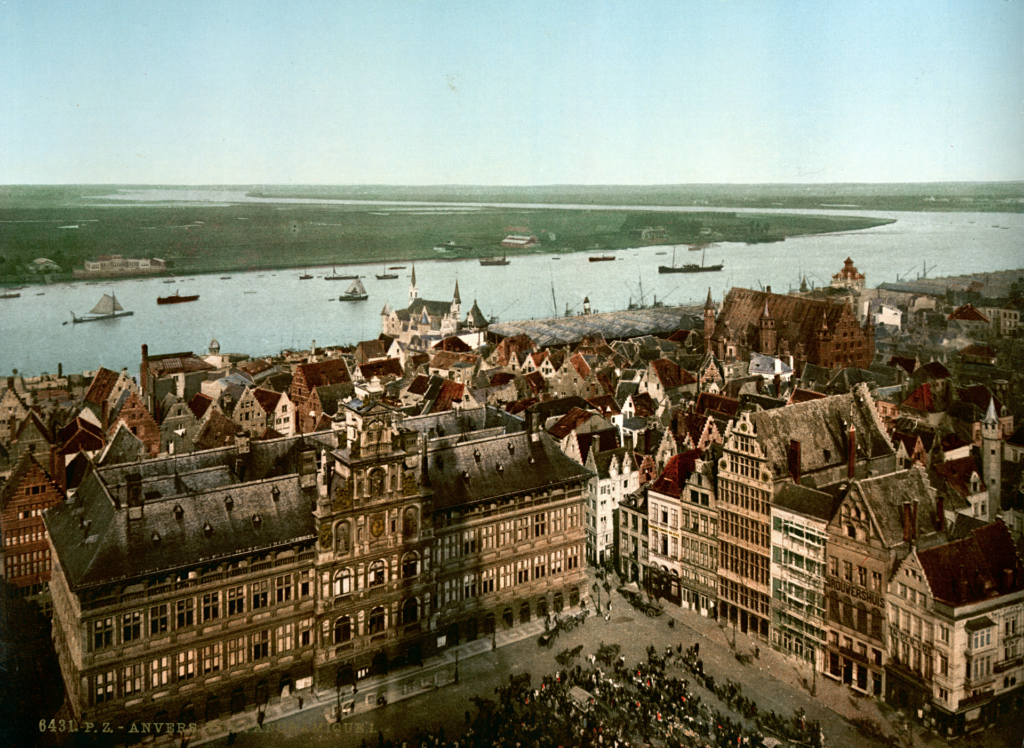

At the end of the 19th century Antwerp’s port on the Scheldt handled ships from every continent, and the city held world exhibitions in 1885 and 1894. New districts grew beyond the old walls, and their merchants built in every style they could imagine: Neo-Gothic, Neo-Renaissance and the new Art Nouveau.
In 1905 the new central station opened, with a stone hall and a dome over the platforms. After the First World War the city kept building, and in 1932 the Boerentoren, a tower of offices and flats, rose above the old town as the tallest building in Europe of its day.
Where to stay
- The old town: around the Grote Markt and the cathedral, close to the river and the museums.
- Near the central station: convenient for trains, with the zoo, the diamond district and Zurenborg nearby.
- Het Eilandje: the old docks, with the MAS museum, restaurants and views over the water.
Stays
Compare places to stay in Antwerp
Opening soon
Art Nouveau and heritage Antwerp
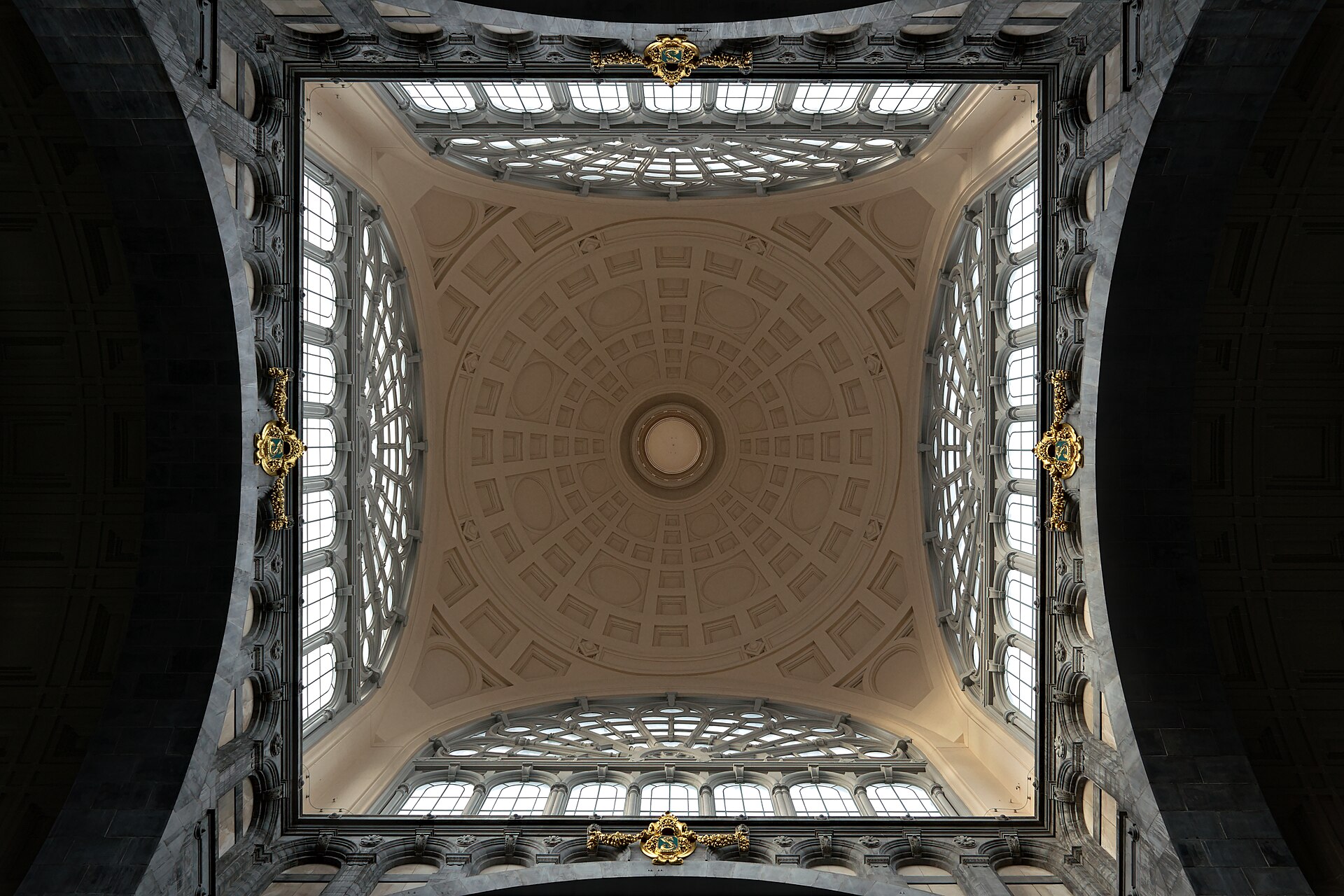
Antwerpen-Centraal
The station of 1905 by Louis Delacenserie, with a marble entrance hall under a great dome and an iron and glass train shed. Even if you arrive by another route, come and see it.
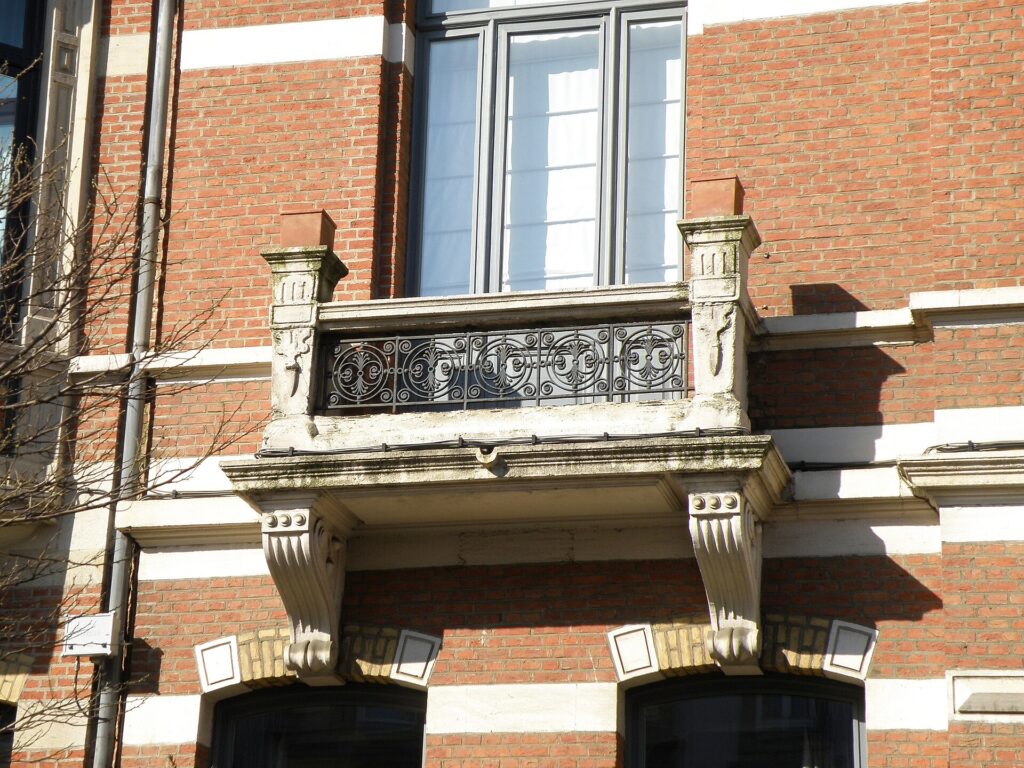

Zurenborg and Cogels-Osylei
A district of grand town houses from around 1900, just behind the station. Walk along Cogels-Osylei and the streets around it to see Art Nouveau facades, turrets, tiles and ironwork side by side with every historic style.
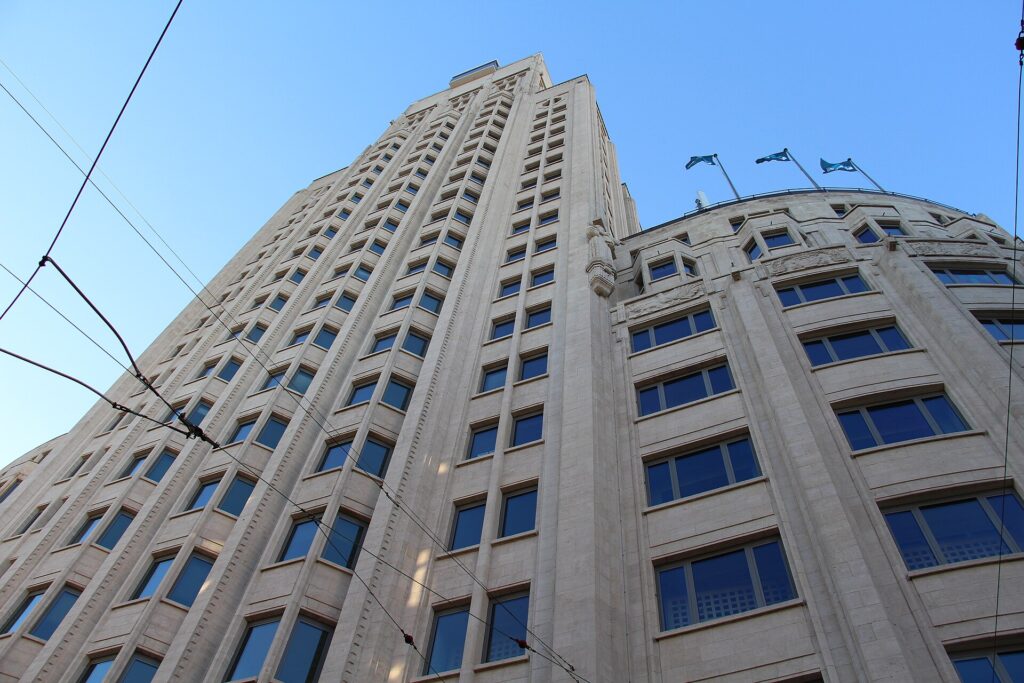

The Boerentoren
The Art Deco tower of 1932 near the cathedral, once the tallest building in Europe. It is being turned into a cultural centre, so for now admire it from the street; it opens to visitors on special days.
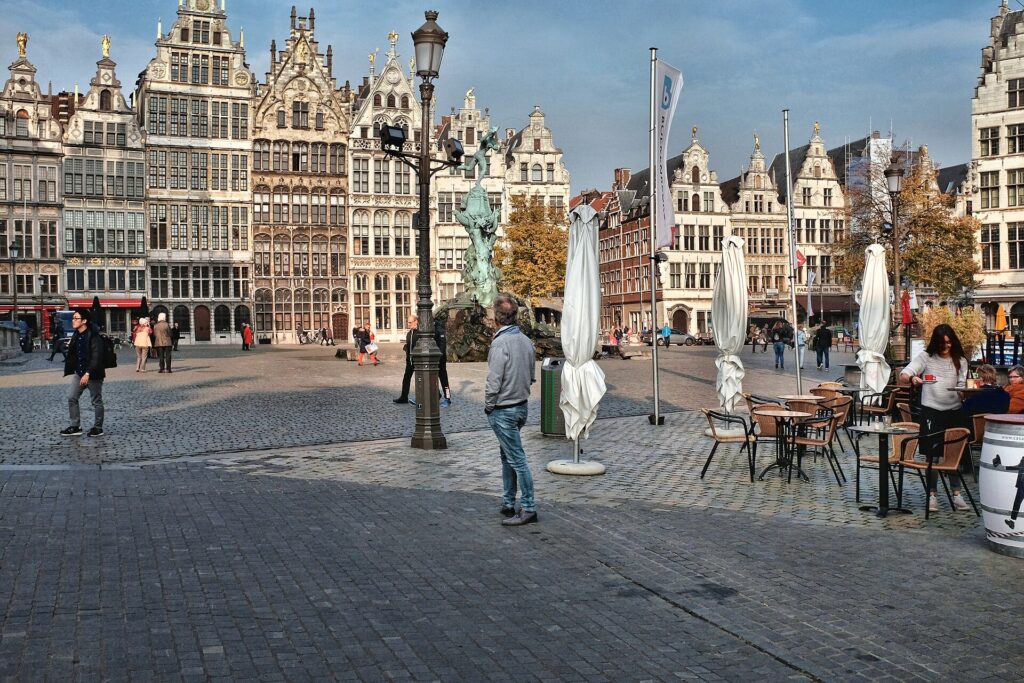

The Grote Markt and the cathedral
The main square with its guild houses and the Brabo fountain, and next to it the Cathedral of Our Lady, with paintings by Rubens.
Tours and activities
Compare tours and activities in Antwerp
Opening soon
Getting there and getting around
Arriving
- By train: frequent trains from Brussels and Brussels Airport, and high-speed trains from Amsterdam and Rotterdam.
- By air: fly to Brussels Airport and take the train, which takes under an hour.
Flights
Compare flights to Brussels
Opening soon
Around the city
- On foot for the old town, and by tram for Zurenborg and the docks; the city also has public bikes.
- Car hire is not needed in the city, where a low-emission zone applies; it is useful for Bruges, Ghent and the Belgian coast.
Car hire
Compare car hire in Belgium
Opening soon
Staying connected
Visitors with an EU phone plan can roam at home prices. Others, including many UK plans, may pay extra, so an eSIM with a data allowance is a simple alternative.
eSIMs
Compare eSIMs for Belgium
Opening soon
Before you go
- Entry rules: EU and EEA citizens only need a valid ID card or passport. Many other nationalities, including British, American, Canadian and Australian citizens, can visit the Schengen area visa-free for up to 90 days in any 180-day period. At the border, the EU’s Entry/Exit System registers non-EU visitors with fingerprints and a photo. ETIAS, an online travel authorisation, is expected to start in 2027 and is not needed yet. Always check the latest official advice, for example GOV.UK travel advice for Belgium, or your own government’s.
- Driving: foreign cars must be registered before entering Antwerp’s low-emission zone; check the rules if you drive.
- Opening days: many museums close on Mondays.
- Combine it: Brussels, where Art Nouveau began, is under an hour away by train, and our Art Nouveau by rail journey continues to Paris and Nancy.
Travel Emporium compares offers from trusted travel providers. When you book, you book and pay directly with the provider shown. Some links earn us a commission, at no extra cost to you. How we work