
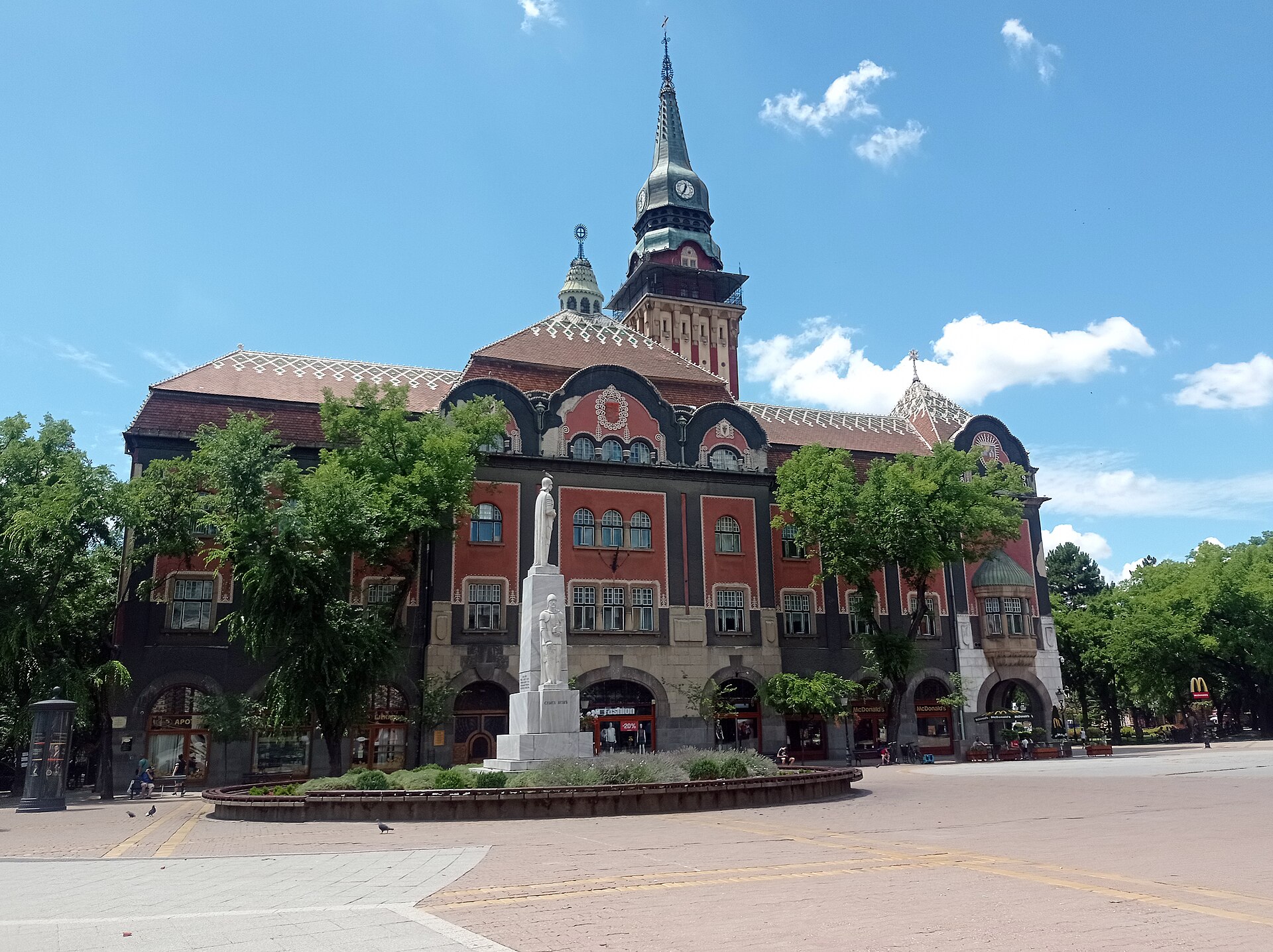

Subotica sits on the plains of northern Serbia, a few kilometres from the Hungarian border, and around 1900 it was one of the richest towns of the Kingdom of Hungary. Its merchants and council built in the Hungarian Art Nouveau style, with glazed tiles, folk motifs and curving gables, and the result is a town centre that feels like a small open-air museum. Add the lakeside resort of Palić, good wine and a mix of Hungarian, Serbian and Bunjevac cooking, and Subotica makes a rewarding stop between Budapest and Belgrade.
Facts checked: November 2026.
Subotica at a glance
- Best time to go: May to September, when the terraces and Palić lake are at their best.
- How long to stay: one or two days, or a day trip from Szeged, about 45 kilometres away.
- Getting there: trains from Belgrade and Novi Sad; Budapest and Belgrade airports are each about two hours away by road.
- Money: Serbian dinar (RSD). Cards are accepted in most hotels, restaurants and shops; carry some cash for markets and small cafés.
- Entry: Serbia is not in the EU or the Schengen area. Many visitors, including EU, British, American, Canadian and Australian citizens, can visit visa-free for short stays. See Before you go below.
Then: Szabadka around 1900
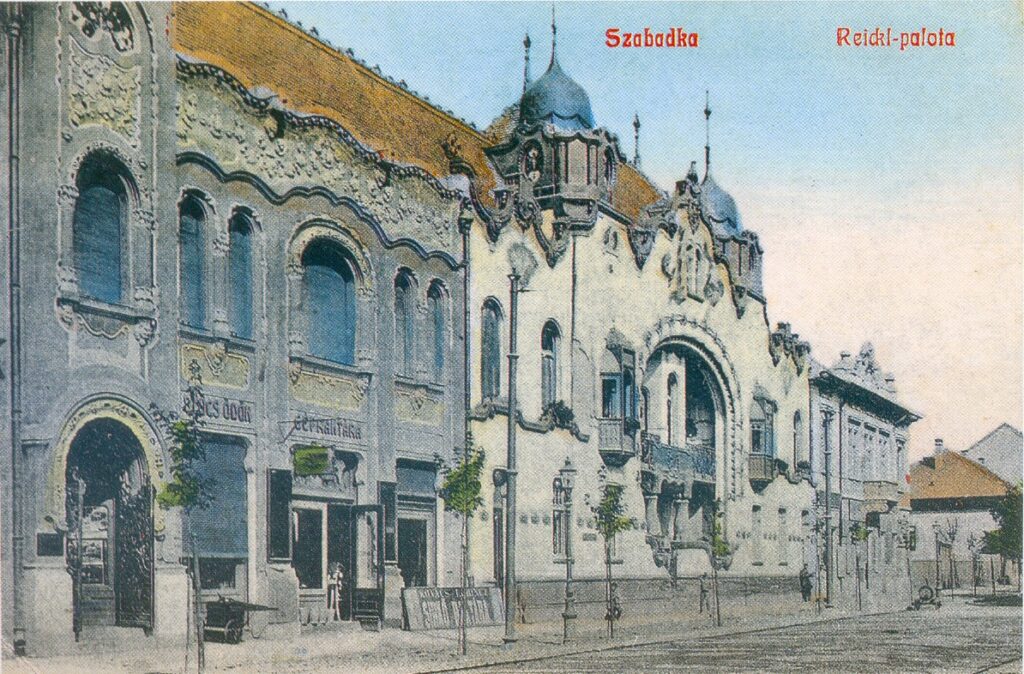

Around 1900 the town was called Szabadka and belonged to Hungary. The rich black soil of the plain made its landowners and merchants wealthy, and Hungarians, Bunjevci, Serbs, Germans and a large Jewish community lived side by side.
In the years before the First World War the town hired some of the best architects of Budapest. The architect Ferenc J. Raichle built himself a palace of coloured tiles, and Marcell Komor and Dezső Jakab built a synagogue and then a new City Hall, the town’s proudest building. In 1918 Subotica became part of the new Kingdom of Serbs, Croats and Slovenes, later Yugoslavia, but its Art Nouveau centre survived.
Where to stay
- The centre: around the City Hall and the pedestrian streets, close to everything.
- Palić: the lakeside resort about eight kilometres east, with villas, parks and a calmer pace; buses link it with the town.
Stays
Compare places to stay in Subotica
Opening soon
Art Nouveau and heritage Subotica
The City Hall
The great City Hall of 1908 to 1912 by Komor and Jakab, covered in Hungarian folk ornament, with a tall tower and a council chamber with stained-glass windows. Ask locally about guided tours of the interior and the tower.

The Synagogue
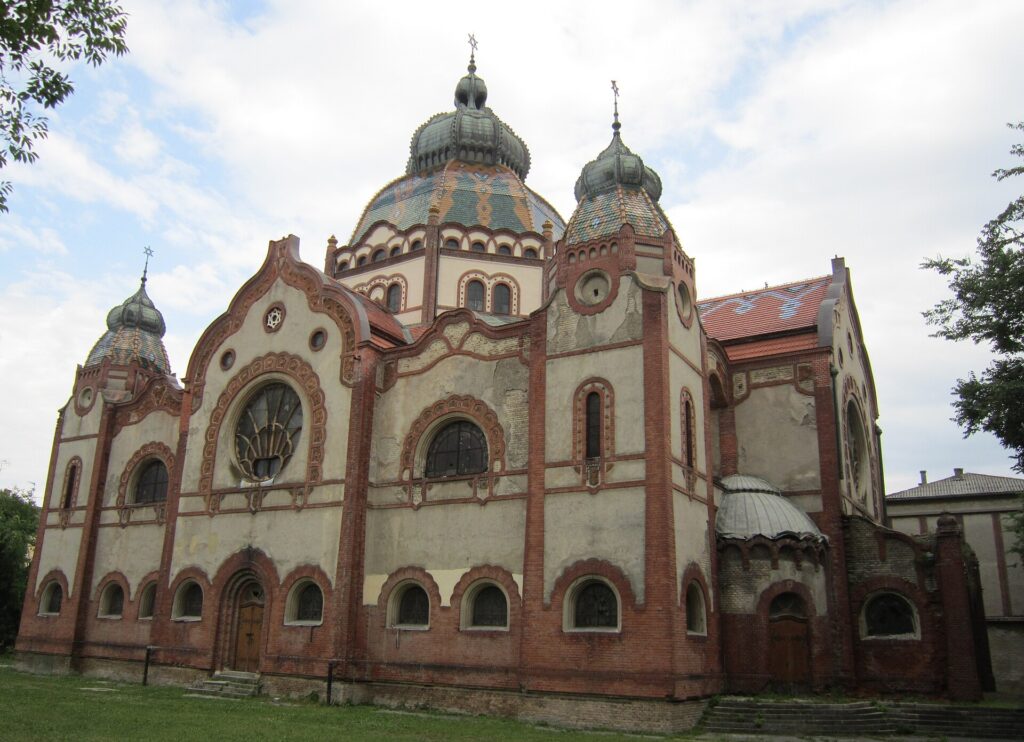
Komor and Jakab’s synagogue of 1902, one of the great Art Nouveau synagogues of Europe, with a painted dome and Zsolnay tiles. After a long restoration it reopened in 2018 and can be visited; check the opening times before you go.

The Raichle Palace
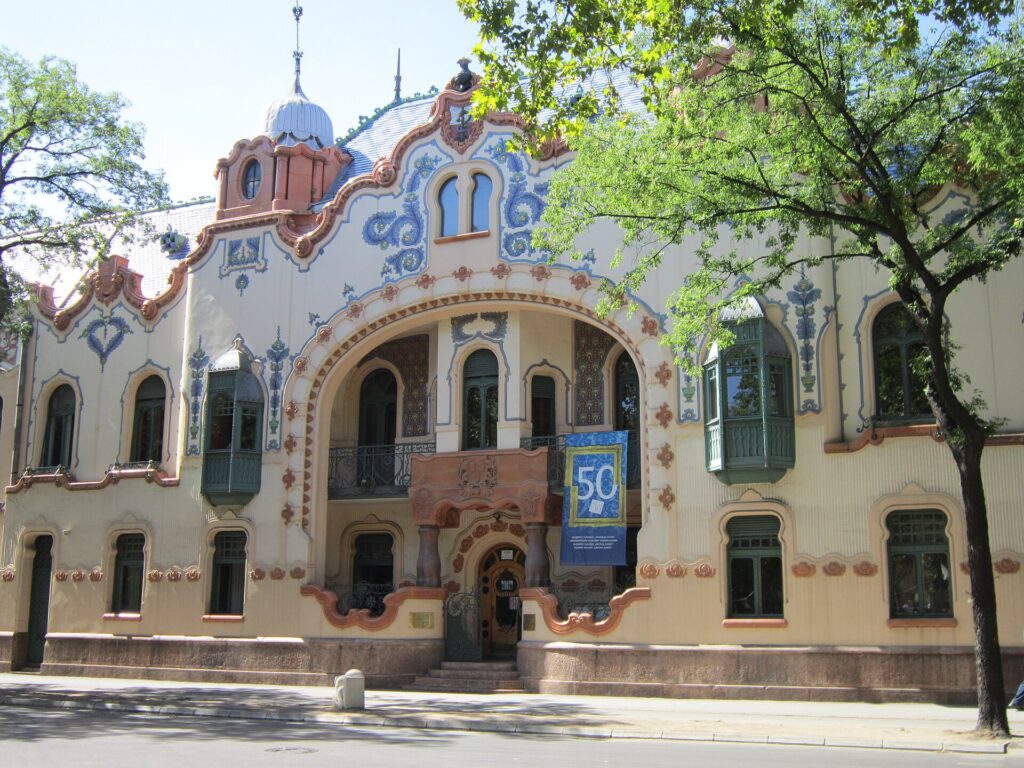
Ferenc J. Raichle’s own house of 1904, near the station, with wavy gables, coloured tiles and ironwork. Today it houses a gallery of contemporary art.
Palić
A lakeside spa resort of the early 20th century, with a water tower, a grand terrace and villas by Komor and Jakab, and a lido for swimming in summer. Walk the lakeside park and stay for dinner by the water.
Tours and activities
Compare tours and activities in Subotica
Opening soon
Getting there and getting around
Arriving
- By train: fast trains run from Belgrade and Novi Sad to Subotica. Through trains between Budapest and Belgrade via Subotica are due to return after the rebuilding of the line; check the current timetable before you plan on the train from Budapest.
- By air: the nearest airports are Belgrade and Budapest, each about two hours by road.
- By road: the motorway from Budapest to Belgrade passes the town; expect queues at the border in summer and at holiday weekends.
Flights
Compare flights to Belgrade and Budapest
Opening soon
Around the town
- On foot for the centre, and by local bus or taxi to Palić.
- Car hire is useful for Palić, the Ludaš lake nature reserve and the wine cellars of the region.
Car hire
Compare car hire in Serbia
Opening soon
Staying connected
Serbia is not part of the EU’s roaming rules, so EU and UK phone plans may charge extra. An eSIM with a data allowance for Serbia is a simple way to stay online.
eSIMs
Compare eSIMs for Serbia
Opening soon
Before you go
- Entry rules: many nationalities, including EU, British, American, Canadian and Australian citizens, can visit Serbia visa-free for short stays. Foreign visitors must be registered with the police within 24 hours of arrival; hotels and most guest houses do this for you. Serbia is outside the Schengen area, so days spent here do not count towards your Schengen 90 days. Always check the latest official advice, for example GOV.UK travel advice for Serbia, or your own government’s.
- Make it a journey: combine this city with its neighbours on our Hungarian Art Nouveau by train route.
- Combine it: Subotica sits between Szeged and Belgrade, and pairs well with Budapest for a week of Hungarian Art Nouveau.
Travel Emporium compares offers from trusted travel providers. When you book, you book and pay directly with the provider shown. Some links earn us a commission, at no extra cost to you. How we work