
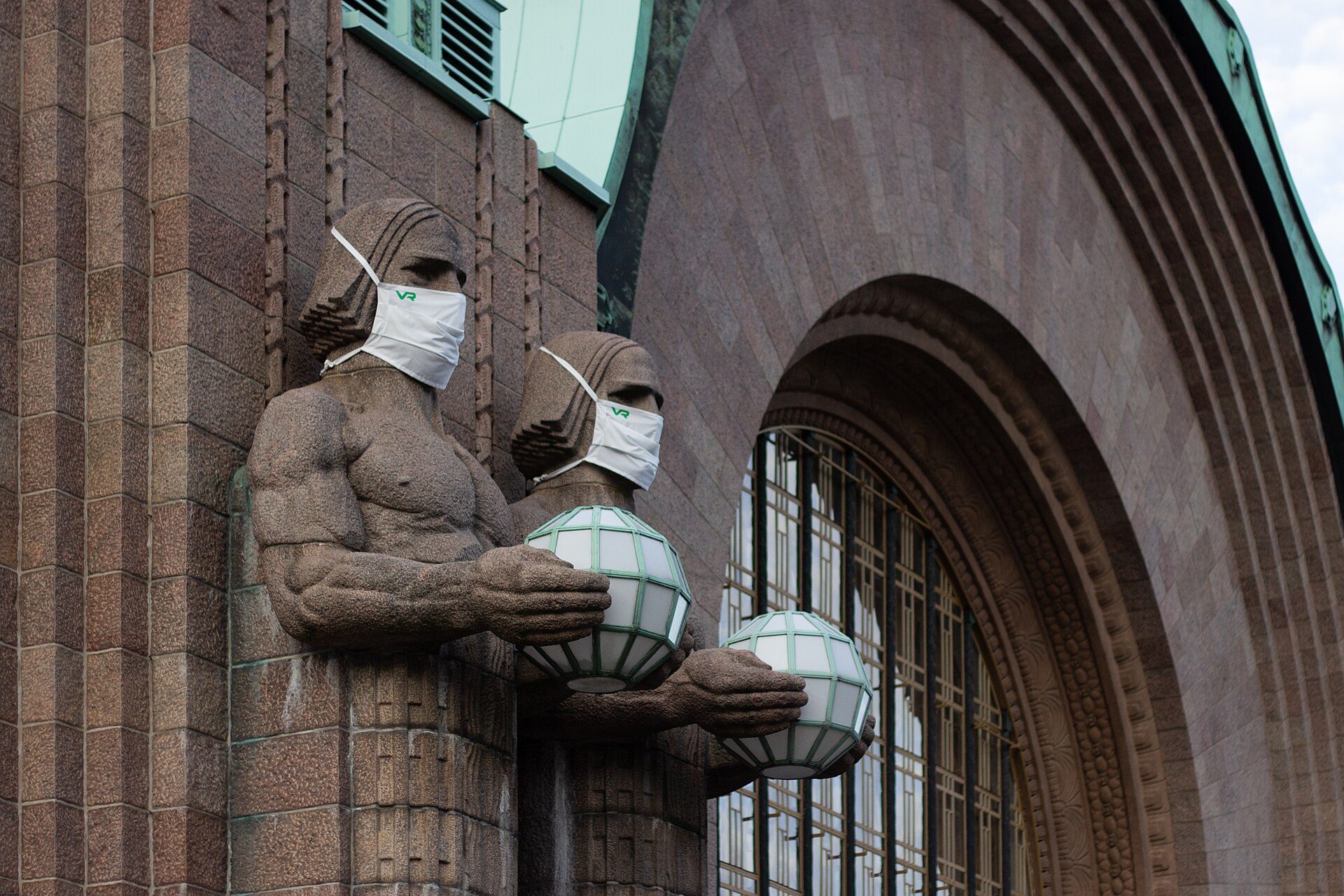

Around 1900 Helsinki found its own voice in architecture: a Finnish Jugendstil, also called National Romanticism, of rough granite, steep roofs and carved bears, owls and pine cones. Eliel Saarinen’s railway station, the castle-like National Museum and the apartment houses of Katajanokka still give the city its character. Add a sea fortress, public saunas and islands a short ferry ride away, and Helsinki makes a fine Nordic city break.
Facts checked: November 2026.
Helsinki at a glance
- Best time to go: June to August, when the evenings stay light until late; December for the Christmas markets and snow.
- How long to stay: two to three days, plus a day trip by ferry to Tallinn.
- Airport: Helsinki Airport (HEL), at Vantaa, about 20 kilometres north of the centre.
- Money: euro (EUR). Cards and phone payments are accepted almost everywhere, even for small amounts.
- Entry: Finland is in the EU and the Schengen area. Many non-EU visitors, including British, American, Canadian and Australian citizens, can visit visa-free for up to 90 days in any 180-day period. See Before you go below.
Then: Helsinki around 1900
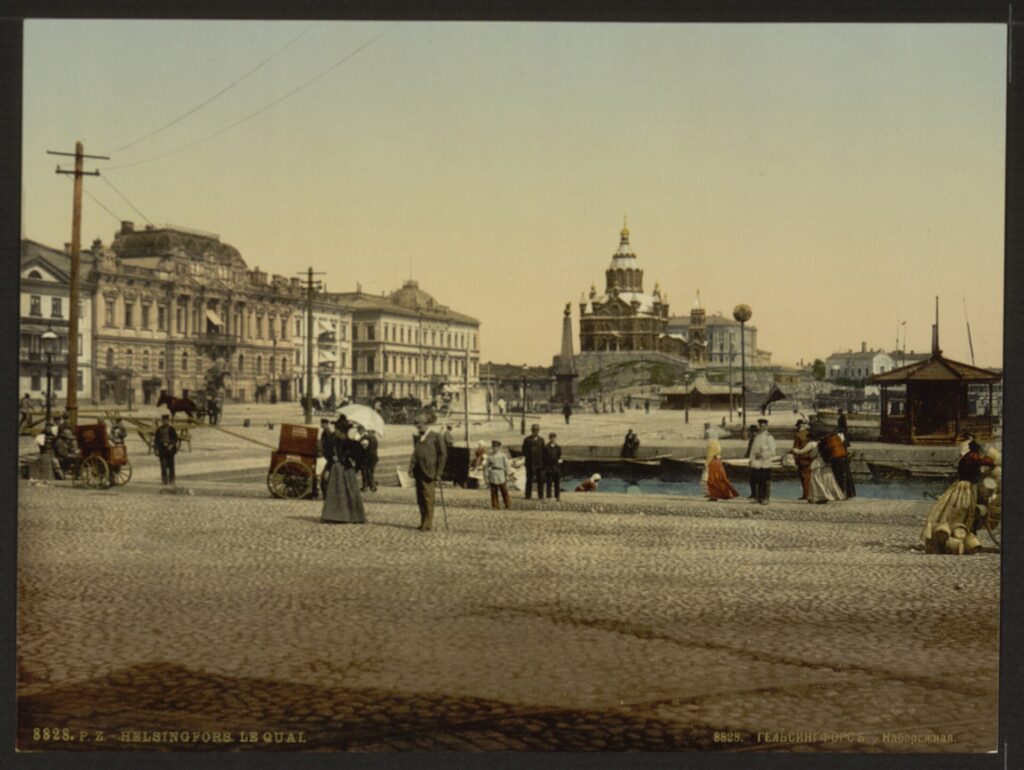

In the 1890s Helsinki, or Helsingfors, was the capital of the Grand Duchy of Finland, ruled by the Russian tsar. Its grand centre had been laid out in pale neoclassical style around Senate Square, and steamers filled the harbour by the Market Square.
As Russia tried to tighten its grip, Finnish artists and architects looked to their own forests, granite and the epic Kalevala. The young firm of Gesellius, Lindgren and Saarinen built the Pohjola insurance building and the National Museum, and Saarinen won the competition for the railway station. In 1917 Finland became independent.
Where to stay
- The city centre (Kluuvi and Kaartinkaupunki): around the Esplanadi park and the station, close to shops, restaurants and the harbour.
- Katajanokka: a quiet island of Jugendstil streets, a short walk from the Market Square and the ferry terminals.
- Kallio: a lively former workers’ district with bars, cafés and lower prices, a few tram stops north.
- Eira and Punavuori: elegant Jugendstil villas, design shops and the seafront.
Stays
Compare places to stay in Helsinki
Opening soon
Jugendstil and heritage Helsinki
Helsinki Central Station
Saarinen’s granite station, designed in 1904 and finished in 1919, with its clock tower and the four giant lantern carriers by the doors. Walk through the main hall, even if you are not catching a train.

Katajanokka
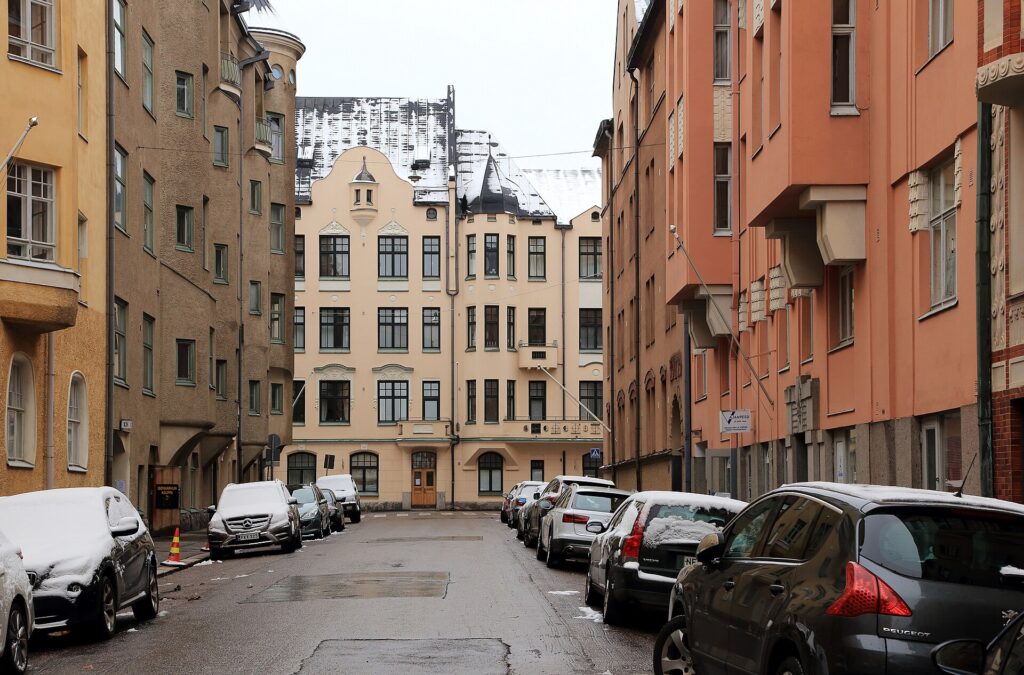
Behind the Uspenski Cathedral, the streets of Katajanokka are lined with Jugendstil apartment houses of the early 1900s: look for carved animals, turrets and doorways framed like caves.

The Pohjola building
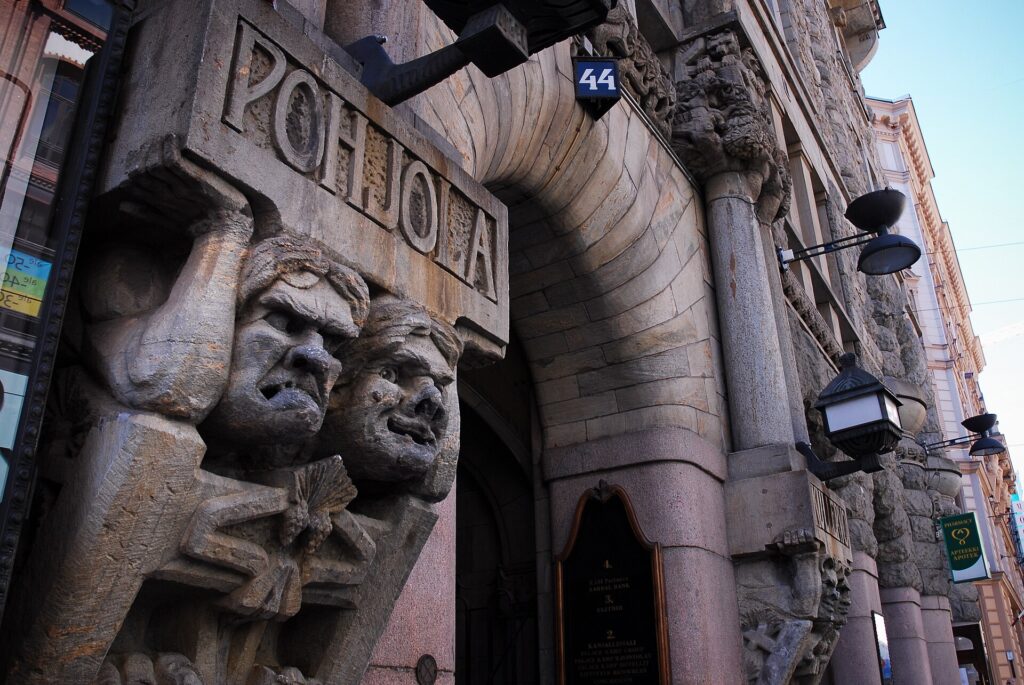
The insurance company headquarters of 1901 on Aleksanterinkatu, faced in rough granite carved with trolls, bears and forest faces, one of the finest examples of Finnish National Romanticism.
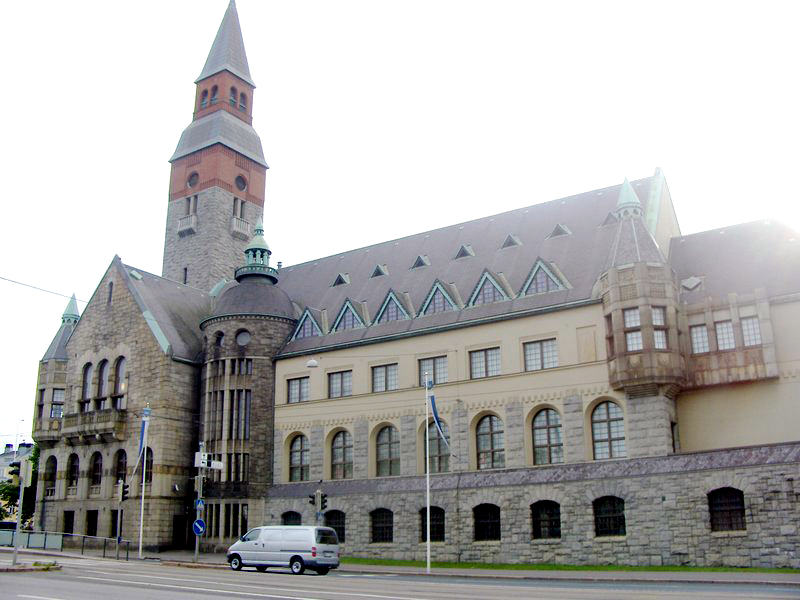

The National Museum of Finland
A building like a medieval church and castle in one, opened in 1916, with a tower and a ceiling painted with scenes from the Kalevala by Akseli Gallen-Kallela. Inside is the story of Finland from prehistory to today.
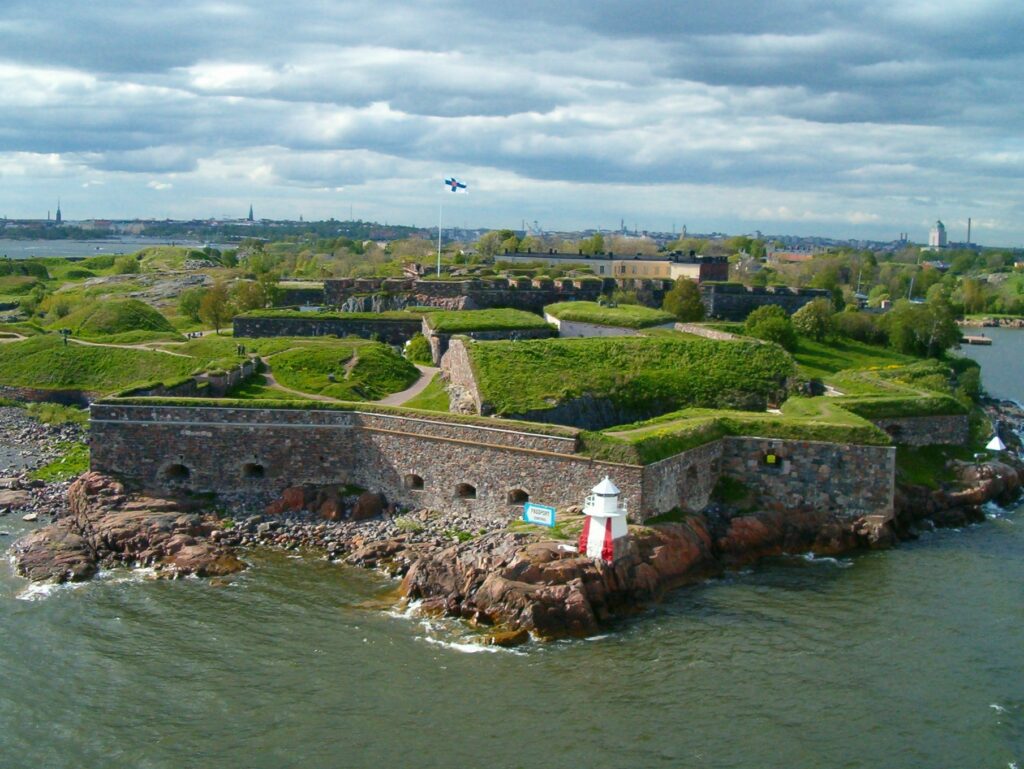

Suomenlinna
An 18th-century sea fortress spread over several islands, a UNESCO World Heritage Site, reached by a short ferry from the Market Square. Bring a picnic and walk the ramparts.
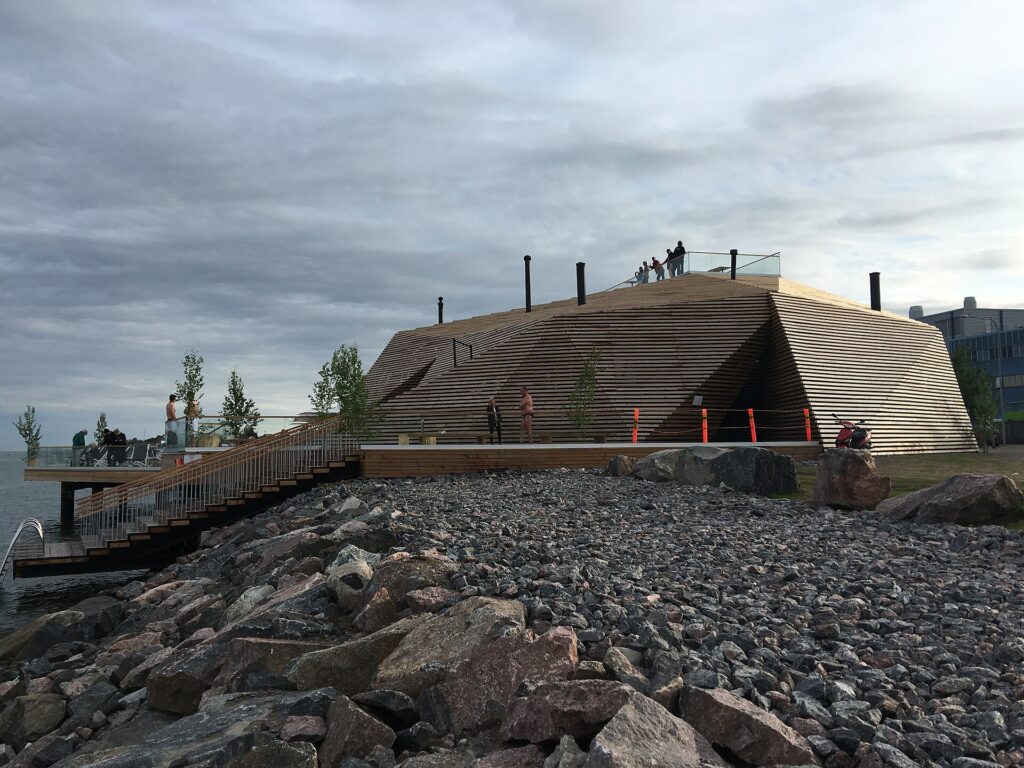

Sauna by the sea
Sauna is a way of life in Finland. Try a modern public sauna on the waterfront, such as Löyly, and cool off in the Baltic, even in winter.
Tours and activities
Compare tours and activities in Helsinki
Opening soon
Getting there and getting around
Arriving
- By air: trains run from the airport station to Helsinki Central Station in about half an hour.
- By sea: ferries link Helsinki with Tallinn in about two hours, and with Stockholm overnight.
Flights
Compare flights to Helsinki
Opening soon
Around the city
- On foot for the compact centre, and by tram for everything else; one ticket covers trams, buses, the metro and the Suomenlinna ferry.
- Car hire is not needed in the city; it is useful for the lakes and national parks of southern Finland.
Car hire
Compare car hire in Finland
Opening soon
Staying connected
Visitors with an EU phone plan can roam at home prices. Others, including many UK plans, may pay extra, so an eSIM with a data allowance is a simple alternative.
eSIMs
Compare eSIMs for Finland
Opening soon
Before you go
- Entry rules: EU and EEA citizens only need a valid ID card or passport. Many other nationalities, including British, American, Canadian and Australian citizens, can visit the Schengen area visa-free for up to 90 days in any 180-day period. At the border, the EU’s Entry/Exit System registers non-EU visitors with fingerprints and a photo. ETIAS, an online travel authorisation, is expected to start in 2027 and is not needed yet. Always check the latest official advice, for example GOV.UK travel advice for Finland, or your own government’s.
- Weather: winters are cold and dark, with only a few hours of daylight in December; bring warm layers.
- Sauna: public saunas usually have separate times or sections; swimwear is required at mixed saunas such as Löyly.
- Combine it: for more Jugendstil around the Baltic, see our Riga and Kaunas guides, and Ålesund on the Norwegian coast.
Travel Emporium compares offers from trusted travel providers. When you book, you book and pay directly with the provider shown. Some links earn us a commission, at no extra cost to you. How we work