
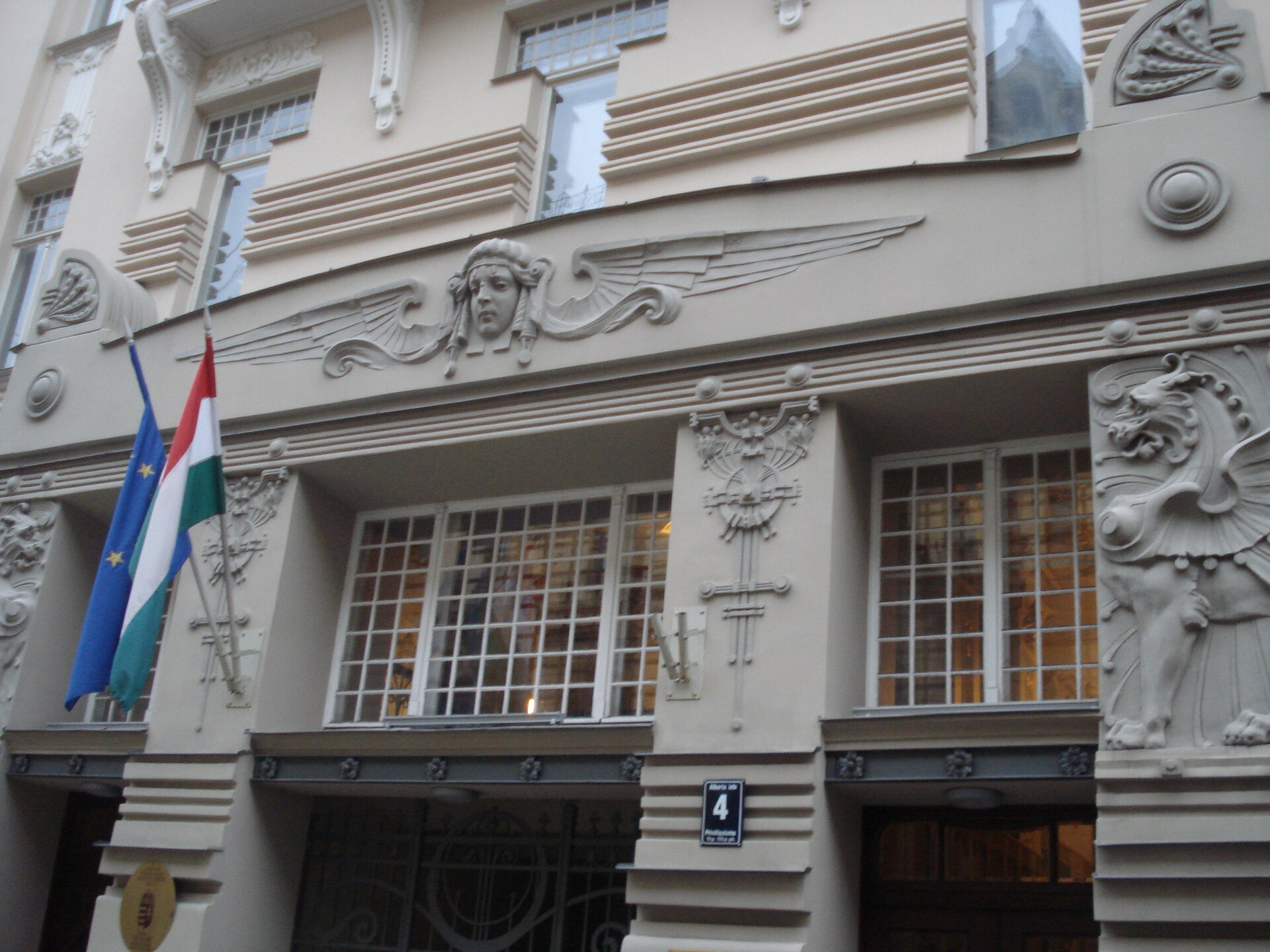

No city in Europe has more Art Nouveau than Riga. Around a third of the buildings in its centre were built in the style, and on streets such as Alberta iela every facade seems to stare back at you: stone faces, lions, peacocks and sunflowers. Add a medieval Old Town, a market in old Zeppelin hangars and white beaches half an hour away, and the Latvian capital makes a rewarding city break on the Baltic.
Facts checked: November 2026.
Riga at a glance
- Best time to go: May to September, with long light evenings; Midsummer (Jāņi) on 23 and 24 June is the great festival of the year, and the Old Town has a Christmas market in December.
- How long to stay: two or three days, plus a day at the beach in Jūrmala.
- Airport: Riga International Airport (RIX), about 10 kilometres from the centre.
- Money: euro (EUR). Cards are accepted almost everywhere.
- Entry: Latvia is in the EU and the Schengen area. Many non-EU visitors, including British, American, Canadian and Australian citizens, can visit visa-free for up to 90 days in any 180-day period. See Before you go below.
Then: Riga around 1900
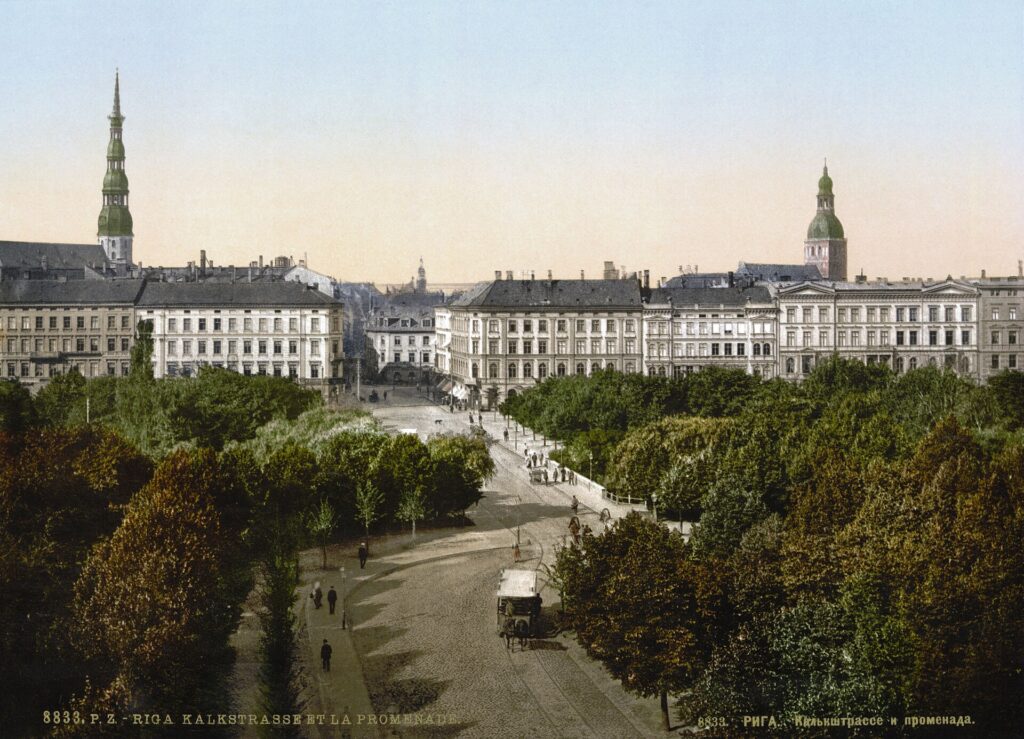

Around 1900 Riga was one of the great ports of the Russian Empire, and one of its fastest-growing cities. Its old walls had come down, new boulevards were laid out, and between the late 1890s and the First World War hundreds of apartment houses went up in the newest style of the day: Jugendstil, as Art Nouveau is called in German.
Architects such as Mikhail Eisenstein, father of the film director Sergei Eisenstein, covered facades with masks and figures, while Latvian architects such as Konstantīns Pēkšēns and Eižens Laube developed a quieter National Romantic style from local stone, wood and folk patterns. In 1997 the historic centre of Riga, Old Town and Art Nouveau quarter together, was listed as a UNESCO World Heritage Site.
Where to stay
- The Old Town (Vecrīga): cobbled lanes, churches and squares, close to everything; lively at night.
- The Art Nouveau quarter (Quiet Centre): around Alberta, Elizabetes and Strēlnieku streets, a short walk from the Old Town and calmer.
- Near the Central Market and the station: practical for trains and buses, with good-value hotels.
- Jūrmala: stay by the sea and visit the city by train.
Stays
Compare places to stay in Riga
Opening soon
Art Nouveau Riga
Alberta iela
The street to start with: a short row of buildings from 1901 to 1908, several by Mikhail Eisenstein, with masks, faces and mythical creatures looking down from every storey. Come in the morning or late afternoon, when the light falls across the facades.
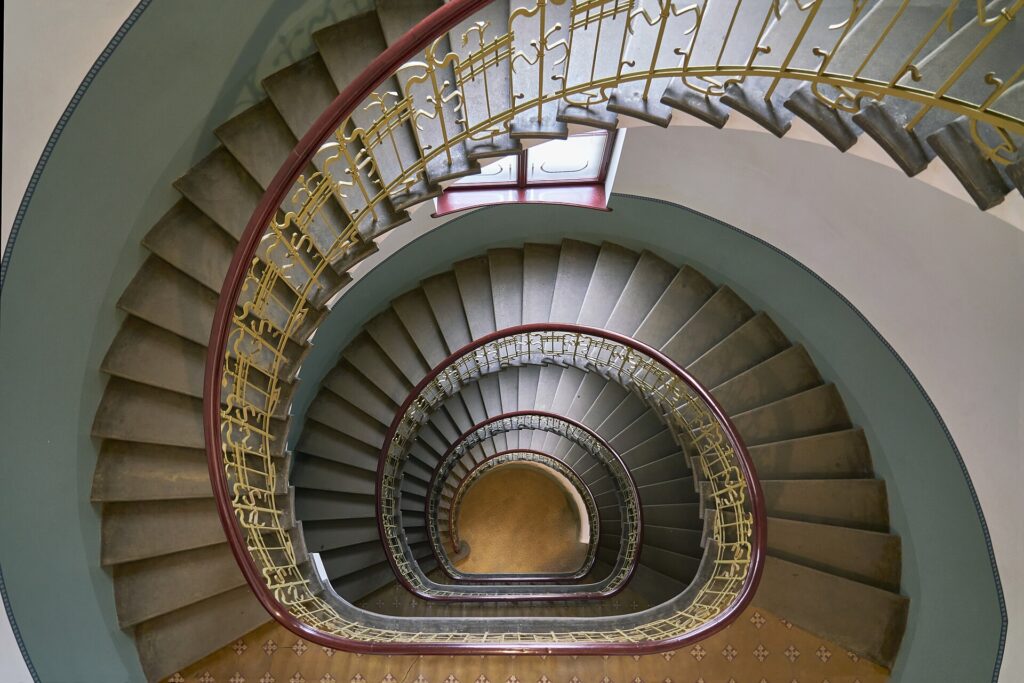

The Riga Art Nouveau Museum
The former home of the architect Konstantīns Pēkšēns at Alberta iela 12, restored as a flat of 1903 with its furniture, stove and kitchen. The painted spiral staircase alone is worth the visit.
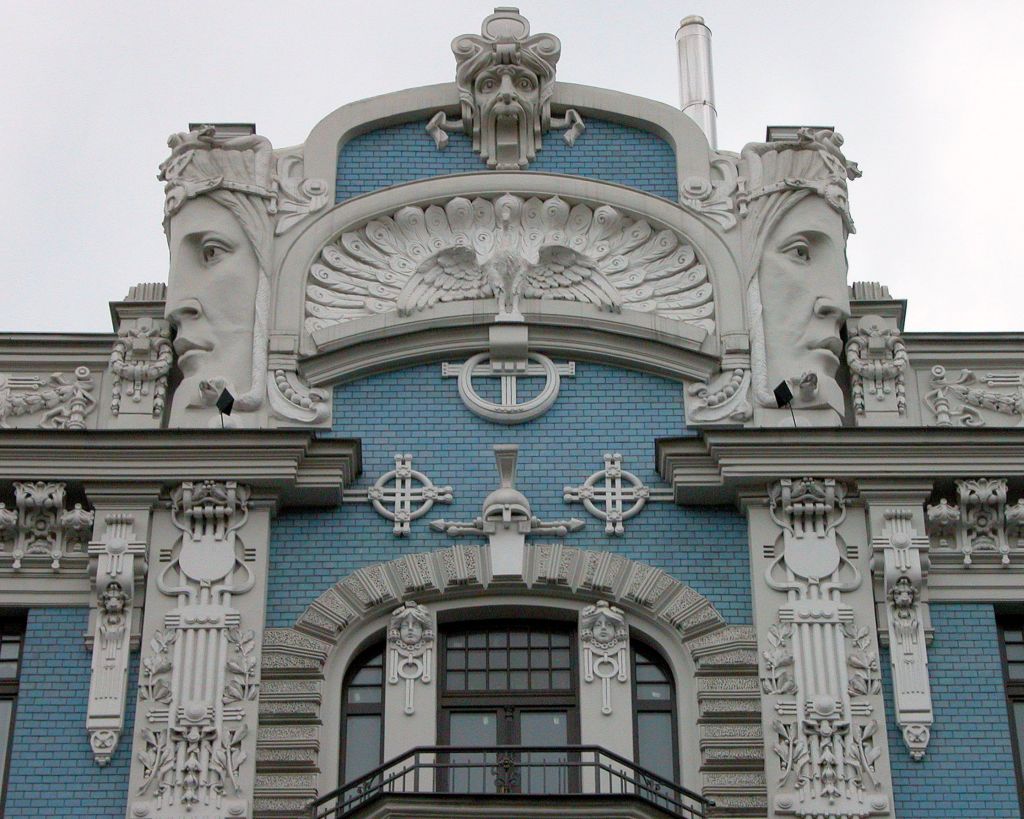

Elizabetes iela
More Eisenstein facades, at numbers 10a, 10b and 33, among the most photographed in the city. Look up: the details continue right to the roof.

The Old Town
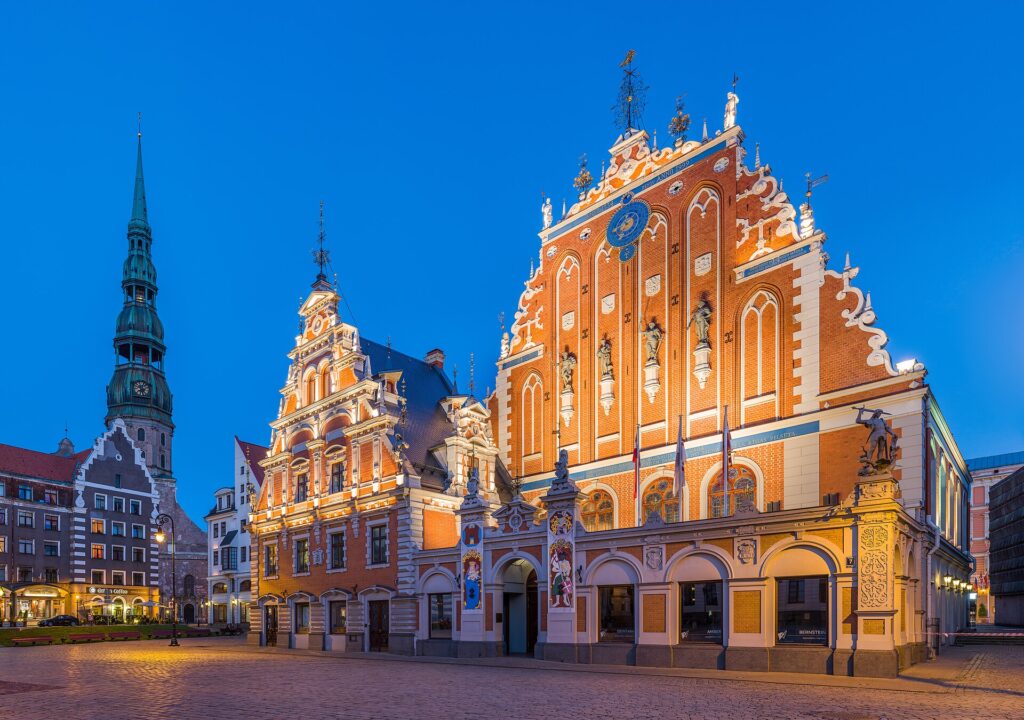
The rebuilt House of the Blackheads, the tower of St Peter’s Church with its view over the rooftops, the Three Brothers houses and the Dome Cathedral, all within a few minutes’ walk.

Riga Central Market
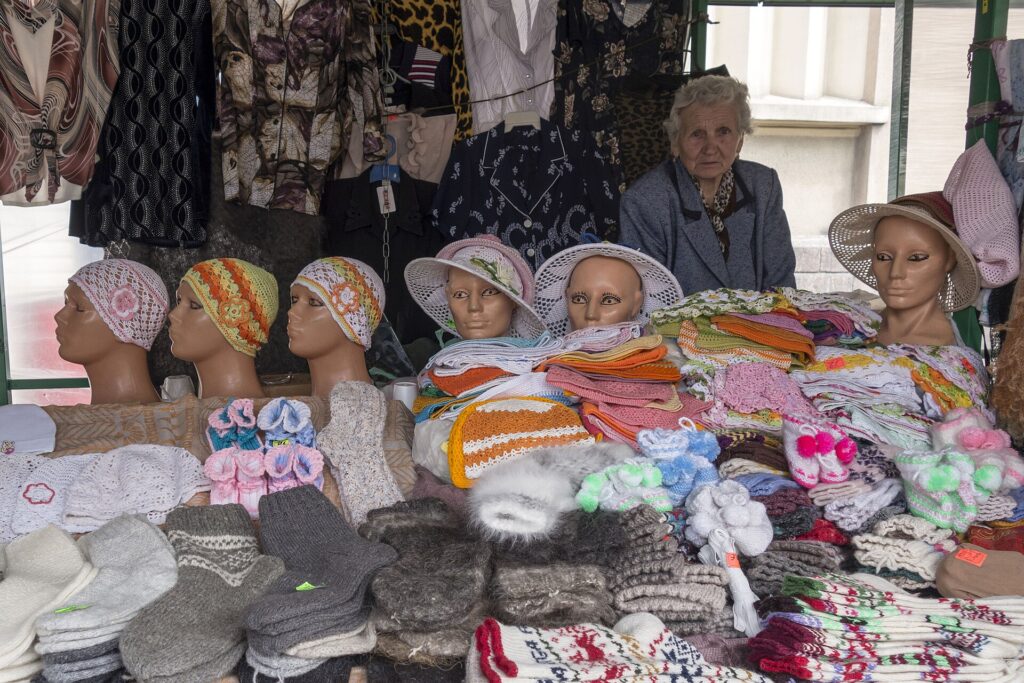
One of Europe’s largest markets, in pavilions built from German Zeppelin hangars and opened in 1930. Come hungry: smoked fish, rye bread, berries and Baltic cheeses.
Jūrmala
A long white beach on the Gulf of Riga, about half an hour from the city by train, lined with pine woods and wooden villas from the years around 1900.
Tours and activities
Compare tours and activities in Riga
Opening soon
Getting there and getting around
Arriving
- By air: bus 22 runs from the airport to the centre in about half an hour; taxis and ride-hailing apps are also easy to use.
- By sea and road: overnight ferries sail from Stockholm, and long-distance buses connect Riga with Tallinn and Vilnius in about four hours.
Flights
Compare flights to Riga
Opening soon
Around the city
- On foot for the Old Town and the Art Nouveau quarter, which are side by side.
- Trams, trolleybuses and buses for the rest of the city; buy an e-ticket before you board.
- Car hire is not needed in Riga, but is handy for the Gauja National Park around Sigulda and the Baroque Rundāle Palace.
Car hire
Compare car hire in Latvia
Opening soon
Staying connected
Visitors with an EU phone plan can roam at home prices. Others, including many UK plans, may pay extra, so an eSIM with a data allowance is a simple alternative.
eSIMs
Compare eSIMs for Latvia
Opening soon
Before you go
- Entry rules: EU and EEA citizens only need a valid ID card or passport. Many other nationalities, including British, American, Canadian and Australian citizens, can visit the Schengen area visa-free for up to 90 days in any 180-day period. At the border, the EU’s Entry/Exit System registers non-EU visitors with fingerprints and a photo. ETIAS, an online travel authorisation, is expected to start in 2027 and is not needed yet. Always check the latest official advice, for example GOV.UK travel advice for Latvia, or your own government’s.
- Weather: summers are mild and winters cold and dark, with snow likely from December to March.
- Languages: Latvian is the official language; English is widely spoken, especially by younger people.
- Combine it: modernist Kaunas is a few hours away by bus, and Jugendstil Helsinki is across the Baltic.
Travel Emporium compares offers from trusted travel providers. When you book, you book and pay directly with the provider shown. Some links earn us a commission, at no extra cost to you. How we work