
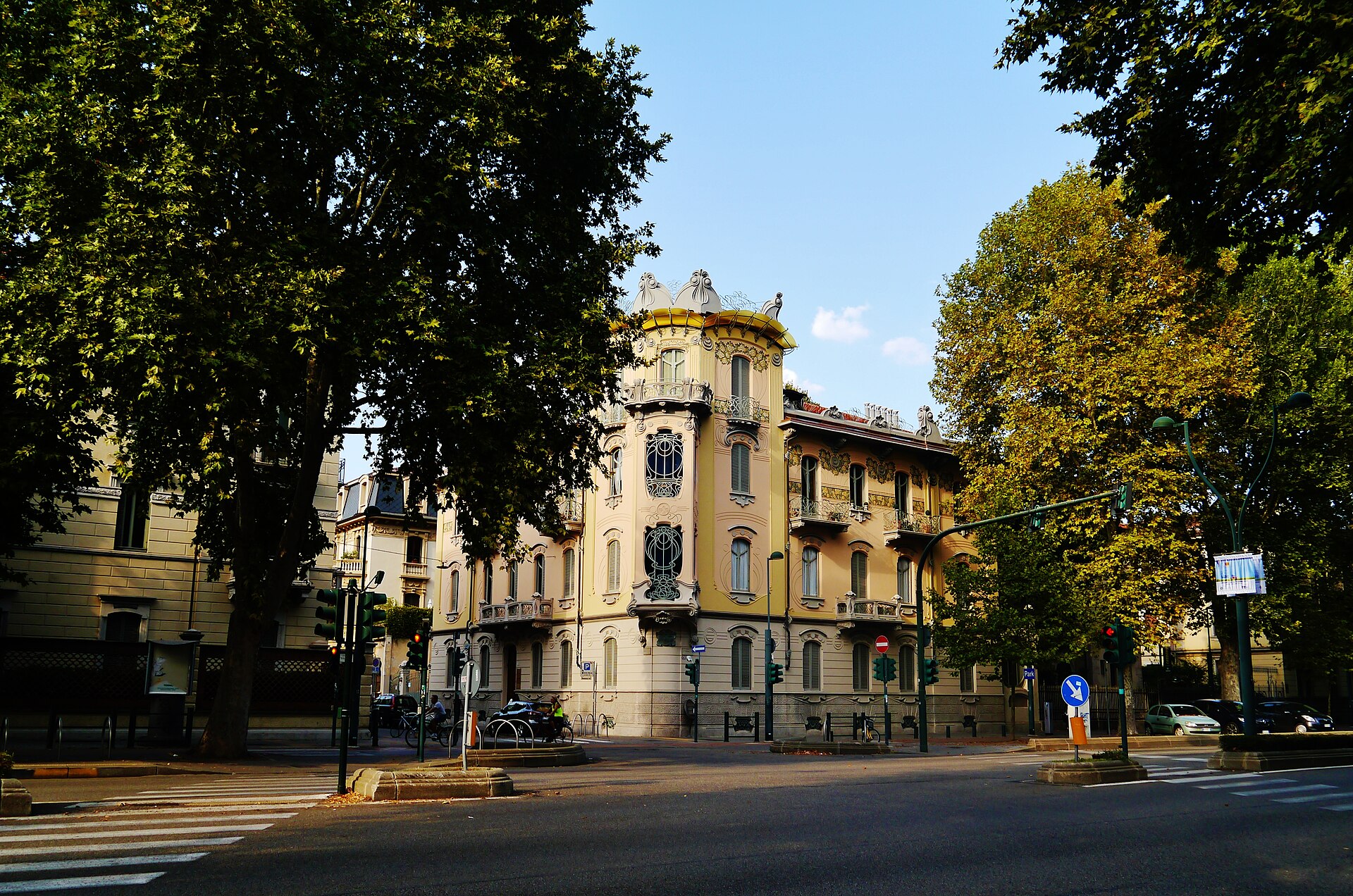

Turin was Italy’s first capital and its first industrial city, and around 1900 it fell in love with the new art. The city hosted the International Exhibition of Modern Decorative Art in 1902, and its architects covered the new districts with Stile Liberty, the Italian Art Nouveau, in wrought iron, glass and painted plaster. In the 1920s Fiat built the Lingotto factory, with a test track on its roof. Add elegant arcades, historic cafés, chocolate and the Alps on the horizon, and Turin is one of Italy’s most underrated cities.
Facts checked: November 2026.
Turin at a glance
- Best time to go: April to June and September to October; winters are cold and foggy, summers hot.
- How long to stay: two or three days.
- Getting there: high-speed trains from Milan in about 1 hour, and from Rome in about 4 hours 30 minutes.
- Money: euro (EUR). Cards are accepted almost everywhere; keep a little cash for small cafés.
- Entry: Italy is in the EU and the Schengen area. Many non-EU visitors, including British, American, Canadian and Australian citizens, can visit visa-free for up to 90 days in any 180-day period. See Before you go below.
Then: the city of the 1902 exhibition
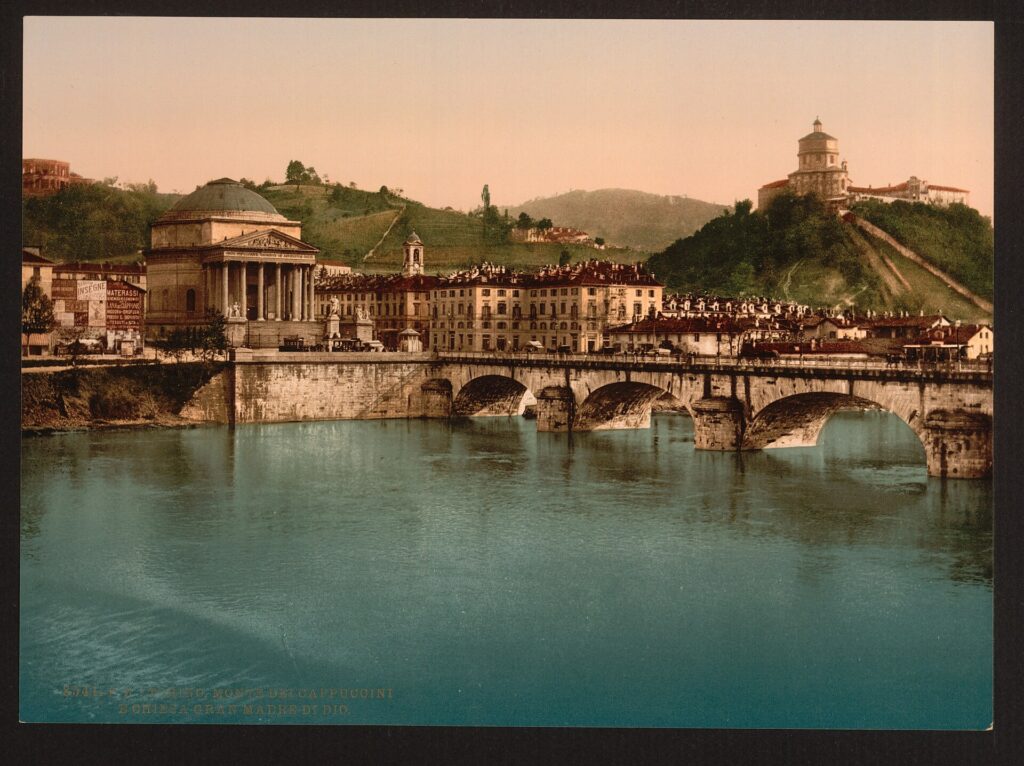

After Italy’s capital moved to Florence and then Rome, Turin reinvented itself as a city of industry, cars and cinema. In 1902 it hosted the first international exhibition of modern decorative art, and Liberty style became the fashion for the villas and apartment houses of the growing city.
Its leading architect, Pietro Fenoglio, built dozens of buildings in the new style, among them the Casa Fenoglio-Lafleur on Via Principi d’Acaja, finished in 1902. In the 1920s the Lingotto factory of Fiat, with its rooftop test track, became a symbol of the modern age.
Where to stay
- The centre: around Piazza Castello, Via Roma and Piazza San Carlo, with the arcades and the museums.
- San Salvario and Crocetta: lively and residential districts south of the centre, with cafés, restaurants and Liberty houses.
- Cit Turin: the district west of the centre with the finest Liberty buildings.
Stays
Compare places to stay in Turin
Opening soon
Liberty style and heritage Turin
Cit Turin and Casa Fenoglio-Lafleur
Walk around Corso Francia and Via Principi d’Acaja to see Fenoglio’s corner villa of 1902 and the other Liberty houses of the district, with their curving balconies and floral ironwork.
The Lingotto
Fiat’s factory of the 1920s, where cars climbed a spiral ramp to the test track on the roof. Today the building holds shops, a hotel and the Pinacoteca Agnelli art gallery, and the rooftop track has become a garden.
The historic cafés
Turin’s cafés, some more than a century old, serve bicerin, a layered drink of coffee, chocolate and cream. Look for gilded interiors around Piazza Castello and Via Po.
The Mole Antonelliana and the museums
The tall spire of the Mole houses the National Museum of Cinema, with a lift to the top for views of the Alps. The Egyptian Museum is one of the most important in the world.
Tours and activities
Compare tours and activities in Turin
Opening soon
Getting there and getting around
Arriving
- By train: high-speed trains from Milan, Rome, Florence and Naples arrive at Torino Porta Nuova or Torino Porta Susa.
- By air: Turin airport (TRN) is north of the city, linked by bus and train.
Flights
Compare flights to Turin
Opening soon
Around the city
- On foot in the centre, much of it under arcades, and by metro, tram and bus for the rest.
- Car hire is not needed in the city; it is useful for the Langhe wine hills, the lakes and the Alps.
Car hire
Compare car hire in Italy
Opening soon
Staying connected
Visitors with an EU phone plan can roam at home prices. Others, including many UK plans, may pay extra, so an eSIM with a data allowance is a simple alternative.
eSIMs
Compare eSIMs for Italy
Opening soon
Before you go
- Entry rules: EU and EEA citizens only need a valid ID card or passport. Many other nationalities, including British, American, Canadian and Australian citizens, can visit the Schengen area visa-free for up to 90 days in any 180-day period. At the border, the EU’s Entry/Exit System registers non-EU visitors with fingerprints and a photo. ETIAS, an online travel authorisation, is expected to start in 2027 and is not needed yet. Always check the latest official advice, for example GOV.UK travel advice for Italy, or your own government’s.
- Tourist tax: Turin charges a tourist tax per person per night, paid at your accommodation.
- Opening days: many museums close on Mondays.
- Combine it: for Liberty style in the south, see our Palermo guide.
Travel Emporium compares offers from trusted travel providers. When you book, you book and pay directly with the provider shown. Some links earn us a commission, at no extra cost to you. How we work