
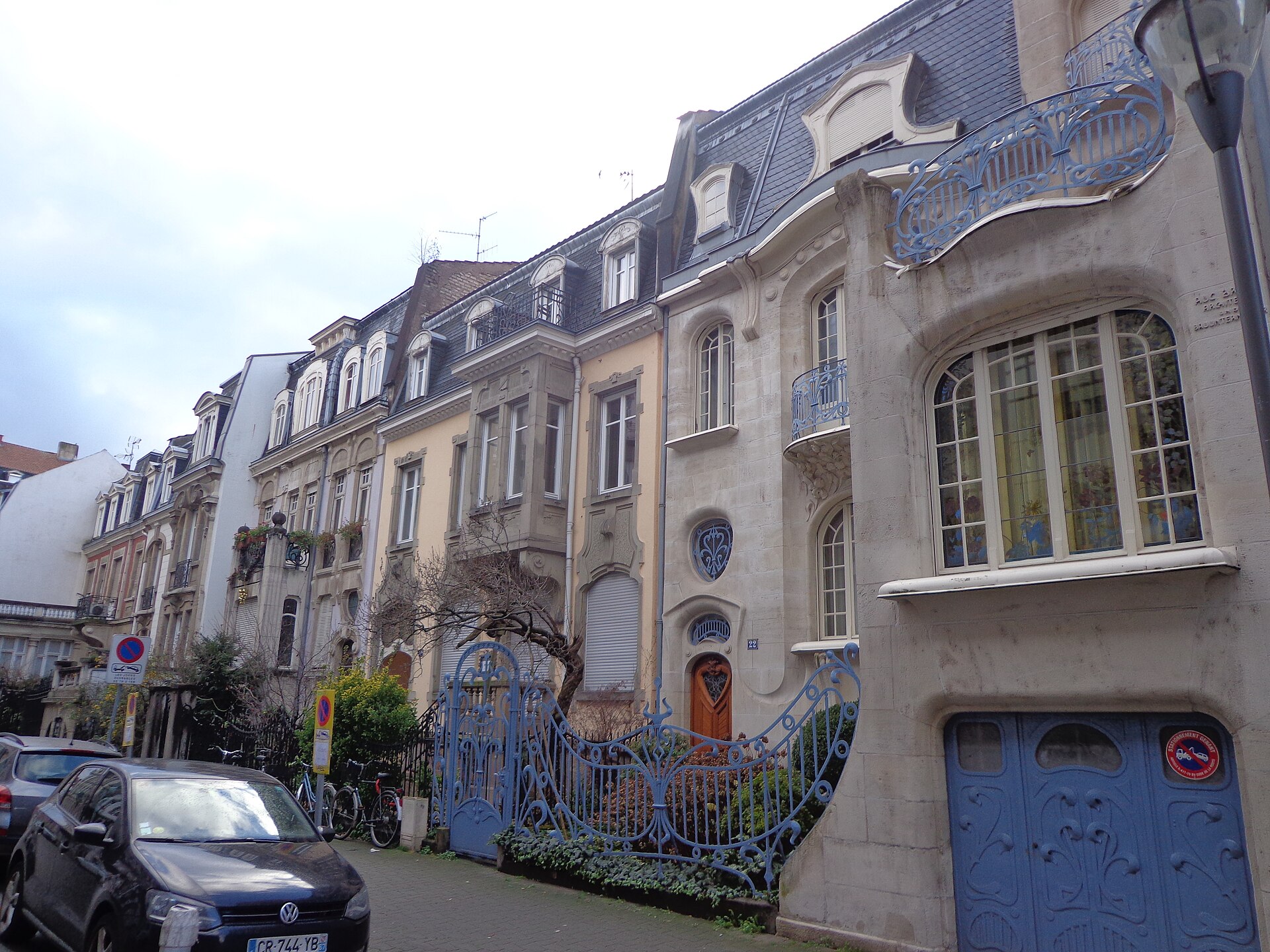

Strasbourg has two faces. The old town on its island, with the great red cathedral and the half-timbered houses of Petite France, is pure Alsace. Across the river lies the Neustadt, the new town built between 1871 and 1918, when the city belonged to Germany: wide avenues, palaces and whole streets of Jugendstil apartment houses. Since 2017 both are a UNESCO World Heritage Site, and together they make one of the most rewarding city breaks in France.
Facts checked: November 2026.
Strasbourg at a glance
- Best time to go: May to October, and from late November for the Christmas market.
- How long to stay: two or three days, with a day for the Alsace wine villages.
- Getting there: high-speed trains from Paris in about 1 hour 50 minutes; trains also run from Germany and Switzerland.
- Money: euro (EUR). Cards are accepted almost everywhere.
- Entry: France is in the EU and the Schengen area. Many non-EU visitors, including British, American, Canadian and Australian citizens, can visit visa-free for up to 90 days in any 180-day period. See Before you go below.
Then: a German city on the Rhine
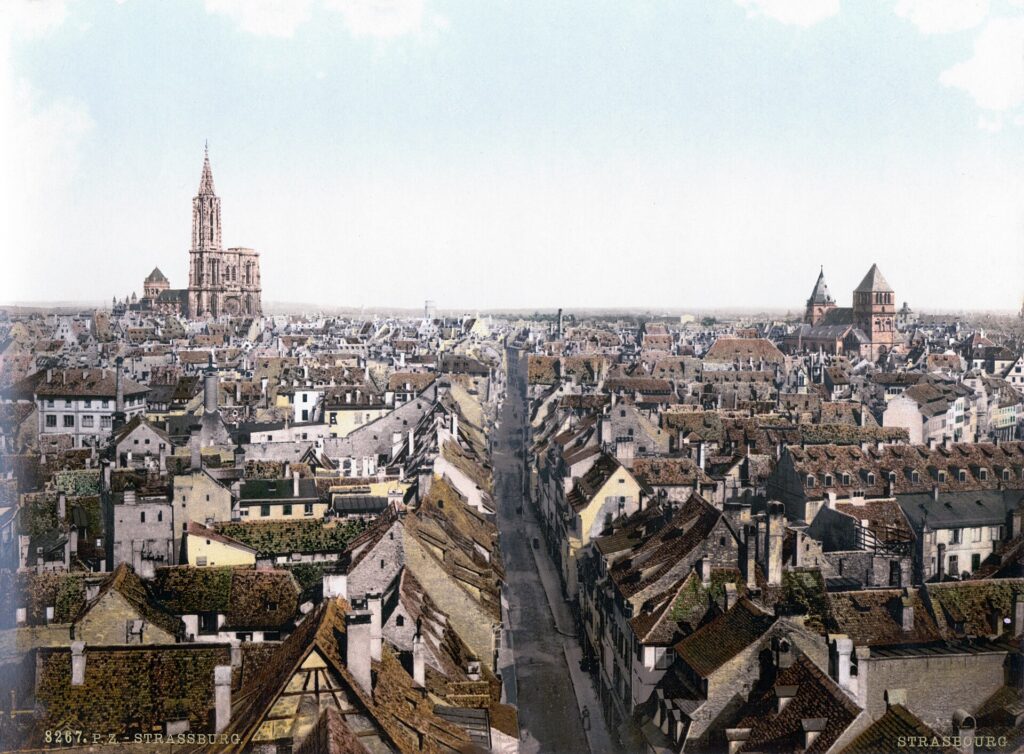

After the war of 1870 to 1871, Strasbourg became the capital of the German Reichsland of Alsace-Lorraine. The new rulers wanted a showcase, and they planned a whole new district to the north and east of the old town, with an imperial palace, a university, a railway station and a grid of avenues.
By 1900 the Neustadt was filling with apartment houses for the city’s middle classes, and many were built in the new Jugendstil, with flowers, curving windows and painted tiles. When Strasbourg returned to France in 1918, the district was complete.
Where to stay
- The Grande-Île: the old town on its island, around the cathedral and Petite France.
- The Neustadt: quieter streets near the university and the parks, among the Art Nouveau houses.
- Near the station: convenient for trains, a short walk or tram ride from the centre.
Stays
Compare places to stay in Strasbourg
Opening soon
Art Nouveau and heritage Strasbourg
The Neustadt and rue Sleidan
Walk from the Place de la République along the avenues of the Neustadt to rue Sleidan and the streets around it, where Jugendstil houses stand side by side. The Palais du Rhin, the former imperial palace, rises over the Place de la République.
The cathedral
The red sandstone cathedral with its single spire, its astronomical clock and its views from the platform, at the heart of the old town.
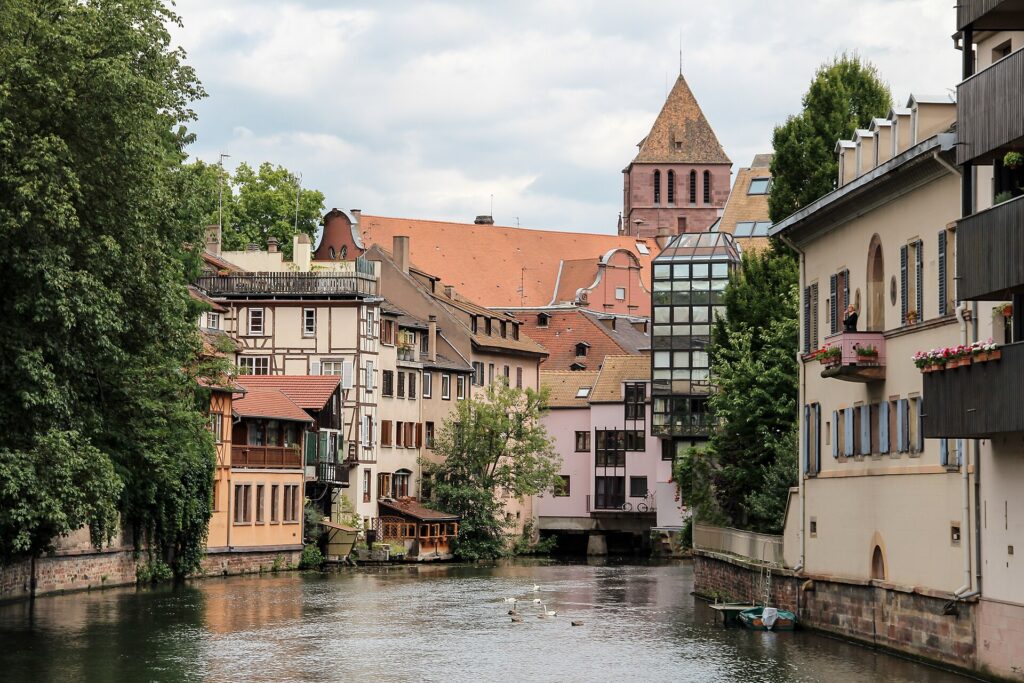

Petite France
The old quarter of tanners and millers, with half-timbered houses, canals and the covered bridges, best seen early in the morning or from a boat.
The Christmas market
One of the oldest Christmas markets in Europe, spread over the squares of the old town from late November until late December. Book your stay early if you come then.
Tours and activities
Compare tours and activities in Strasbourg
Opening soon
Getting there and getting around
Arriving
- By train: TGV high-speed trains from Paris Gare de l’Est, and trains from Germany and Switzerland, arrive at Strasbourg station.
- By air: Strasbourg has a small airport with a shuttle train to the city; many visitors fly to Basel-Mulhouse or Frankfurt and continue by train.
Flights
Compare flights to Strasbourg
Opening soon
Around the city
- On foot in the centre, and by tram for the rest; Strasbourg is also one of the best cycling cities in France.
- Car hire is not needed in the city; it is useful for the Alsace wine route and the Vosges mountains.
Car hire
Compare car hire in France
Opening soon
Staying connected
Visitors with an EU phone plan can roam at home prices. Others, including many UK plans, may pay extra, so an eSIM with a data allowance is a simple alternative.
eSIMs
Compare eSIMs for France
Opening soon
Before you go
- Entry rules: EU and EEA citizens only need a valid ID card or passport. Many other nationalities, including British, American, Canadian and Australian citizens, can visit the Schengen area visa-free for up to 90 days in any 180-day period. At the border, the EU’s Entry/Exit System registers non-EU visitors with fingerprints and a photo. ETIAS, an online travel authorisation, is expected to start in 2027 and is not needed yet. Always check the latest official advice, for example GOV.UK travel advice for France, or your own government’s.
- Swiss Art Nouveau: trains via Basel reach the watchmaking town of La Chaux-de-Fonds and its Style sapin in a few hours.
- Christmas market: expect crowds and security checks at the entrances to the old town at weekends.
- Opening days: many museums close on Mondays or Tuesdays.
Travel Emporium compares offers from trusted travel providers. When you book, you book and pay directly with the provider shown. Some links earn us a commission, at no extra cost to you. How we work