
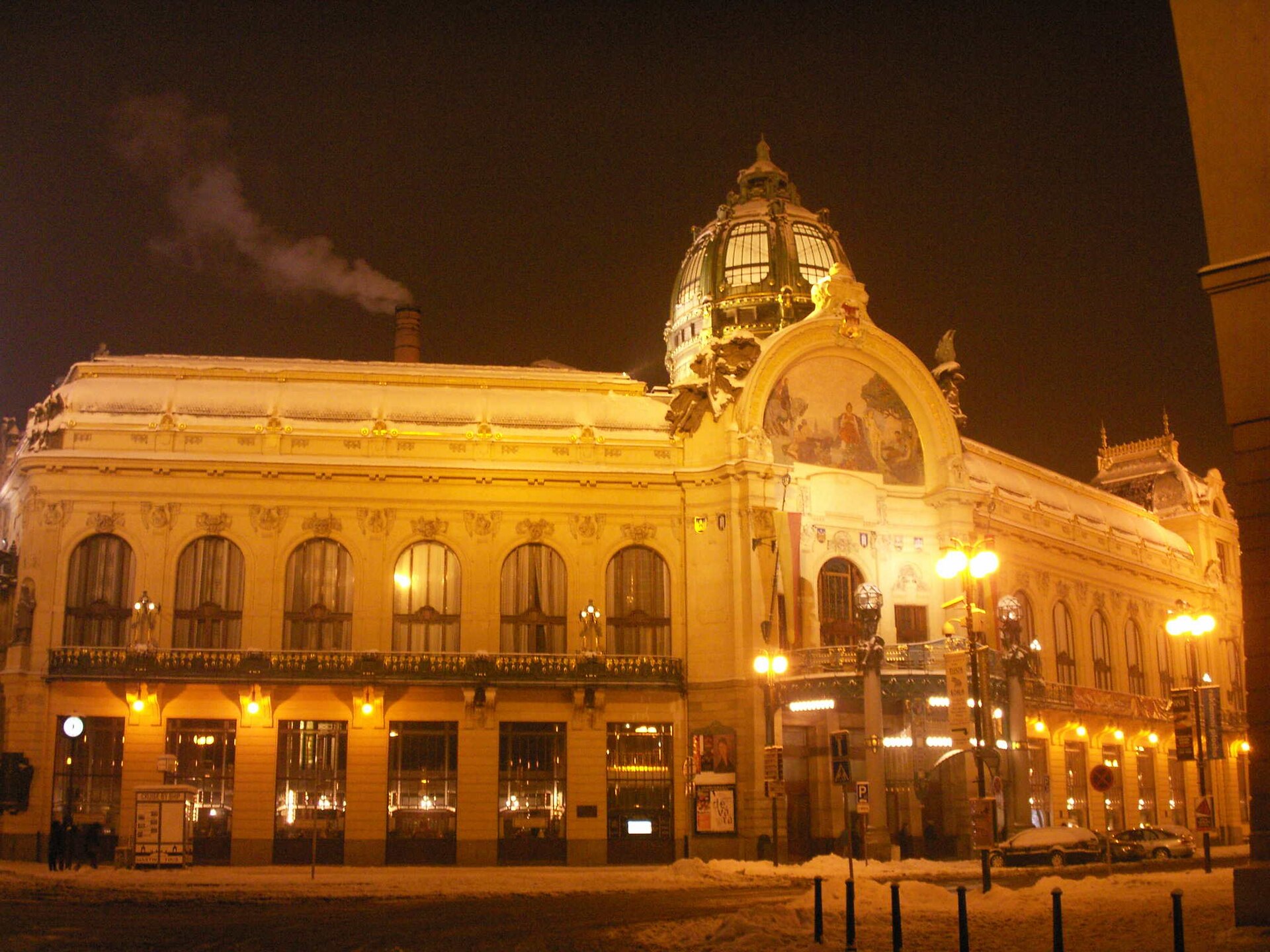

Prague is famous for its castle, its bridge and its hundred spires, but walk a few minutes from the Old Town Square and you are in another age: the glittering Municipal House, Alfons Mucha’s swirling posters, the stained glass and gilding of the Czech Art Nouveau, and the world’s only Cubist buildings. Few cities let you see so many styles in a single afternoon.
Facts checked: November 2026.
Prague at a glance
- Best time to go: April to June and September to October; December brings the Christmas markets on the Old Town and Wenceslas squares.
- How long to stay: three days, plus a day trip to Kutná Hora or Český Krumlov.
- Airport: Václav Havel Airport Prague (PRG), about 15 kilometres west of the centre.
- Money: Czech koruna (CZK), not the euro. Cards are accepted almost everywhere; avoid exchange offices with poor rates.
- Entry: Czechia is in the EU and the Schengen area. Many non-EU visitors, including British, American, Canadian and Australian citizens, can visit visa-free for up to 90 days in any 180-day period. See Before you go below.
Then: Prague around 1900
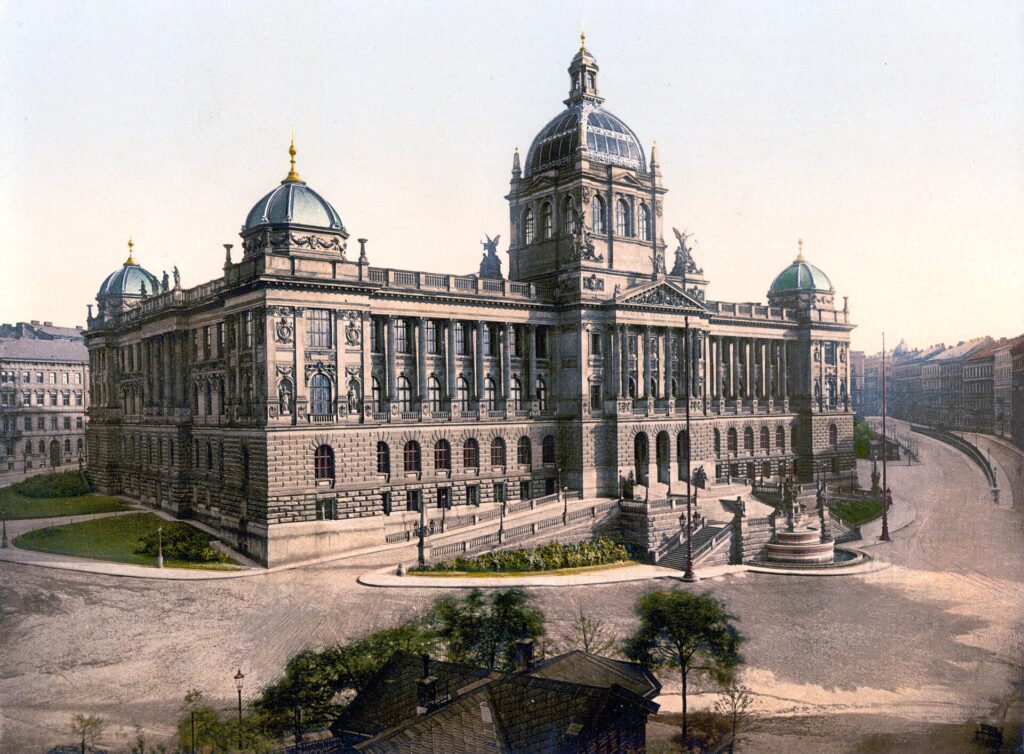

Around 1900 Prague was the capital of the Kingdom of Bohemia, part of Austria-Hungary, and a city in the middle of a Czech national revival. Its architects and artists answered with a style of their own, the Czech secese: Art Nouveau with Slavic patterns, gold mosaics and allegories of the nation.
Its high point is the Municipal House, built between 1905 and 1912, where artists such as Alfons Mucha decorated the halls. In 1918 the independence of Czechoslovakia was proclaimed there. Just before the First World War, Prague’s architects went a step further and built in Cubism, a style found nowhere else in architecture.
Where to stay
- The Old Town (Staré Město): cobbled lanes and the famous square, close to everything; busy by day.
- Around the Municipal House and Na Příkopě: central, between the Old Town and Wenceslas Square.
- The Lesser Town (Malá Strana): below the castle, quieter at night, with Baroque palaces and gardens.
- Vinohrady: a leafy residential district of Art Nouveau apartment houses, cafés and wine bars, a few tram stops from the centre.
Stays
Compare places to stay in Prague
Opening soon
Art Nouveau and Cubist Prague
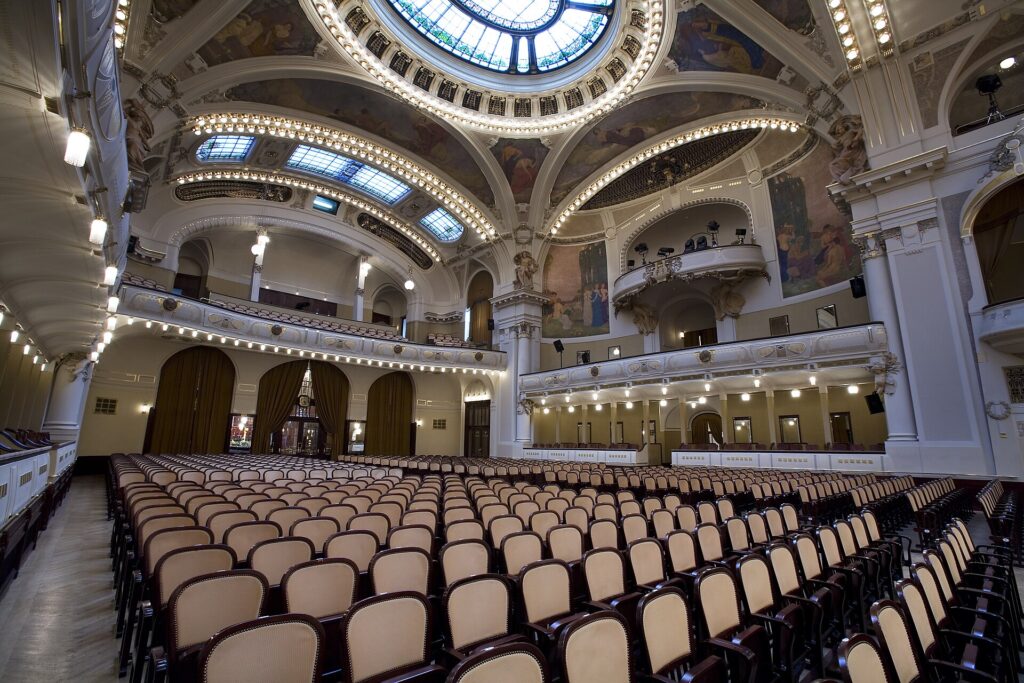

The Municipal House
Prague’s great Art Nouveau palace, with the Smetana concert hall under its glass dome and halls decorated by Mucha and other Czech artists. Join a guided tour of the interiors, take coffee in the café or book a concert.
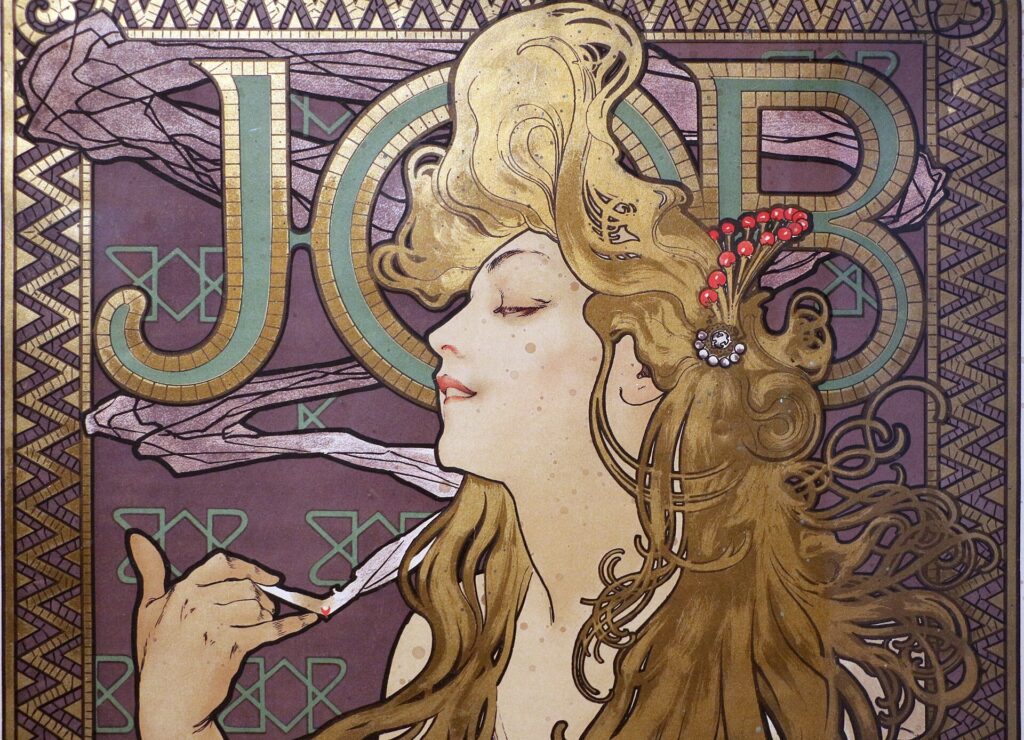

The Mucha Museum
Alfons Mucha made his name in Paris in the 1890s with posters for Sarah Bernhardt and for brands such as JOB cigarette papers. The Mucha Museum opened in 2025 in the restored Savarin Palace on Na Příkopě, with original posters, drawings and photographs.
Mucha’s window in St Vitus Cathedral
In the cathedral at Prague Castle, look for the stained-glass window Mucha designed in the early 1930s, glowing in blues and golds among the older glass.
The House of the Black Madonna
A department store of 1912 by Josef Gočár and the best-known Cubist building in the world, with angular windows and a staircase to match. Upstairs, the Grand Café Orient has Cubist lamps, chairs and cakes.
The main station
Behind the modern concourse of Praha hlavní nádraží hides the original Art Nouveau station hall by Josef Fanta, with its dome, towers and painted decoration. Look up as you change trains.
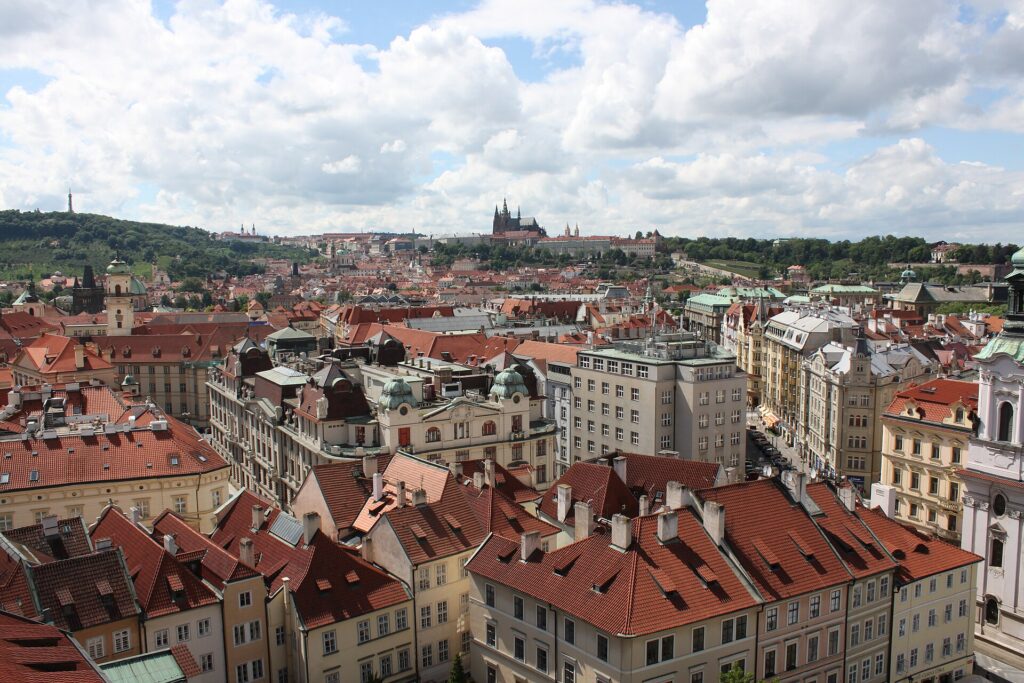

Prague Castle and Charles Bridge
Older than any of the above, but no visit is complete without them. Cross Charles Bridge early in the morning, before the crowds, and climb to the castle for the view over the red roofs.
Tours and activities
Compare tours and activities in Prague
Opening soon
Getting there and getting around
Arriving
- By air: airport buses connect with the metro and the main station; a taxi or ride-hailing car takes about half an hour to the centre.
- By train: direct trains from Vienna, Berlin and Budapest, with night trains on some routes.
Flights
Compare flights to Prague
Opening soon
Around the city
- On foot for the centre, and by tram for everything else: Prague’s trams are frequent and easy, and day tickets cover trams, metro and buses.
- Car hire is not needed in the city; it is useful for Český Krumlov and the Bohemian countryside.
Car hire
Compare car hire in Czechia
Opening soon
Staying connected
Visitors with an EU phone plan can roam at home prices. Others, including many UK plans, may pay extra, so an eSIM with a data allowance is a simple alternative.
eSIMs
Compare eSIMs for Czechia
Opening soon
Before you go
- Entry rules: EU and EEA citizens only need a valid ID card or passport. Many other nationalities, including British, American, Canadian and Australian citizens, can visit the Schengen area visa-free for up to 90 days in any 180-day period. At the border, the EU’s Entry/Exit System registers non-EU visitors with fingerprints and a photo. ETIAS, an online travel authorisation, is expected to start in 2027 and is not needed yet. Always check the latest official advice, for example GOV.UK travel advice for the Czech Republic, or your own government’s.
- Combine it: the Belle Époque spa of Karlovy Vary is two hours away by bus, and our Central Europe 1900 by train journey continues to Brno, Vienna and Budapest.
- Tickets: buy and validate a public transport ticket before you ride; inspectors check.
- Money: pay in koruna and, when a card machine asks, choose to be charged in koruna rather than your home currency.
Travel Emporium compares offers from trusted travel providers. When you book, you book and pay directly with the provider shown. Some links earn us a commission, at no extra cost to you. How we work