
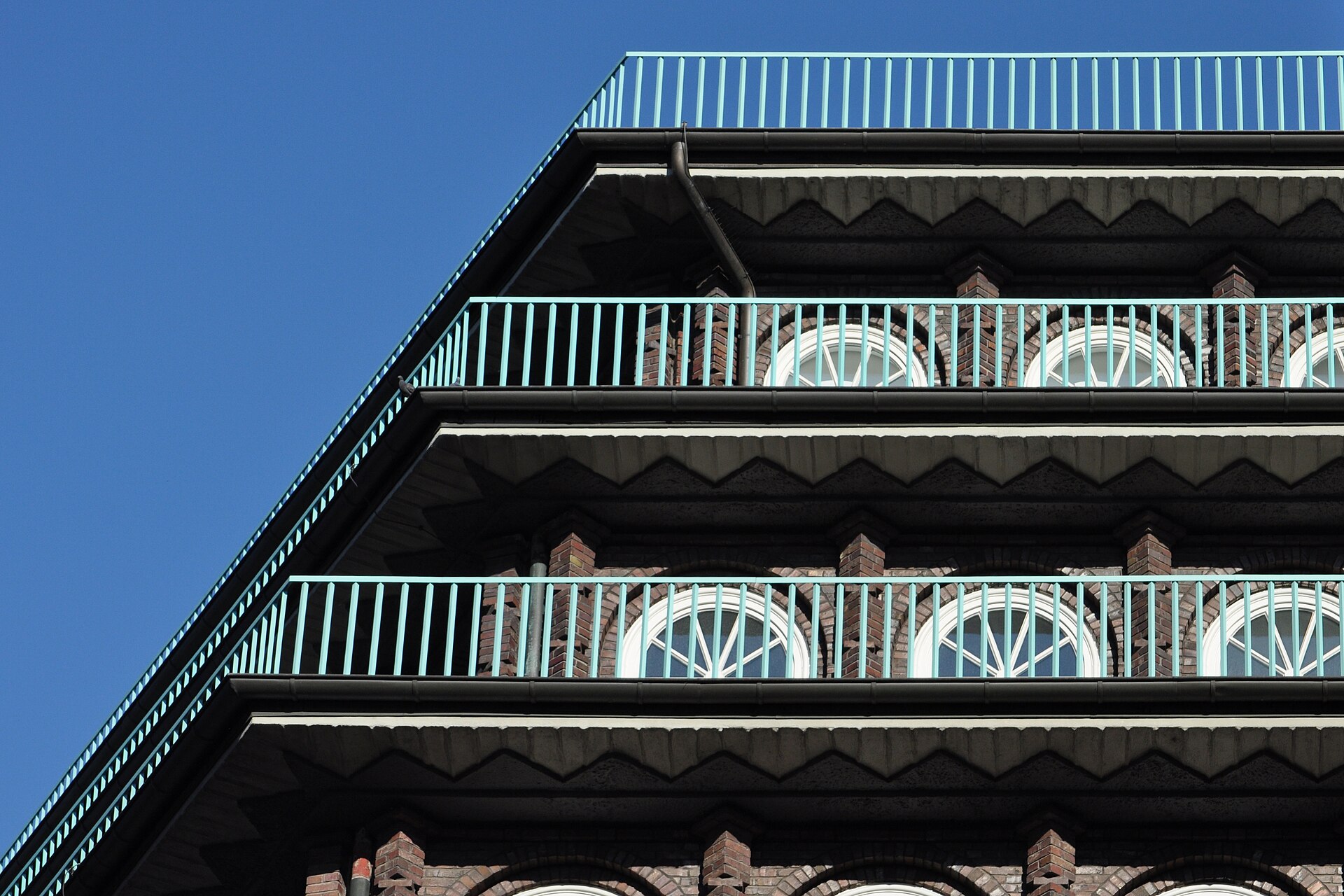

Hamburg built its 1920s in brick. While other cities used white plaster, the great port city clad its new office buildings in dark, glazed clinker brick, shaped into prows, pinnacles and zigzags. The Chilehaus, its corner as sharp as a ship’s bow, became an icon of the age, and together with the older warehouse city of the Speicherstadt it is now a UNESCO World Heritage Site. Add the Alster lakes, the harbour, the Elbphilharmonie and a lively night life, and Hamburg is one of Germany’s most rewarding cities.
Facts checked: November 2026.
Hamburg at a glance
- Best time to go: May to September; December for the Christmas markets.
- How long to stay: three days.
- Getting there: Hamburg airport (HAM) is linked to the centre by S-Bahn in about 25 minutes; fast trains from Berlin take about 1 hour 45 minutes.
- Money: euro (EUR). Cards are widely accepted, but some small cafés and bars still prefer cash.
- Entry: Germany is in the EU and the Schengen area. Many non-EU visitors, including British, American, Canadian and Australian citizens, can visit visa-free for up to 90 days in any 180-day period. See Before you go below.
Then: the gateway to the world
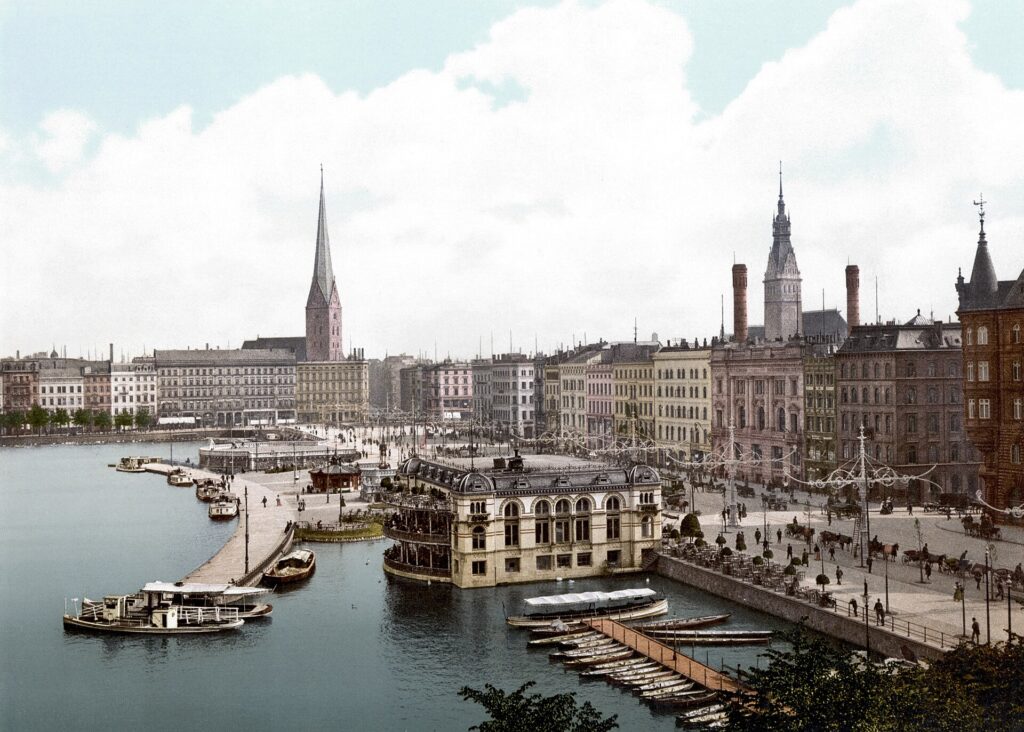

Around 1900 Hamburg was one of the busiest ports in Europe and the starting point for millions of emigrants sailing to America. Its merchants built grand houses around the Alster lakes, and between 1883 and 1927 the city raised the Speicherstadt, a district of brick warehouses on oak piles in the harbour.
After the First World War, the city needed offices for its trading firms. In the Kontorhaus district, architects such as Fritz Höger built them in brick, with the sharp lines and rich detail of Expressionism and Art Deco. The Chilehaus, finished in 1924, was paid for by a merchant who had made his fortune in Chile.
Where to stay
- Altstadt and Neustadt: the centre, between the Alster, the Kontorhaus district and the harbour.
- HafenCity and the Speicherstadt: the new waterfront district beside the warehouses and the Elbphilharmonie.
- St. Georg and Sternschanze: lively districts with cafés and bars, close to the central station or the parks.
Stays
Compare places to stay in Hamburg
Opening soon
Brick Art Deco and heritage Hamburg
The Chilehaus
Fritz Höger’s office building of 1922 to 1924, with its pointed corner like a ship’s bow and walls of dark brick that seem to ripple in the light. Walk round it, and look into the stairwells and passages.

The Kontorhaus district
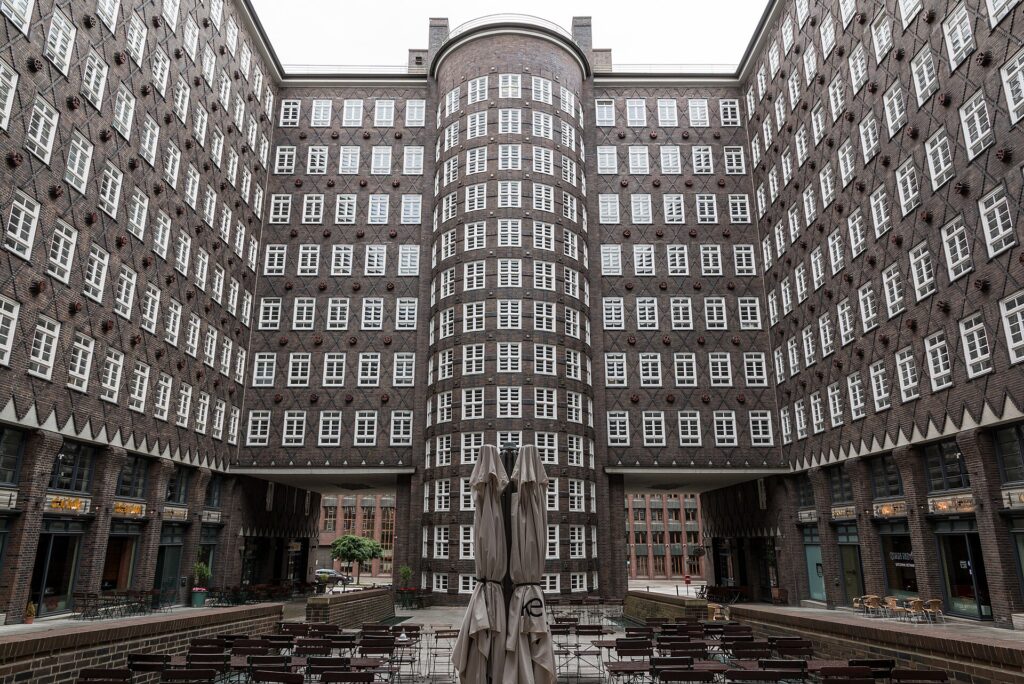
Next to the Chilehaus, the Sprinkenhof and the other office buildings of the 1920s and 1930s form a whole quarter of brick, with ceramic details and grand entrances.

The Speicherstadt
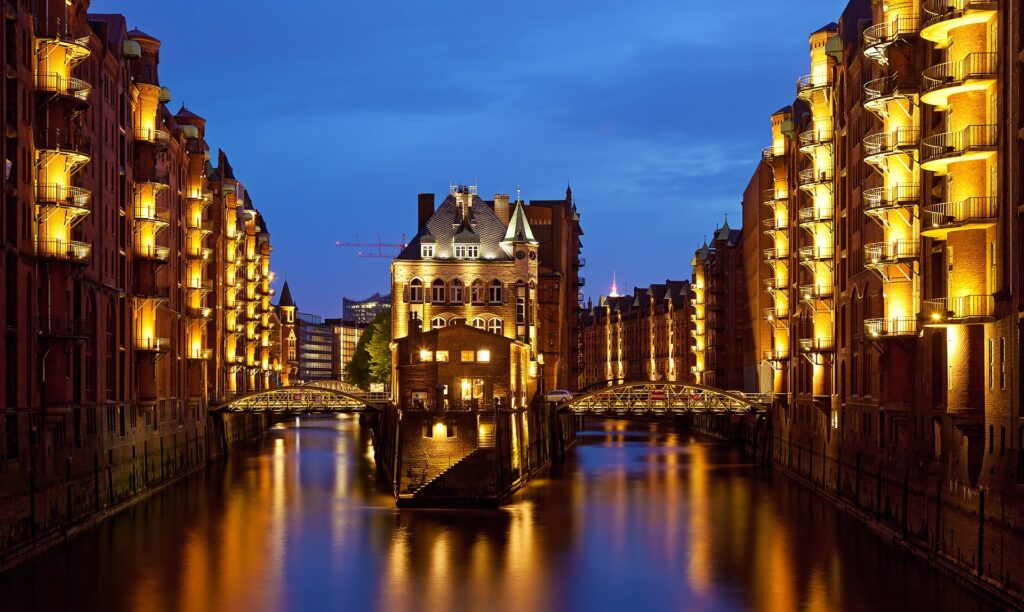
The largest warehouse district of its kind in the world, built between 1883 and 1927, with canals, bridges and Neo-Gothic gables. It is at its best in the evening, when the buildings are lit.
The Alster and the harbour
Walk around the Binnenalster and along the Jungfernstieg, then take a harbour ferry for views of the port and the Elbphilharmonie concert hall. At Ballinstadt, a museum tells the story of the emigrants who left from Hamburg.
Tours and activities
Compare tours and activities in Hamburg
Opening soon
Getting there and getting around
Arriving
- By air: Hamburg airport (HAM) is north of the city, about 25 minutes from the central station by S-Bahn.
- By train: fast trains from Berlin, Copenhagen, Cologne and other cities arrive at Hamburg Hauptbahnhof.
Flights
Compare flights to Hamburg
Opening soon
Around the city
- On foot in the centre, and by U-Bahn, S-Bahn, bus and harbour ferry for the rest; the harbour ferries are part of the city transport network.
- Car hire is not needed in the city; it is useful for the Baltic and North Sea coasts and the old Hanseatic towns of Lübeck and Lüneburg.
Car hire
Compare car hire in Germany
Opening soon
Staying connected
Visitors with an EU phone plan can roam at home prices. Others, including many UK plans, may pay extra, so an eSIM with a data allowance is a simple alternative.
eSIMs
Compare eSIMs for Germany
Opening soon
Before you go
- Entry rules: EU and EEA citizens only need a valid ID card or passport. Many other nationalities, including British, American, Canadian and Australian citizens, can visit the Schengen area visa-free for up to 90 days in any 180-day period. At the border, the EU’s Entry/Exit System registers non-EU visitors with fingerprints and a photo. ETIAS, an online travel authorisation, is expected to start in 2027 and is not needed yet. Always check the latest official advice, for example GOV.UK travel advice for Germany, or your own government’s.
- Make it a journey: combine this city with its neighbours on our From Jugendstil to Bauhaus by train route.
- The Elbphilharmonie: the public viewing platform, the Plaza, needs a timed ticket; book ahead at busy times, as concerts sell out early.
- Opening days: many museums close on Mondays.
Travel Emporium compares offers from trusted travel providers. When you book, you book and pay directly with the provider shown. Some links earn us a commission, at no extra cost to you. How we work