
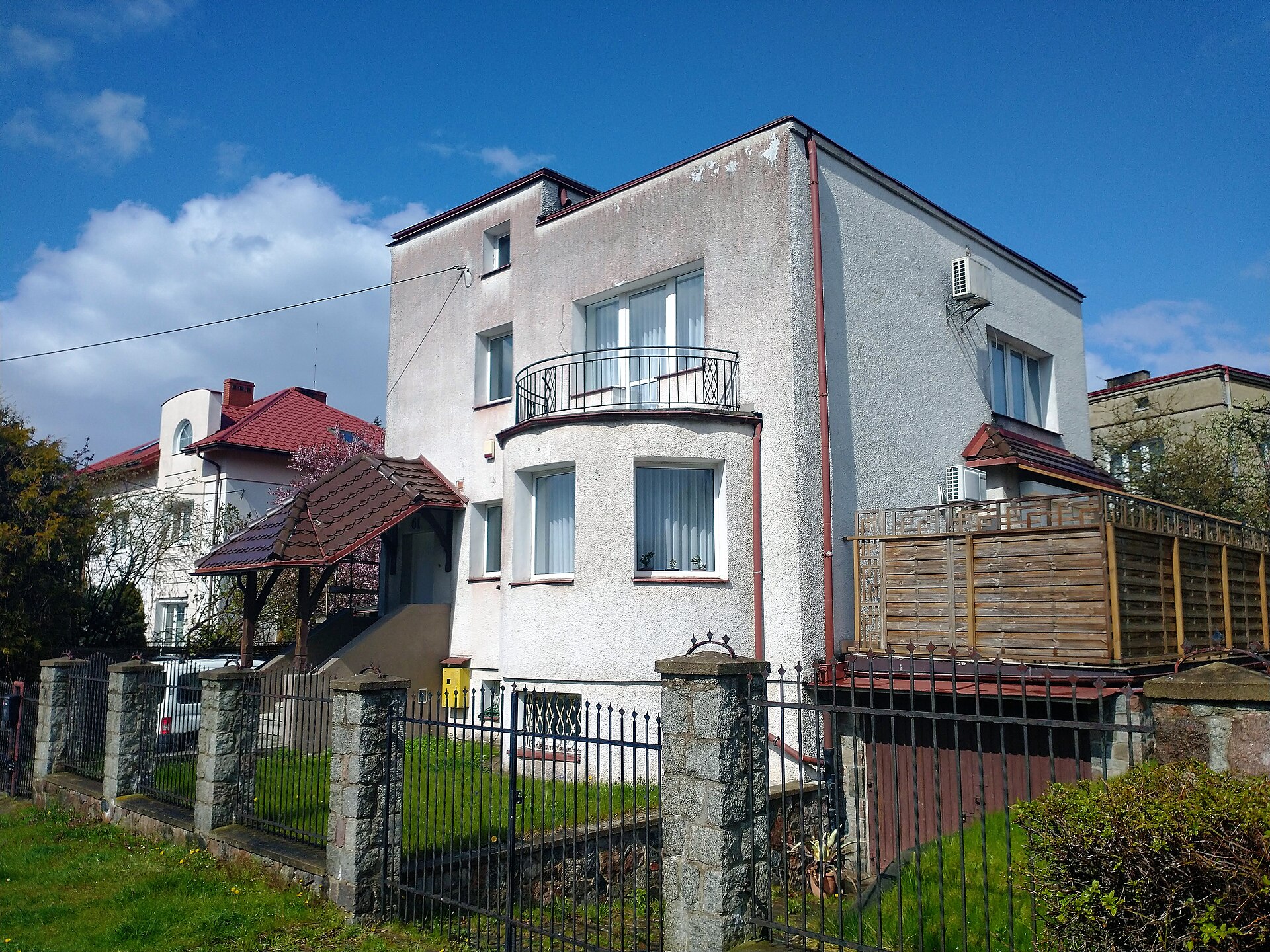

Gdynia is the city the 1930s built. A hundred years ago it was a fishing village; then the new Polish state chose it for its port, and in less than twenty years it grew into a city of white, streamlined buildings with rounded corners and ship-like balconies. Its modernist centre is one of the finest of its time in Europe, and with the sea at the end of the main street, sailing ships at the pier and Gdańsk and Sopot a short train ride away, it makes an easy and rewarding trip.
Facts checked: November 2026.
Gdynia at a glance
- Best time to go: June to September for the beaches and the sea; spring and autumn are quieter and cooler.
- How long to stay: two days for Gdynia, or longer as a base for the whole Tricity of Gdańsk, Sopot and Gdynia.
- Getting there: fly to Gdańsk airport (GDN) and take the train; fast trains from Warsaw take about 3 hours.
- Money: Polish złoty (PLN). Cards are accepted almost everywhere.
- Entry: Poland is in the EU and the Schengen area. Many non-EU visitors, including British, American, Canadian and Australian citizens, can visit visa-free for up to 90 days in any 180-day period. See Before you go below.
Then: a city built in the 1930s

After the First World War, Poland had only a short stretch of coast, and no large port of its own. The government chose the village of Gdynia, built a harbour from the early 1920s and gave the new town its city rights in 1926. By 1939 more than 100,000 people lived there.
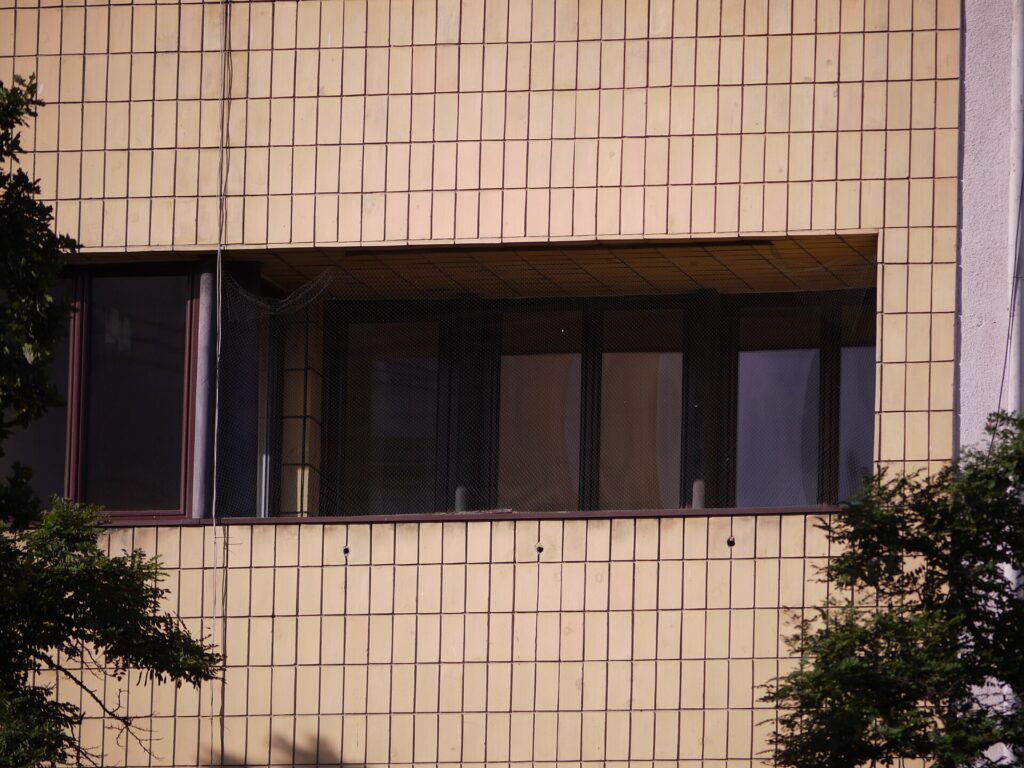
Almost everything was built in those years, in the style of the moment: functionalism and streamlined modernism, with white walls, long horizontal windows, round corner towers and porthole windows that recall the ocean liners leaving from the harbour. In 1933 the Marine Station opened for passengers sailing to New York and South America.
Where to stay
- The city centre: around Świętojańska and 10 Lutego streets, between the station and the sea, with the best of the modernist buildings.
- Kamienna Góra and Orłowo: quieter districts on the hill and by the beach, with villas from the 1930s and views of the bay.
- Sopot or Gdańsk: the resort and the old Hanseatic city are 10 to 30 minutes away by local train.
Stays
Compare places to stay in Gdynia
Opening soon
Modernist and maritime Gdynia
The modernist centre
Walk along Świętojańska, 10 Lutego and the streets around Skwer Kościuszki to see the apartment blocks, banks and offices of the 1930s, with their curved corners, balconies like ship decks and fine doorways. Poland lists the centre as a national Monument of History.
The Emigration Museum
In the Marine Station of 1933, where emigrants boarded ships for the Americas, a museum now tells their story. The building itself, with its long hall and quayside, is one of Gdynia’s landmarks.
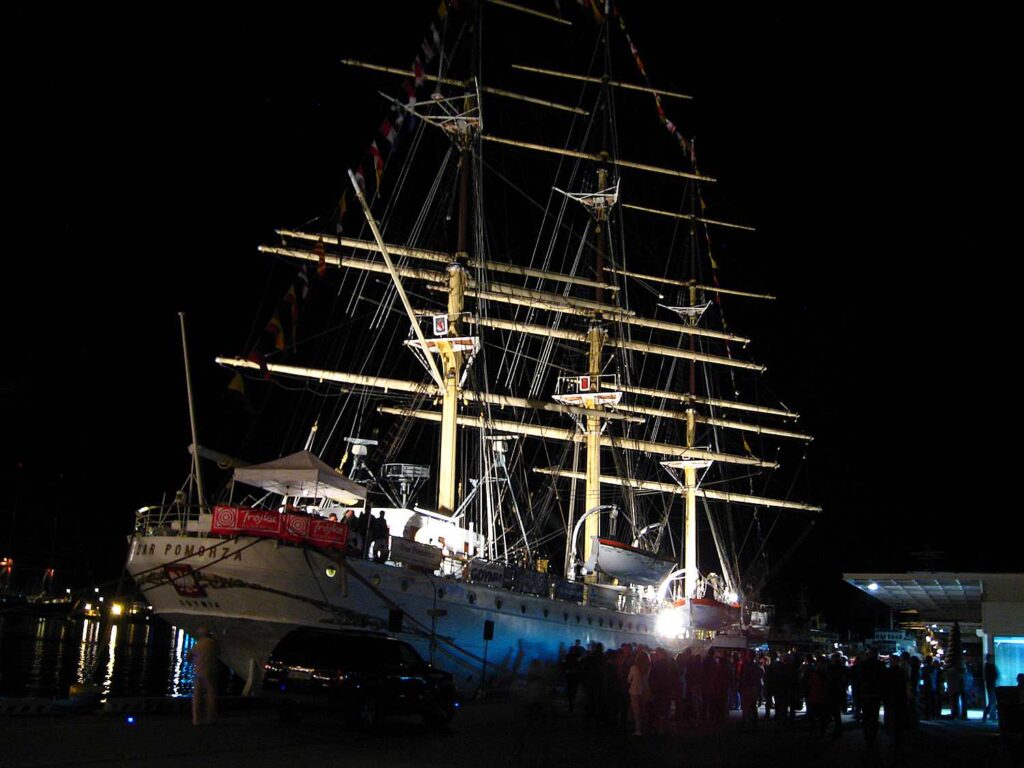

Dar Pomorza
A three-masted sailing ship of 1909, which trained Polish sailors and sailed around the world. It is now a museum ship at the pier at the end of Skwer Kościuszki.
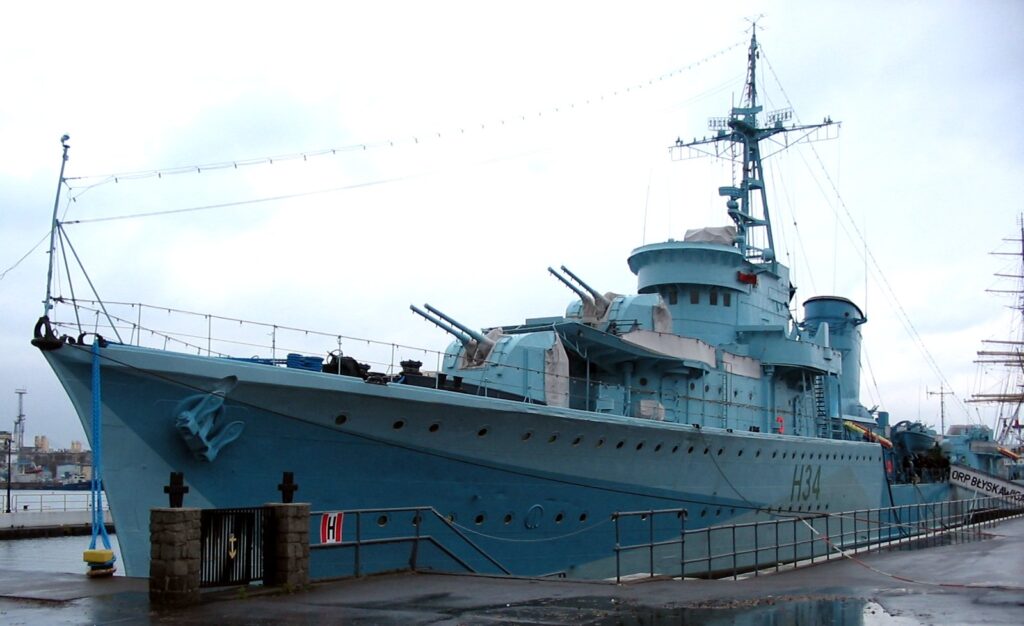

ORP Błyskawica
A destroyer of 1936 that served through the Second World War, now a museum ship next to Dar Pomorza. Check the opening days before you go.
Orłowo and Kamienna Góra
The pier and the cliff at Orłowo, and the viewpoint on Kamienna Góra hill, show the city and the bay from their best side.
Tours and activities
Compare tours and activities in Gdynia
Opening soon
Getting there and getting around
Arriving
- By air: Gdańsk airport (GDN) is linked to Gdynia by train in about 40 minutes, with a change at Gdańsk Wrzeszcz on some services.
- By train: fast trains from Warsaw, Kraków and other Polish cities run to Gdynia Główna, the main station.
Flights
Compare flights to Gdańsk
Opening soon
Around the city
- On foot for the centre and the pier, and by local train (SKM) along the coast to Sopot and Gdańsk; buses and trolleybuses reach the rest.
- Car hire is not needed in the Tricity; it is useful for the Hel peninsula, the Kashubian lakes and Malbork castle.
Car hire
Compare car hire in Poland
Opening soon
Staying connected
Visitors with an EU phone plan can roam at home prices. Others, including many UK plans, may pay extra, so an eSIM with a data allowance is a simple alternative.
eSIMs
Compare eSIMs for Poland
Opening soon
Before you go
- Entry rules: EU and EEA citizens only need a valid ID card or passport. Many other nationalities, including British, American, Canadian and Australian citizens, can visit the Schengen area visa-free for up to 90 days in any 180-day period. At the border, the EU’s Entry/Exit System registers non-EU visitors with fingerprints and a photo. ETIAS, an online travel authorisation, is expected to start in 2027 and is not needed yet. Always check the latest official advice, for example GOV.UK travel advice for Poland, or your own government’s.
- Make it a journey: combine this city with its neighbours on our Interwar modernism by train route.
- Museum ships: opening times change with the season, and some close in winter.
- Opening days: many museums close on Mondays.
Travel Emporium compares offers from trusted travel providers. When you book, you book and pay directly with the provider shown. Some links earn us a commission, at no extra cost to you. How we work