


Rio de Janeiro has one of the most spectacular settings of any city, between granite peaks, forest and the Atlantic beaches of Copacabana and Ipanema. It also has a rich heritage from its years as Brazil’s capital: a Paris-style boulevard from 1905, a mirrored Belle Époque café, an opera house modelled on the Paris Opéra, and above them all the statue of Christ the Redeemer, finished in 1931 and one of the great Art Deco works of the world.
Facts checked: November 2026.
Rio de Janeiro at a glance
- Best time to go: April to October, when it is drier and less hot; Carnival fills the city in February or March.
- How long to stay: four or five days.
- Getting there: Rio de Janeiro–Galeão International Airport (GIG) has flights from Europe, North America and across South America.
- Money: Brazilian real (BRL). Cards are widely accepted; carry a little cash for beach kiosks and markets.
- Entry: British and EU citizens can visit Brazil without a visa for short stays; Americans, Canadians and Australians need an e-visa. See Before you go below.
Then: the capital of the Belle Époque
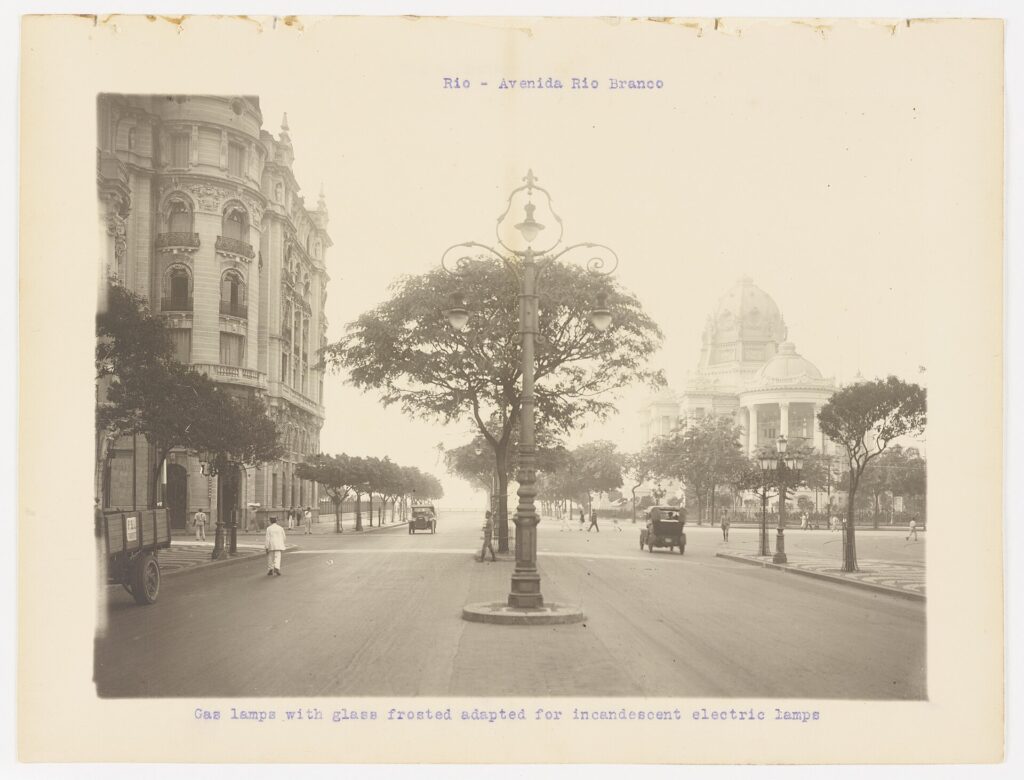

Rio was Brazil’s capital until 1960. In the first years of the 20th century its mayor, Pereira Passos, cut a great boulevard, the Avenida Central (now Avenida Rio Branco), through the old town, and lined it with buildings in the latest Paris style. The Theatro Municipal opened in 1909, and the cafés of the centre filled with poets and politicians.
In 1922 Brazil celebrated a hundred years of independence, and a year later the Copacabana Palace opened on the then quiet beach. In 1931 the statue of Christ the Redeemer, designed by the engineer Heitor da Silva Costa with the French sculptor Paul Landowski, was finished on top of Corcovado, and through the 1930s Copacabana filled with Art Deco apartment blocks.
Where to stay
- Copacabana: beach hotels and Art Deco apartment blocks along Avenida Atlântica, close to the metro.
- Ipanema and Leblon: quieter, more upmarket beach districts with restaurants and bars.
- Santa Teresa: a hilltop district of old villas and guest houses, with views over the centre.
Stays
Compare places to stay in Rio de Janeiro
Opening soon
Art Deco and heritage Rio
Christ the Redeemer and Corcovado
Ride the rack railway through the forest to the top of Corcovado and stand beneath the statue of 1931. Go early on a clear day, and book your ticket ahead.
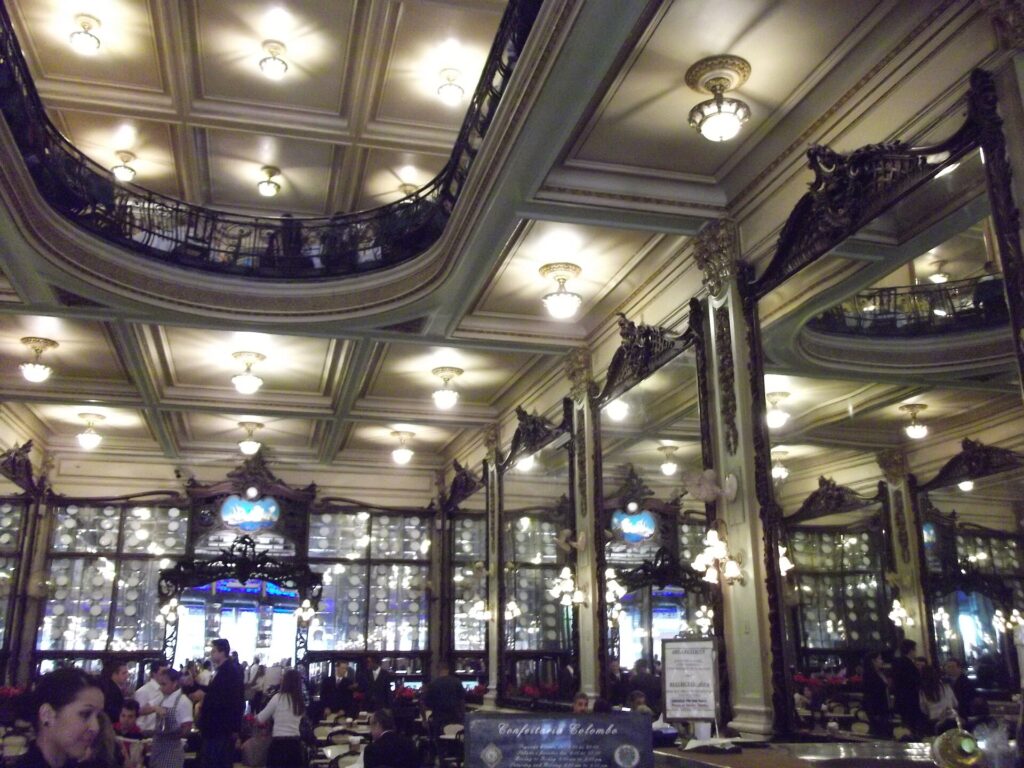

The Confeitaria Colombo
A café of 1894 in the old centre, with huge mirrors, stained glass and marble counters. Come for coffee and pastries, and expect a queue at busy times.
The Theatro Municipal and Cinelândia
The opera house of 1909, modelled on the Paris Opéra, offers guided tours; the square in front, Cinelândia, is named after the cinemas of the 1920s and 1930s.
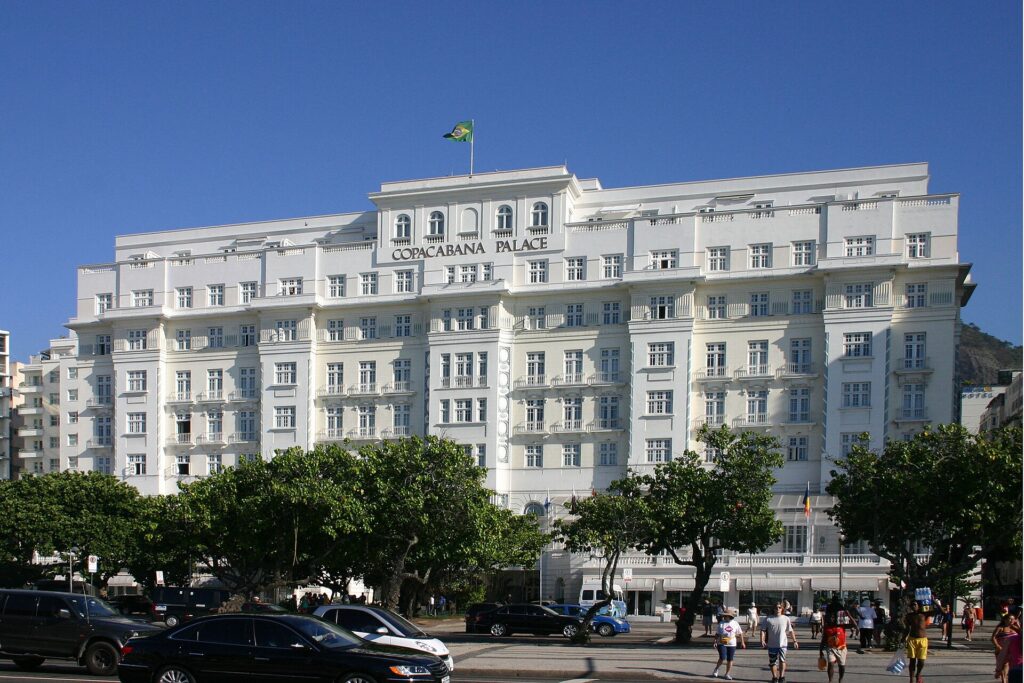

The Copacabana Palace and the beach
The white palace hotel of 1923 on Avenida Atlântica. Have a drink by the pool or simply admire it from the beach promenade, then walk past the Art Deco blocks to Ipanema.
Tours and activities
Compare tours and activities in Rio de Janeiro
Opening soon
Getting there and getting around
Arriving
- By air: Galeão International Airport (GIG) for most international flights, and Santos Dumont airport (SDU), near the centre, for domestic flights.
Flights
Compare flights to Rio de Janeiro
Opening soon
Around the city
- By metro: clean and safe, linking the centre with Copacabana, Ipanema and Barra.
- By app or taxi: the easiest option at night.
- Car hire is not recommended in the city; it is useful for the coast towards Paraty and the mountains of Petrópolis.
Car hire
Compare car hire in Brazil
Opening soon
Staying connected
Many foreign phone plans charge extra in Brazil, so an eSIM with a data allowance is a simple way to stay online.
eSIMs
Compare eSIMs for Brazil
Opening soon
Before you go
- Entry rules: British and EU citizens can visit Brazil without a visa for short stays. Since 2025, citizens of the United States, Canada and Australia need an e-visa before they travel. Always check the latest official advice, for example GOV.UK travel advice for Brazil, or your own government’s.
- Safety: keep valuables out of sight, especially on the beach and at night, and take local advice before visiting any favela; go with a reputable guide.
- Combine it: for more Art Deco in South America, see our Buenos Aires and Montevideo guides.
Travel Emporium compares offers from trusted travel providers. When you book, you book and pay directly with the provider shown. Some links earn us a commission, at no extra cost to you. How we work