
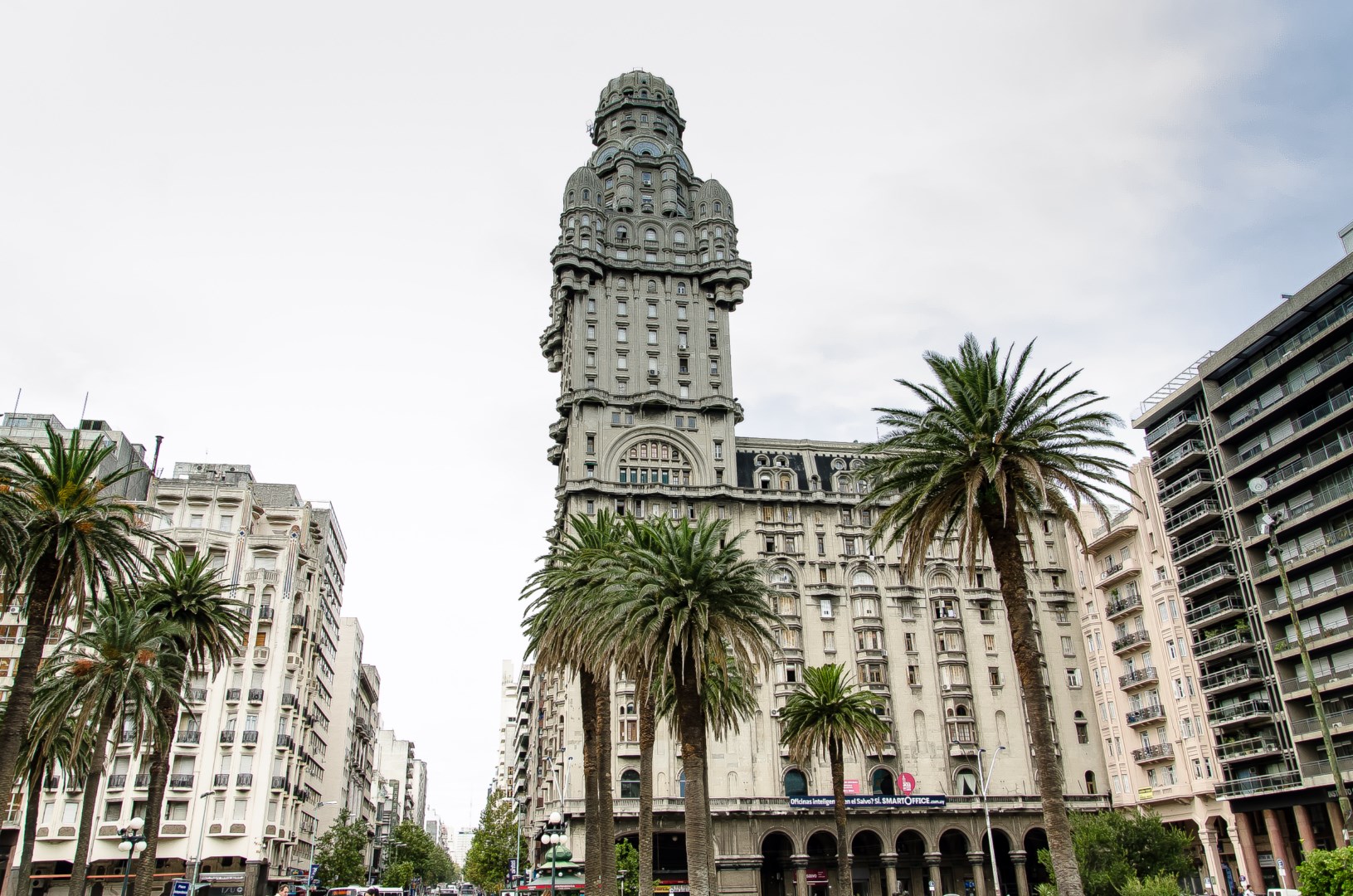

Montevideo is a relaxed capital on the wide brown estuary of the Río de la Plata, with a long seaside promenade, an old town full of grills and cafés, and a surprising amount of Art Deco. Uruguay grew rich between the wars, and its capital built the Palacio Salvo, once the tallest building in South America, a marble parliament and streets of streamlined apartment blocks. It is calmer than Buenos Aires across the river, and easy to love.
Facts checked: November 2026.
Montevideo at a glance
- Best time to go: November to March, the southern summer, for the beaches and the long Carnival season; spring and autumn are mild.
- How long to stay: two or three days, or longer with the coast.
- Getting there: fast ferries from Buenos Aires, directly or via Colonia del Sacramento; Carrasco airport (MVD) is about 30 minutes from the centre.
- Money: Uruguayan peso (UYU). Cards are widely accepted.
- Entry: many visitors, including British, EU, American and Canadian citizens, can visit Uruguay without a visa for up to 90 days. See Before you go below.
Then: the Switzerland of South America
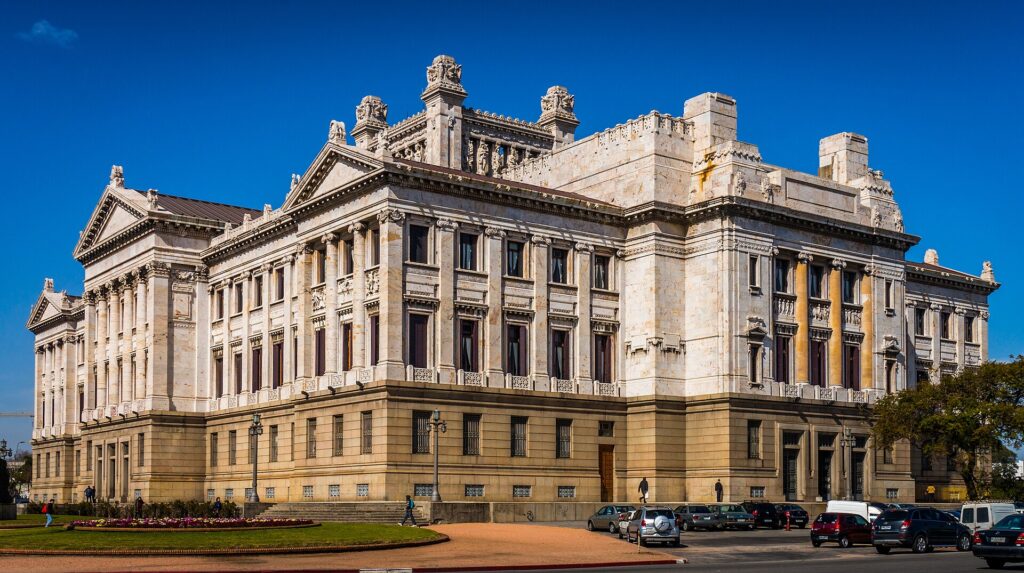

In the early 20th century Uruguay was prosperous and stable, with modern laws and a growing middle class, and people called it the Switzerland of South America. Montevideo built boulevards, a marble Palacio Legislativo, opened in 1925, and a long promenade by the water, the Rambla.
In 1928 the Italian architect Mario Palanti, who had designed the Palacio Barolo in Buenos Aires, finished the Palacio Salvo on Plaza Independencia. For years it was the tallest building in South America. Through the 1930s the avenues and the seaside districts filled with Art Deco apartment blocks, cinemas and shops.
Where to stay
- Ciudad Vieja and the Centro: the old town and the main avenue, 18 de Julio, close to the sights and the port.
- Pocitos: the beach district along the Rambla, with Art Deco blocks, restaurants and sand.
- Punta Carretas: quiet streets near the lighthouse and the coast.
Stays
Compare places to stay in Montevideo
Opening soon
Art Deco and heritage Montevideo
The Palacio Salvo and Plaza Independencia
Palanti’s tower of 1928 rises over the main square, at the gate to the old town. Guided tours take you inside and up the tower; check the times locally.
The Palacio Legislativo
The marble parliament of 1925 at the end of a grand avenue, with halls of coloured stone; guided tours are usually offered on weekdays.
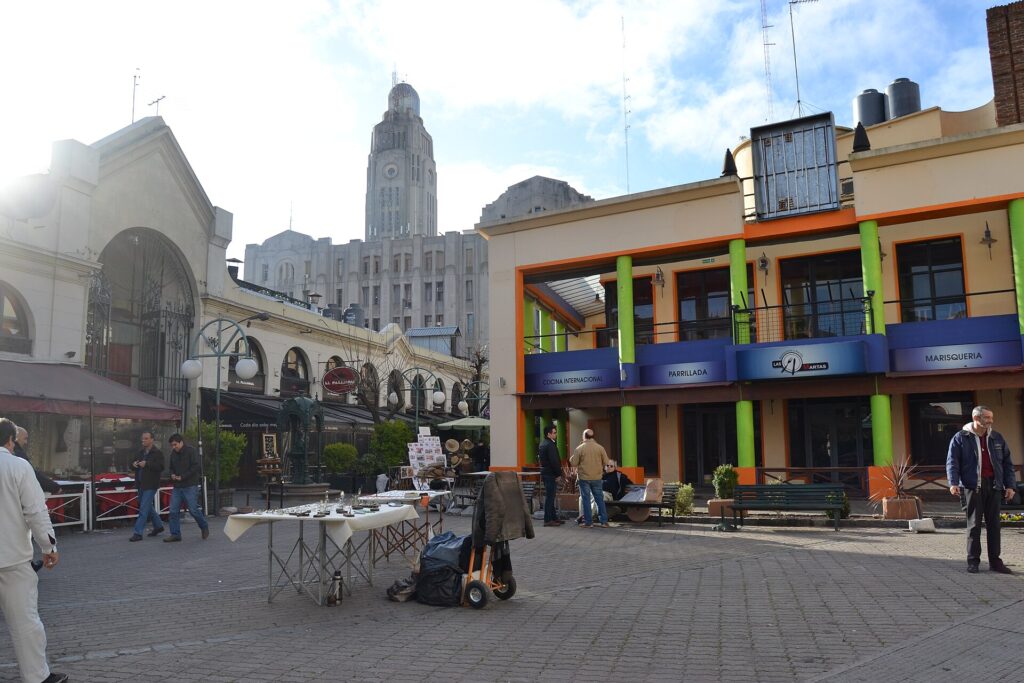

The Mercado del Puerto
An iron market hall of the 1860s by the port, full of parrillas grilling beef, sausages and vegetables over wood fires. Come at lunchtime.
The Teatro Solís and the Rambla
Uruguay’s grand theatre of 1856, then a walk or a bike ride along the Rambla, the long promenade that follows the shore past Pocitos and its Art Deco blocks.
Tours and activities
Compare tours and activities in Montevideo
Opening soon
Getting there and getting around
Arriving
- By ferry: fast ferries from Buenos Aires arrive at the port beside the old town; others run to Colonia del Sacramento, with a bus onwards. See our Buenos Aires guide.
- By air: Carrasco International Airport (MVD) has flights from Buenos Aires, São Paulo, Madrid and other cities.
Flights
Compare flights to Montevideo
Opening soon
Around the city
- On foot in the old town and the centre, and by bus or taxi along the Rambla.
- By bike on the Rambla’s waterside path.
- Car hire is useful for the beaches of the east coast and Punta del Este.
Car hire
Compare car hire in Uruguay
Opening soon
Staying connected
Many foreign phone plans charge extra in Uruguay, so an eSIM with a data allowance is a simple way to stay online.
eSIMs
Compare eSIMs for Uruguay
Opening soon
Before you go
- Entry rules: many nationalities, including British, EU, American and Canadian citizens, can visit Uruguay without a visa for up to 90 days. Always check the latest official advice, for example GOV.UK travel advice for Uruguay, or your own government’s.
- Carnival: Montevideo’s Carnival, with candombe drums and street theatre, runs for weeks in January and February.
- Combine it: Montevideo pairs well with Buenos Aires, where Palanti’s Palacio Barolo is the twin of the Palacio Salvo.
Travel Emporium compares offers from trusted travel providers. When you book, you book and pay directly with the provider shown. Some links earn us a commission, at no extra cost to you. How we work