
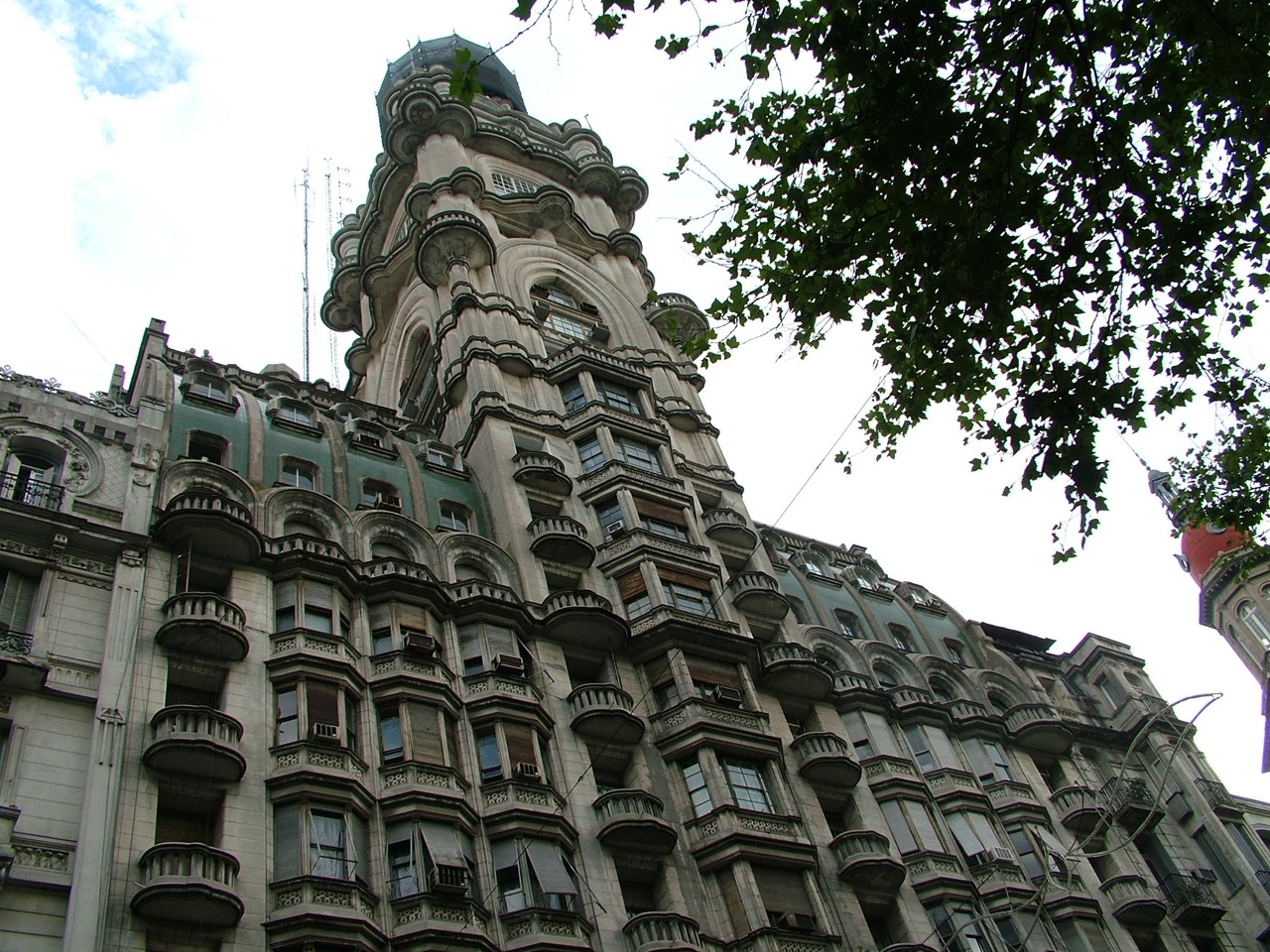

Around 1900 Buenos Aires was one of the richest cities in the world, and it built like Paris, Madrid and Milan at once. Its grand Avenida de Mayo is lined with palaces, theatres and historic cafés; the Palacio Barolo rises above it like a tower from Dante’s Divine Comedy; and in the 1930s the city added Art Deco skyscrapers and the Obelisco. Tango, steak and late nights do the rest.
Facts checked: November 2026.
Buenos Aires at a glance
- Best time to go: March to May and September to November, when it is warm but not hot. January and February are hot and humid.
- How long to stay: four or five days, with a day trip across the river to Uruguay.
- Getting there: most international flights land at Ezeiza (EZE), about an hour from the centre; domestic and regional flights use Aeroparque (AEP), close to the city.
- Money: Argentine peso (ARS). Prices change quickly, so check before you go how best to pay; cards are widely accepted.
- Entry: many visitors, including British, EU, American and Canadian citizens, can visit Argentina without a visa for up to 90 days. See Before you go below.
Then: the Paris of South America
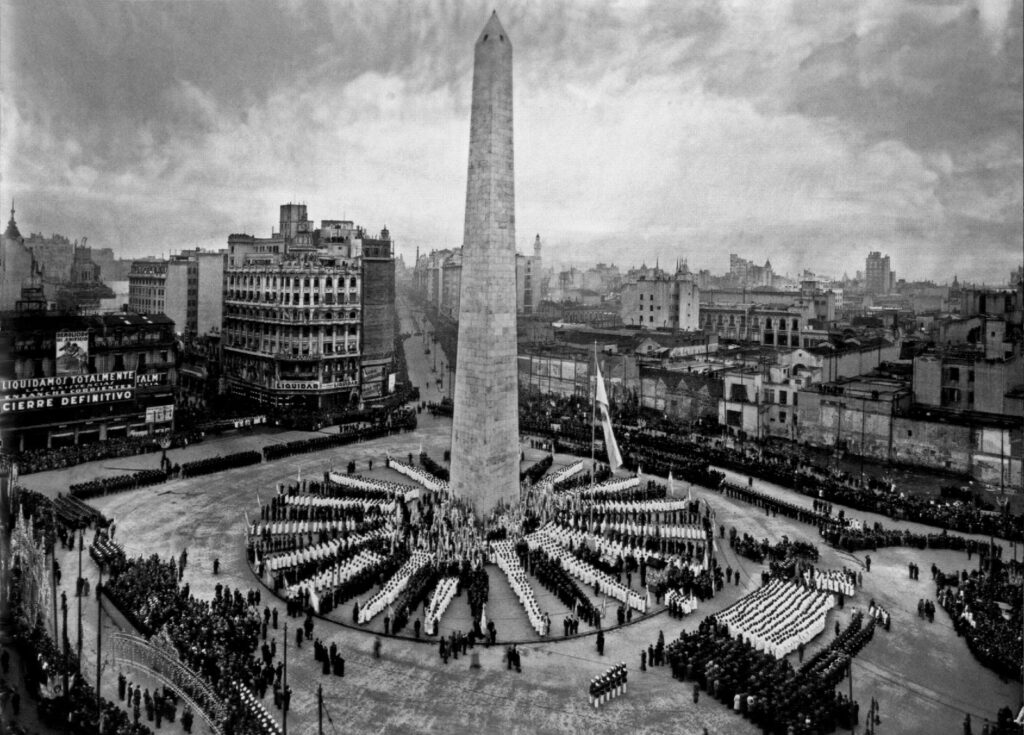

Between about 1880 and 1930, wheat and beef made Argentina rich, and millions of immigrants from Italy and Spain arrived in Buenos Aires. The city built a long boulevard, the Avenida de Mayo, opened in 1894, and lined it with hotels, theatres and cafés. The first underground railway in Latin America opened beneath it in 1913.
In the 1920s and 1930s the style changed. The Italian architect Mario Palanti finished the Palacio Barolo in 1923, then the tallest building in the city; the Kavanagh tower of 1936 gave Buenos Aires an Art Deco skyscraper; and in the same year the Obelisco was raised on the new Plaza de la República for the city’s 400th anniversary.
Where to stay
- Palermo: leafy streets, parks, restaurants and bars; the favourite base for many visitors.
- Recoleta: elegant mansions, the famous cemetery and museums.
- San Telmo and the Centro: the old town and Avenida de Mayo, with antique markets and tango.
Stays
Compare places to stay in Buenos Aires
Opening soon
Belle Époque and Art Deco Buenos Aires
The Palacio Barolo
Palanti’s office tower of 1923, designed around the three parts of Dante’s Divine Comedy, with a lighthouse at the top. Guided tours take you up through the building to the view; book ahead.
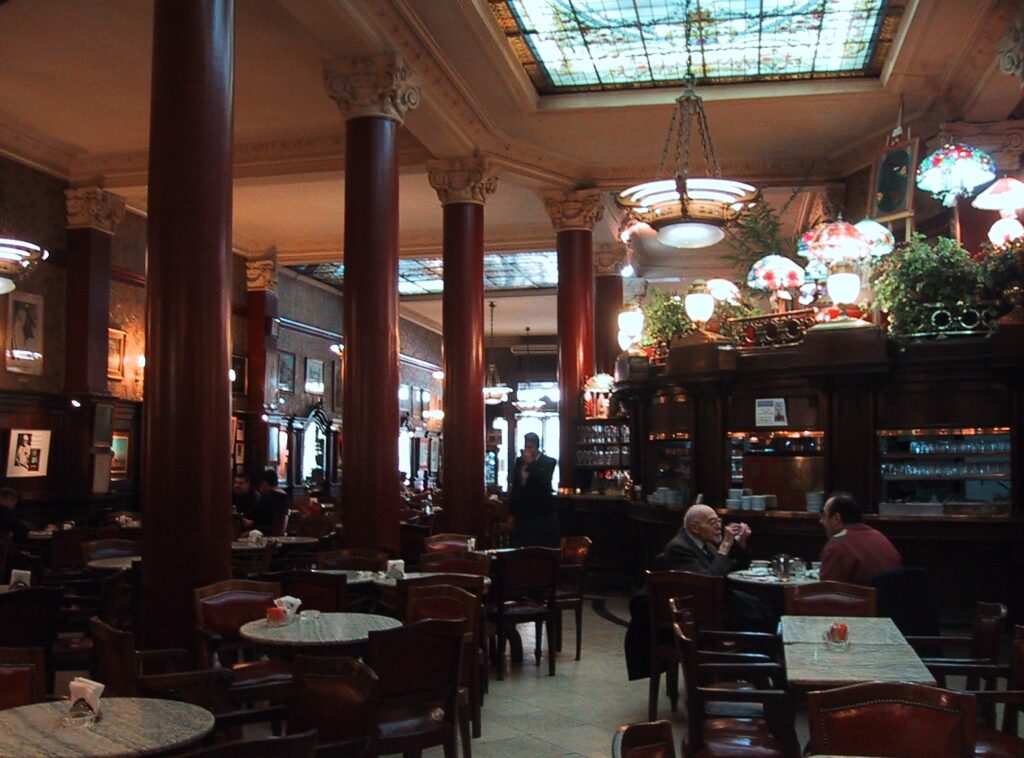

Avenida de Mayo and the Café Tortoni
Walk the avenue from the Plaza de Mayo to the Congress, past Belle Époque hotels and theatres, and stop at the Café Tortoni, the city’s most famous café, with its stained glass and dark wood.
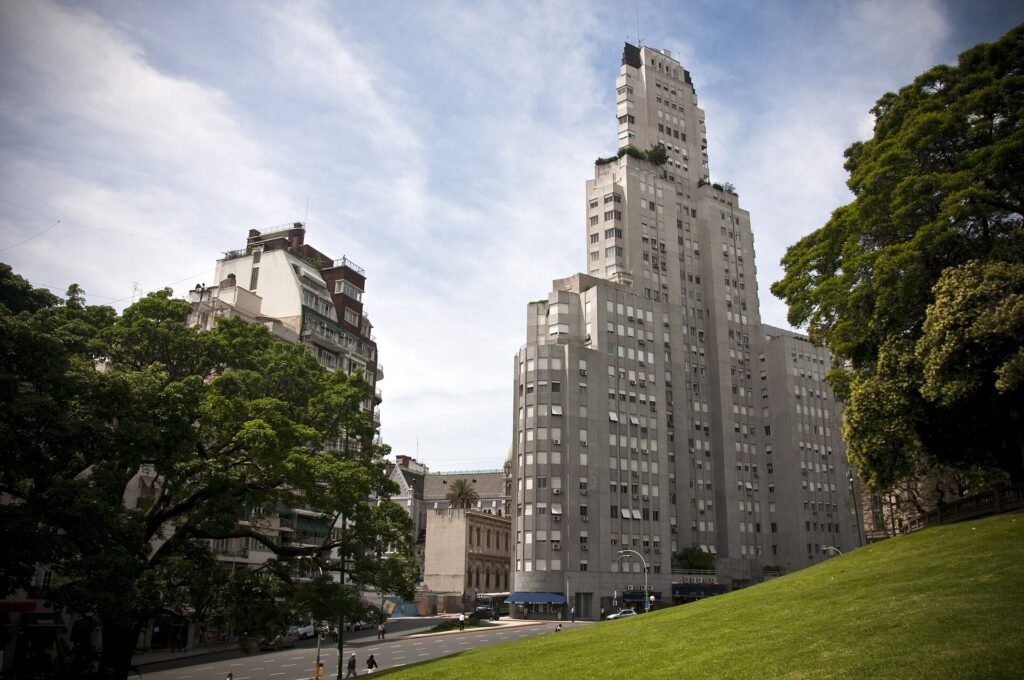

The Kavanagh building
A stepped Art Deco tower of 1936 overlooking Plaza San Martín, once one of the tallest concrete buildings in the world. Admire it from the plaza; it is a private residential building.
The Teatro Colón and the Recoleta cemetery
The great opera house of 1908 offers guided tours most days, and the Recoleta cemetery is a city of marble and Art Nouveau tombs.
Tours and activities
Compare tours and activities in Buenos Aires
Opening soon
Getting there and getting around
Arriving
- By air: Ezeiza (EZE) for most international flights, and Aeroparque (AEP) for domestic and some regional flights.
- By ferry: fast ferries cross the Río de la Plata from Montevideo and from Colonia del Sacramento in Uruguay; see our Montevideo guide.
Flights
Compare flights to Buenos Aires
Opening soon
Around the city
- By Subte: the underground covers the centre, Palermo and Recoleta; pay with a SUBE card or, on many lines, a contactless bank card.
- On foot and by taxi or app for the rest.
- Car hire is not needed in the city; it is useful for the pampas and the coast.
Car hire
Compare car hire in Argentina
Opening soon
Staying connected
Many foreign phone plans charge extra in Argentina, so an eSIM with a data allowance is a simple way to stay online.
eSIMs
Compare eSIMs for Argentina
Opening soon
Before you go
- Entry rules: many nationalities, including British, EU, American and Canadian citizens, can visit Argentina without a visa for up to 90 days. Always check the latest official advice, for example GOV.UK travel advice for Argentina, or your own government’s.
- Late nights: dinner often starts after 21:00, and tango halls (milongas) get going even later.
- Combine it: Buenos Aires pairs well with Montevideo, a short ferry ride away, where the same architect built a twin of the Palacio Barolo.
Travel Emporium compares offers from trusted travel providers. When you book, you book and pay directly with the provider shown. Some links earn us a commission, at no extra cost to you. How we work