
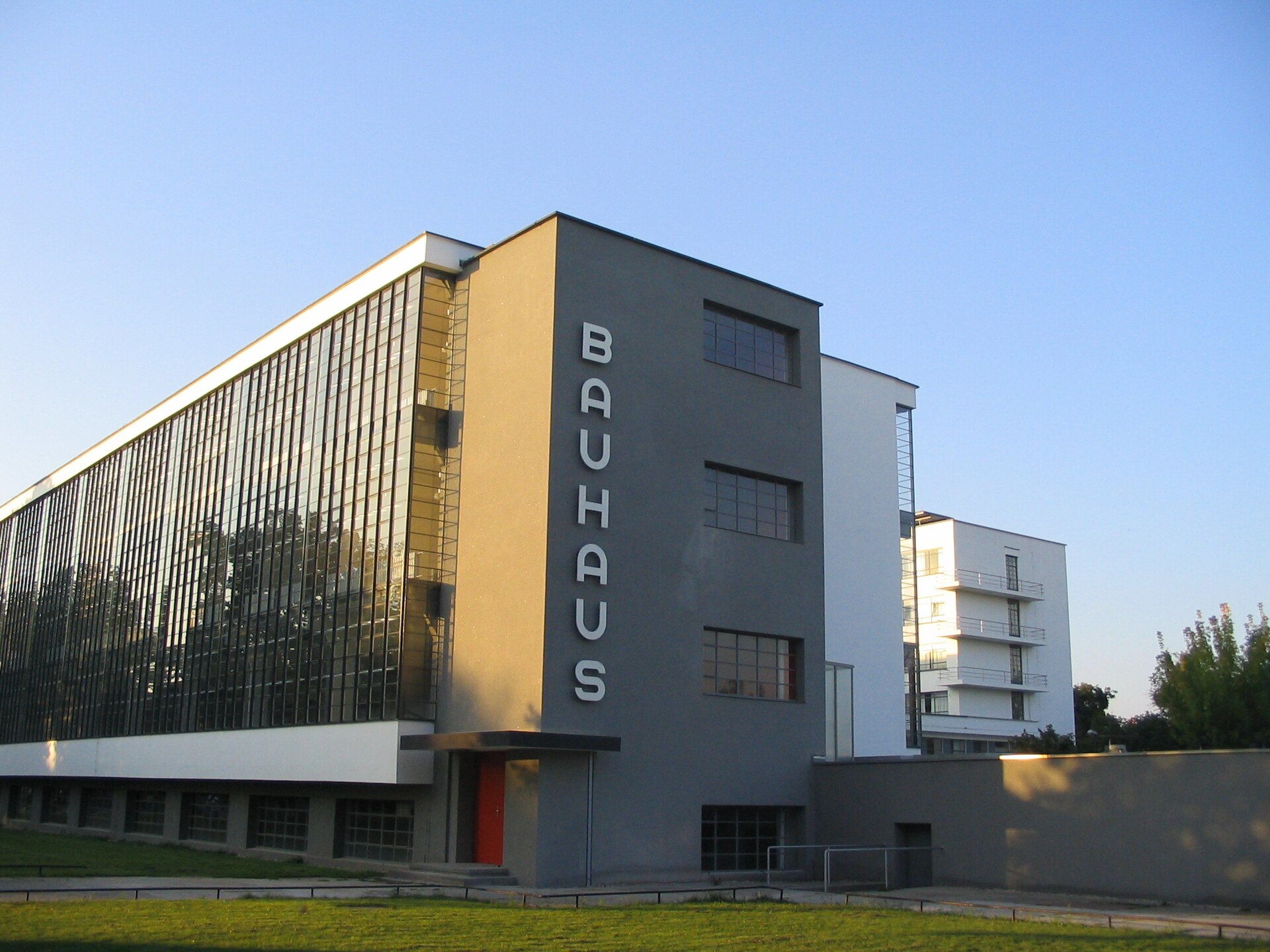

In 1925 the Bauhaus, the most famous art and design school of the 20th century, moved from Weimar to Dessau, a small industrial city between Berlin and Leipzig. Here Walter Gropius built the school’s glass-walled building and houses for its teachers, and for seven years Dessau was where the modern world was designed, from tubular steel chairs to typefaces and lamps. Today the Bauhaus buildings are a UNESCO World Heritage Site, and a short ride away lie the 18th-century gardens of Wörlitz, a second UNESCO site.
Facts checked: November 2026.
Dessau at a glance
- Best time to go: April to October, for the gardens and the Elbe; the Bauhaus is open all year.
- How long to stay: one or two days, or a long day trip from Berlin or Leipzig.
- Getting there: regional trains from Berlin in under two hours, and from Leipzig and Halle in about an hour; the nearest airports are Leipzig/Halle and Berlin.
- Money: euro (EUR). Cards are widely accepted, but carry some cash for smaller cafés.
- Entry: Germany is in the EU and the Schengen area. Many non-EU visitors, including British, American, Canadian and Australian citizens, can visit visa-free for up to 90 days in any 180-day period. See Before you go below.
Then: the Bauhaus years

The Bauhaus was founded in Weimar in 1919. When it lost the support of the regional government there, the city of Dessau, home of the Junkers aircraft works, offered it a new start. Gropius’ building opened in December 1926, with workshops behind a curtain wall of glass, a studio house for students and a canteen and stage between them.
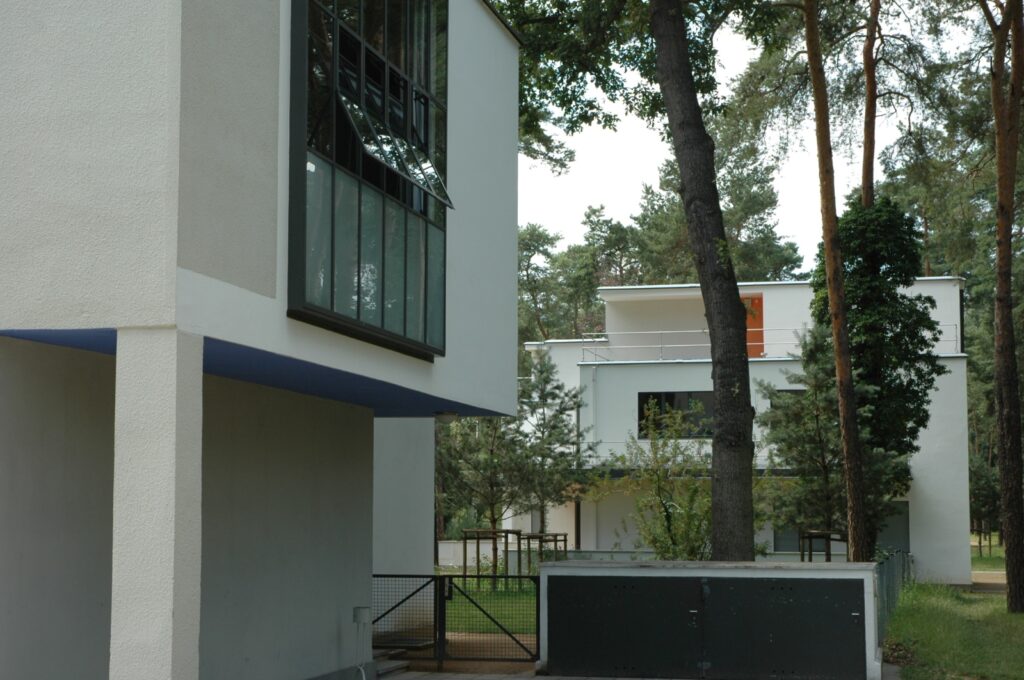
Teachers such as Wassily Kandinsky, Paul Klee and László Moholy-Nagy lived in the white Masters’ Houses in the pine woods nearby. Students designed furniture, lamps, textiles and wallpaper for industry, and the school planned a whole housing estate at Törten. In 1932 political pressure forced the Bauhaus out of Dessau; it moved to Berlin and closed in 1933. Its teachers and students carried its ideas around the world.
Where to stay
- Near the Bauhaus: the quiet streets between the station and the Bauhaus building. The Bauhaus itself offers simple overnight stays in rooms of the studio house; book well ahead.
- The city centre: hotels near the Bauhaus Museum and the city park.
- Wörlitz: guest houses beside the gardens, for a peaceful evening after the day visitors leave.
Stays
Compare places to stay in Dessau
Opening soon
Bauhaus and heritage Dessau
The Bauhaus building
Gropius’ building of 1926, a UNESCO World Heritage Site, with its glass workshop wing, the bridge over the street and the balconies of the studio house. Guided tours take you inside, including rooms restored to their original colours; book ahead at busy times.
The Masters’ Houses
The white houses of 1926 built for the Bauhaus teachers, among the pines on Ebertallee. Several can be visited, including the double house of Kandinsky and Klee and a modern reinterpretation on the site of Gropius’ own house.
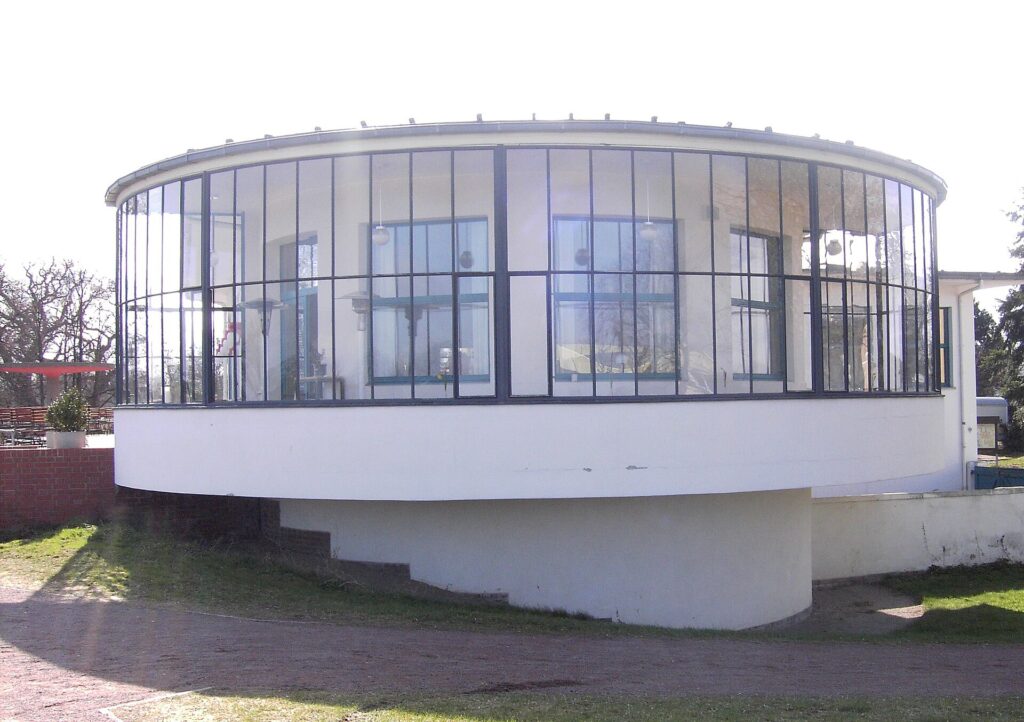

The Kornhaus
A curved restaurant and dance hall of 1930 by the Bauhaus architect Carl Fieger, on the bank of the Elbe, with a terrace over the river. Check whether the restaurant is open before you go.
The Bauhaus Museum and Törten
The Bauhaus Museum Dessau, opened in 2019 in the city centre, shows the school’s collection of furniture, lamps, textiles and designs. To the south, the Törten estate of the late 1920s shows how the Bauhaus imagined affordable modern housing.
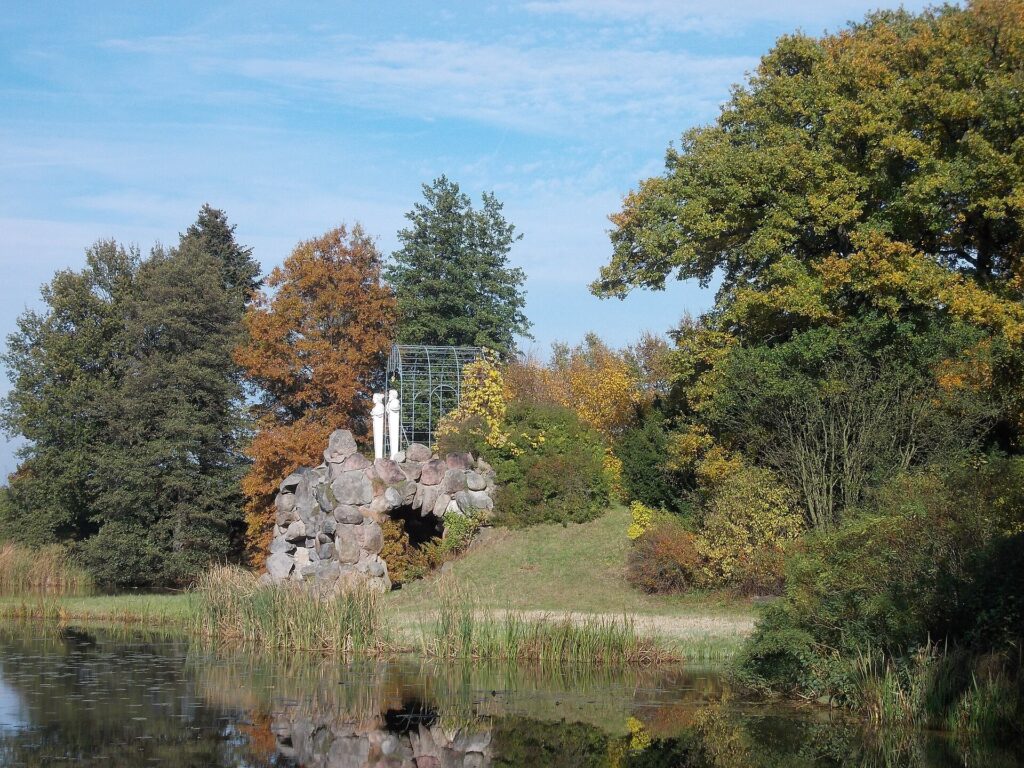

The Wörlitz gardens
The Dessau-Wörlitz Garden Realm, laid out in the late 18th century, is one of the first English landscape gardens on the continent and a UNESCO World Heritage Site. Walk the lakeside paths, take a gondola across the water and visit the palace.
Tours and activities
Compare tours and activities in Dessau
Opening soon
Getting there and getting around
Arriving
- By train: regional trains run from Berlin, Leipzig, Halle and Magdeburg to Dessau Hauptbahnhof; the Bauhaus is a short walk from the station.
- By air: fly to Leipzig/Halle or Berlin and continue by train.
Flights
Compare flights to Berlin and Leipzig
Opening soon
Around the city
- On foot between the station, the Bauhaus and the Masters’ Houses, and by tram or bus for the centre and Törten.
- By bike: the cycle path along the Elbe links Dessau with Wörlitz.
- Car hire is useful for the wider Garden Realm and for combining Dessau with Weimar.
Car hire
Compare car hire in Germany
Opening soon
Staying connected
Visitors with an EU phone plan can roam at home prices. Others, including many UK plans, may pay extra, so an eSIM with a data allowance is a simple alternative.
eSIMs
Compare eSIMs for Germany
Opening soon
Before you go
- Entry rules: EU and EEA citizens only need a valid ID card or passport. Many other nationalities, including British, American, Canadian and Australian citizens, can visit the Schengen area visa-free for up to 90 days in any 180-day period. At the border, the EU’s Entry/Exit System registers non-EU visitors with fingerprints and a photo. ETIAS, an online travel authorisation, is expected to start in 2027 and is not needed yet. Always check the latest official advice, for example GOV.UK travel advice for Germany, or your own government’s.
- Make it a journey: combine this city with its neighbours on our From Jugendstil to Bauhaus by train route.
- Tickets: combined tickets cover the Bauhaus building, the Masters’ Houses and the museum; check the current options on the Bauhaus website.
- Combine it: Dessau pairs well with Darmstadt and Brno for a trip through early modern design.
Travel Emporium compares offers from trusted travel providers. When you book, you book and pay directly with the provider shown. Some links earn us a commission, at no extra cost to you. How we work