
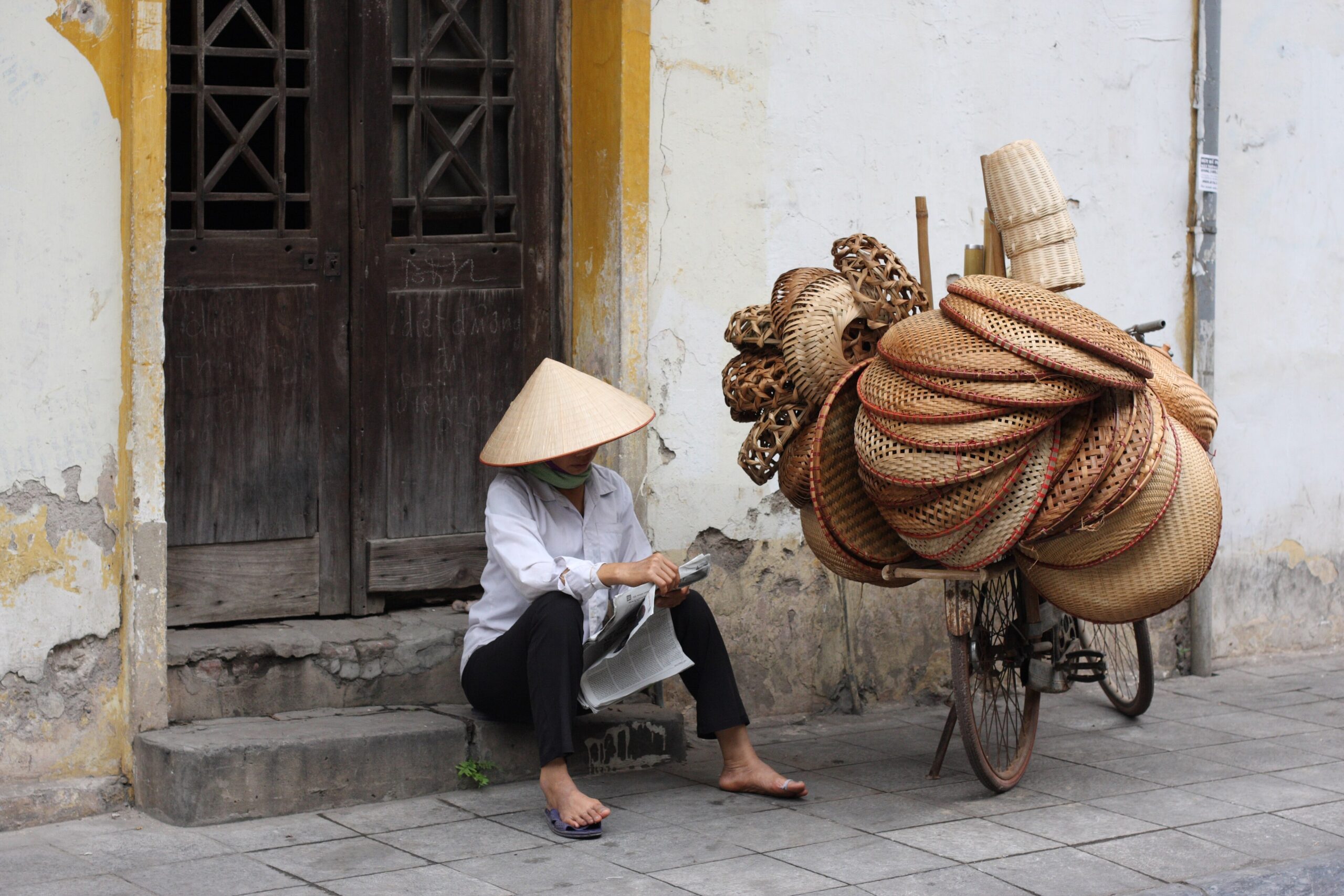

Vietnam’s capital is a city of lakes, tree-lined boulevards and a thousand years of history, packed into streets that never seem to sleep. Come for the food, stay for the Old Quarter at dawn, and use Hanoi as your base for some of the most beautiful landscapes in Asia.
Facts checked: October 2026.
Hanoi at a glance
- Best time to go: September to November (cooler, drier and clearer). March and April are mild but often misty.
- How long to stay: three days for the city, five or more with day trips.
- Airport: Nội Bài International (HAN), about 30 km north of the centre.
- Money: Vietnamese đồng (VND). Cash and QR payments are everywhere; cards work in most hotels and larger restaurants.
- Entry: British, French, German, Italian, Spanish and Nordic passport holders can visit visa-free for up to 45 days. Most others, including Dutch citizens, apply online for an e-visa. See Before you go below.
When to go
Hanoi has four real seasons, unlike the south of Vietnam. Going south? Read our Hanoi to Saigon by train, or fly to the cool Art Deco hill station of Đà Lạt.
- Autumn (September to November) is the favourite: warm days, cooler evenings and clear skies. It is also the busiest season.
- Winter (December to February) is cool and often grey and drizzly. Bring layers; there are fewer visitors.
- Spring (March to April) is mild and green, with frequent mist.
- Summer (May to August) is hot and humid, with sudden heavy storms.
Where to stay in Hanoi

- Old Quarter (Hoàn Kiếm): the classic choice. Narrow streets named after the trades once sold there, street food on every corner, and walking distance to Hoàn Kiếm Lake. Lively and noisy until late.
- French Quarter (south of the lake): wide boulevards, colonial villas, the Opera House and the city’s grand hotels. Quieter, still central.
- West Lake (Tây Hồ): cafés, lakeside walks and a relaxed, residential feel. A short Grab ride from the centre.
- Ba Đình: green and calm, around the Hồ Chí Minh Mausoleum and the Temple of Literature. Good for families.
Stays
Compare places to stay in Hanoi
Opening soon
Things to do in Hanoi
Hoàn Kiếm Lake and the Old Quarter
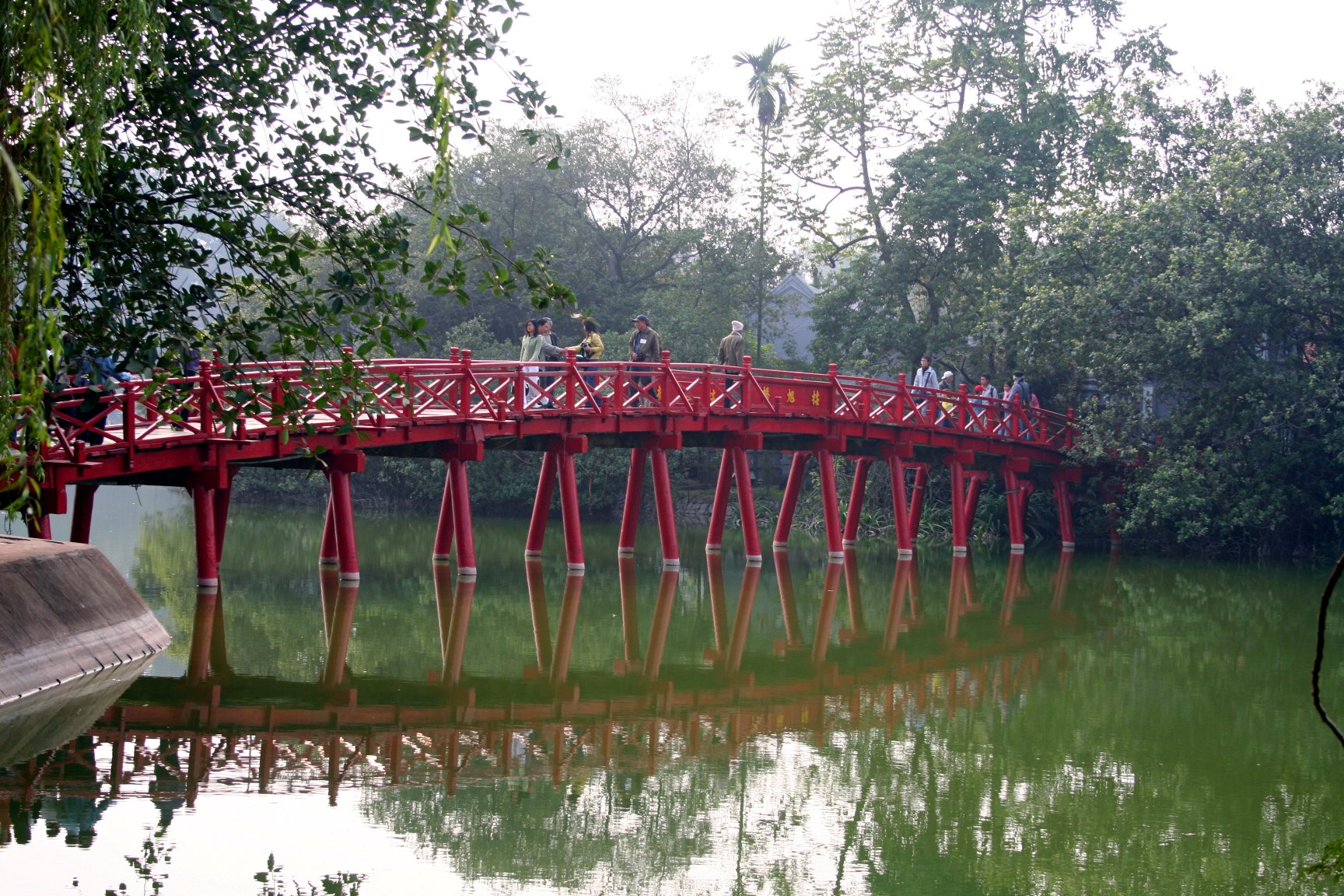
Start at the lake, cross the red Thê Húc bridge to Ngọc Sơn Temple, then lose yourself in the Old Quarter. From Friday evening to Sunday night the streets around the lake become a walking zone, with families, street performers and food stalls.

Temple of Literature (Văn Miếu)
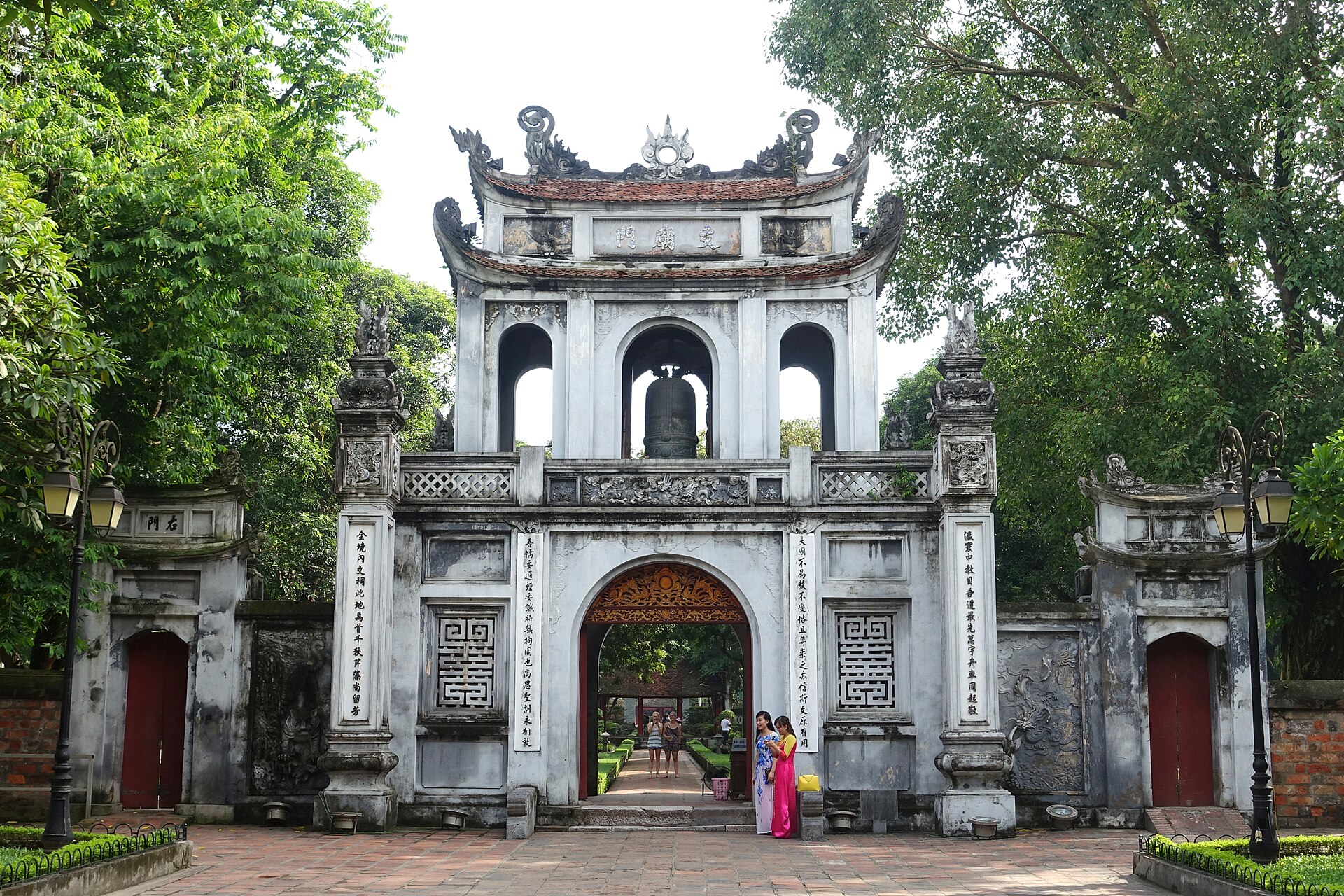
Vietnam’s first national university, founded in 1070. Courtyards, ponds and stone steles carved with the names of scholars. Go early, before the tour groups.
Hồ Chí Minh Mausoleum and the Ba Đình area
The mausoleum, the One Pillar Pagoda and the Presidential Palace grounds sit together. Dress modestly and check the opening days before you go, as the mausoleum closes on some weekdays and for a few months of maintenance each year.
Hỏa Lò Prison
Built by the French for Vietnamese prisoners, later known to American pilots as the “Hanoi Hilton”. A sobering and well-presented museum.
Vietnam Museum of Ethnology
The best museum in the city for understanding Vietnam’s 54 ethnic groups, with full-size traditional houses in the garden.
West Lake and Trấn Quốc Pagoda
Hanoi’s oldest pagoda stands on a small island in West Lake. Walk or cycle part of the lakeside at sunset.
Water puppets
A Hanoi tradition: puppets dancing on water to live music. Short, colourful and fun with children.
Eat your way through the city
Phở for breakfast, bún chả at lunch, bánh mì on the go, and egg coffee in the afternoon. A street-food tour with a local guide is the easiest way to find the best stalls.
Train Street: what to know
The famous narrow street where trains pass between houses has been closed to commercial activity since 2019, the trackside cafés are not permitted, and train services were reduced in 2026. You may still see the street, but follow local signs and stay off the tracks.
Tours and activities
Compare tours and activities in Hanoi
Opening soon
Day trips from Hanoi


Ninh Bình (about 2 hours)
Limestone peaks rising from rice fields and rivers. Take a rowing-boat trip through the caves at Tràng An or Tam Cốc, visit the old capital of Hoa Lư, and climb to the Hang Múa viewpoint. A full day works well; one night is better.


Ha Long Bay (about 2.5 to 3 hours each way)
Thousands of limestone islands in emerald water, a UNESCO World Heritage Site. A day trip is possible but spends much of the day on the road; an overnight cruise gives you sunset, sunrise and quieter corners. Lan Hạ Bay, reached via Cát Bà Island, has similar scenery with fewer boats.

Mai Châu (about 3.5 to 4 hours)
A green valley of rice fields and stilt houses of the White Thái people. Best with an overnight homestay, cycling between the villages.
Tours and activities
Compare day trips from Hanoi
Opening soon
Getting there and getting around
From the airport
- Bus 86: runs from both terminals to Hanoi railway station via the Old Quarter area, roughly 06:00 to 23:00, about 50 to 70 minutes. Around 45,000 VND.
- Grab (ride-hailing app): about 40 to 60 minutes, typically 230,000 to 320,000 VND to the Old Quarter.
- Taxi: use a branded company and insist on the meter. Avoid weekday rush hours (07:30 to 09:00 and 16:30 to 19:00), when the trip can take up to 90 minutes.
Flights
Compare flights to Hanoi
Opening soon
In the city
- Walk in the Old Quarter and around the lake. To cross the road, walk slowly and steadily: the motorbikes will flow around you.
- Grab for cars and motorbike taxis, at fixed prices shown in the app.
- Metro: two lines run today. Line 2A links Cát Linh with Hà Đông in the south-west, and Line 3 runs from Nhổn to Cầu Giấy in the west. Neither reaches the Old Quarter yet; the extension of Line 3 to Hanoi railway station is expected in 2027. Fares are about 9,000 to 19,000 VND, or 40,000 VND for a day pass.
Car hire
Driving in Hanoi itself is not for the faint-hearted, and most visitors use Grab or a driver. A hire car makes more sense for trips into the countryside, if you are confident with the traffic and hold the right licence.
Car hire
Compare car hire in Vietnam
Opening soon
Staying connected
An eSIM is the easiest way to have mobile data from the moment you land: buy and install it before you travel, then switch it on at the airport. Local SIM cards are also sold at the airport arrivals hall.
eSIMs
Compare eSIMs for Vietnam
Opening soon
Before you go
- Entry rules: British citizens, and citizens of Germany, France, Italy, Spain, Denmark, Sweden, Norway and Finland, can stay up to 45 days without a visa (this policy runs until 14 March 2028). Most other nationalities, including Dutch citizens, need an e-visa: up to 90 days, applied for online on the official portal (evisa.xuatnhapcanh.gov.vn; beware of look-alike sites charging extra). Your passport must be valid for at least six months after arrival. Rules change, so always check the latest official advice, for example GOV.UK travel advice for Vietnam, or your own government’s.
- Money: carry some cash in small notes for street food and markets. ATMs are easy to find.
- Respect: cover shoulders and knees in temples and at the mausoleum, and take off your shoes where asked.
- Traffic: the biggest everyday risk. Take care crossing, and wear a helmet on any motorbike.
Travel Emporium compares offers from trusted travel providers. When you book, you book and pay directly with the provider shown. Some links earn us a commission, at no extra cost to you. How we work