
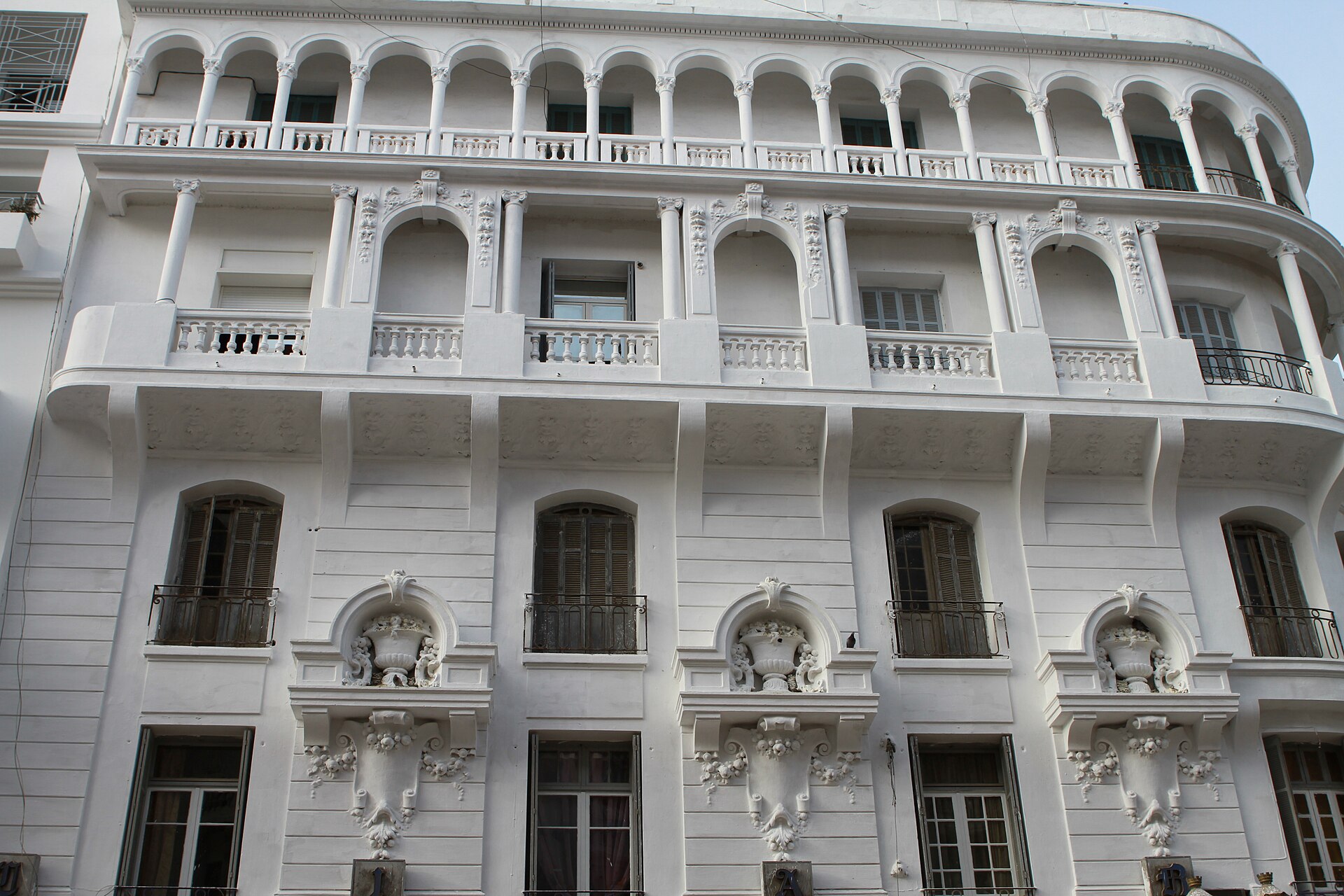

Most travellers pass straight through Casablanca on the way to Marrakech or Fez, and miss one of the great Art Deco cities of the world. Its white boulevards were built between the 1910s and the 1950s, mixing Paris-style apartment blocks with Moroccan tiles, carved plaster and wrought iron. Add the Atlantic Corniche, the vast Hassan II Mosque and some of the best food in Morocco, and the city deserves at least two days.
Facts checked: November 2026.
Casablanca at a glance
- Best time to go: March to May and September to November; the ocean keeps the city mild most of the year.
- How long to stay: two days, as the start or end of a trip around Morocco.
- Airport: Mohammed V International Airport (CMN), about 30 kilometres south of the city.
- Money: Moroccan dirham (MAD). The dirham cannot be bought abroad: use cash machines on arrival. Cards are accepted in hotels and larger shops; carry cash for taxis and markets.
- Entry: British, EU, American, Canadian and Australian citizens can visit Morocco visa-free for up to 90 days. See Before you go below.
Then: Casablanca between the wars
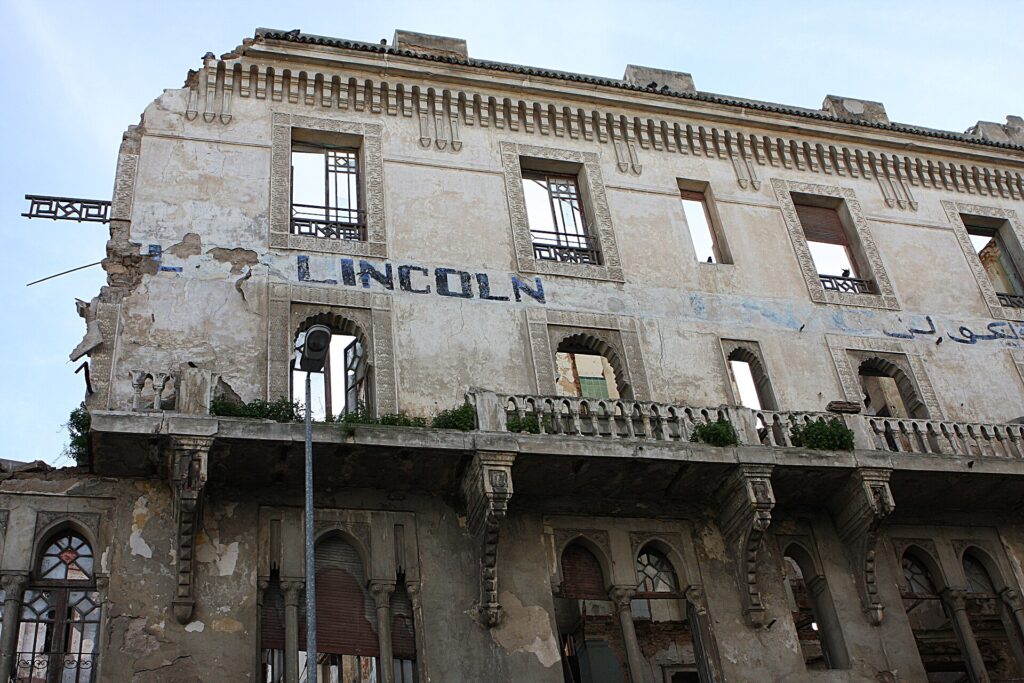

When France made Morocco a protectorate in 1912, Casablanca was a small port. Within a generation it was the country’s largest city, laid out by the planner Henri Prost with wide boulevards beyond the old medina. Architects such as Marius Boyer and Hubert Bride filled them with buildings that joined European Art Nouveau and Art Deco to Moroccan craft: zellige tiles, carved cedar and plaster.
The Hotel Lincoln of 1917 was one of the first of these buildings. Through the 1920s and 1930s came cinemas, department stores, apartment blocks and the white cathedral, in a style sometimes called Mauresque. Since 1995 the association Casamémoire has worked to save this heritage and runs guided walks.
Where to stay
- The city centre: around Boulevard Mohammed V and the Central Market, in the middle of the Art Deco streets.
- The Corniche and Aïn Diab: sea views, beach clubs and restaurants on the Atlantic.
- Gauthier and Maârif: quieter districts with cafés and shops, a short taxi or tram ride from the centre.
Stays
Compare places to stay in Casablanca
Opening soon
Art Deco and Moorish Casablanca
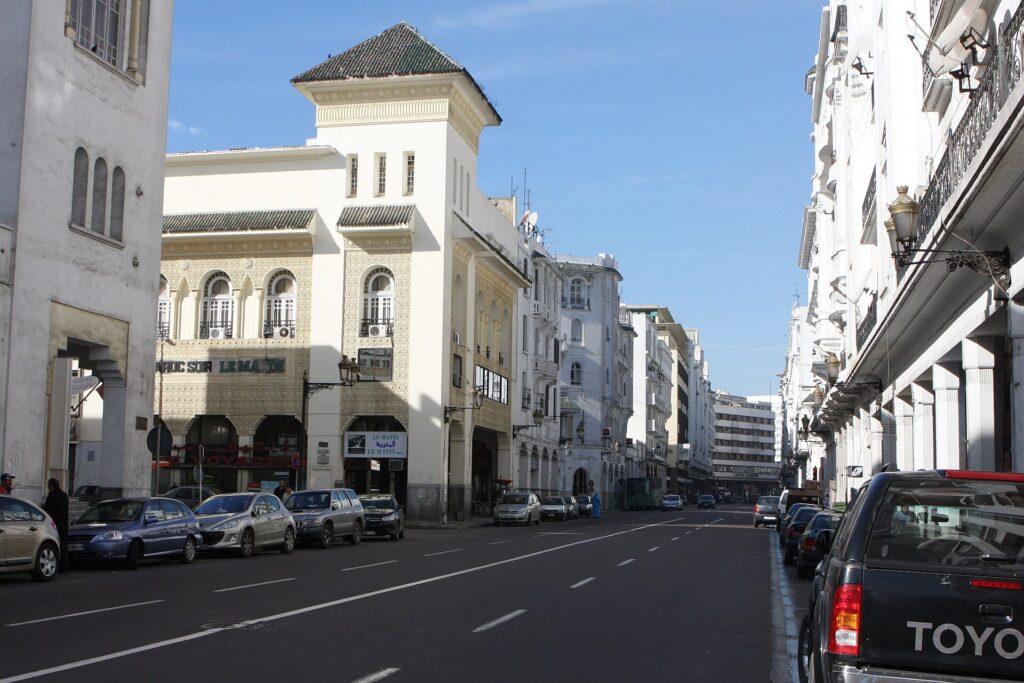

Boulevard Mohammed V
The great boulevard of the 1920s and 1930s, lined with arcades and apartment blocks with rounded corners and decorated balconies. Walk it from the Central Market, a covered market of 1917, towards the old port.
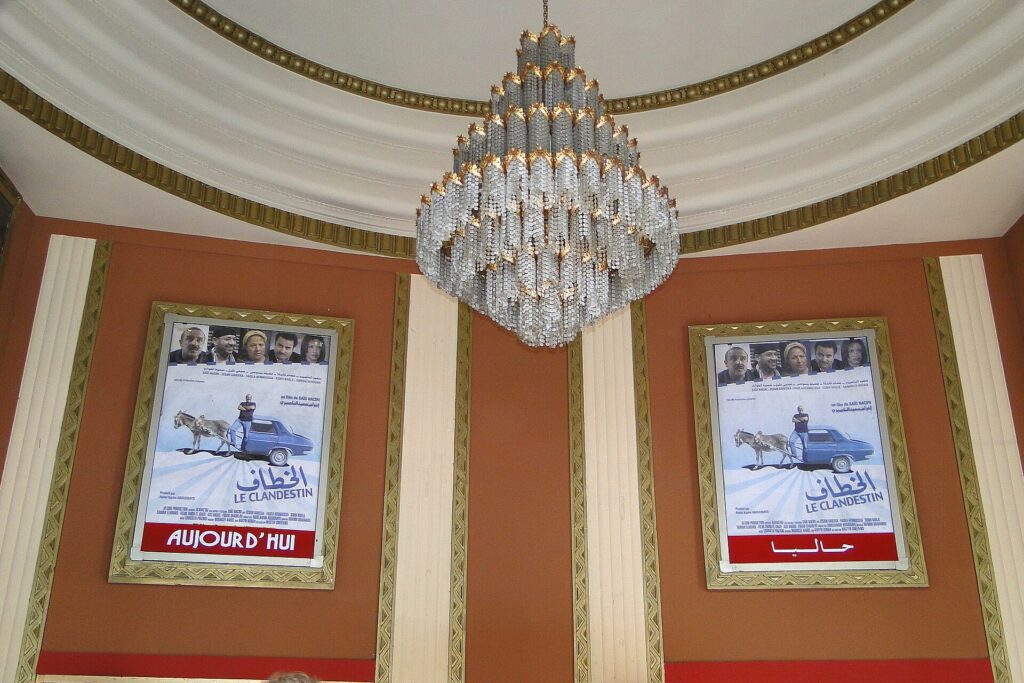

The Rialto and the cinemas
Casablanca loved the cinema. The Rialto, from the 1930s, keeps its Art Deco hall, and the Lutetia and other picture houses of the mid-century still stand in the centre.
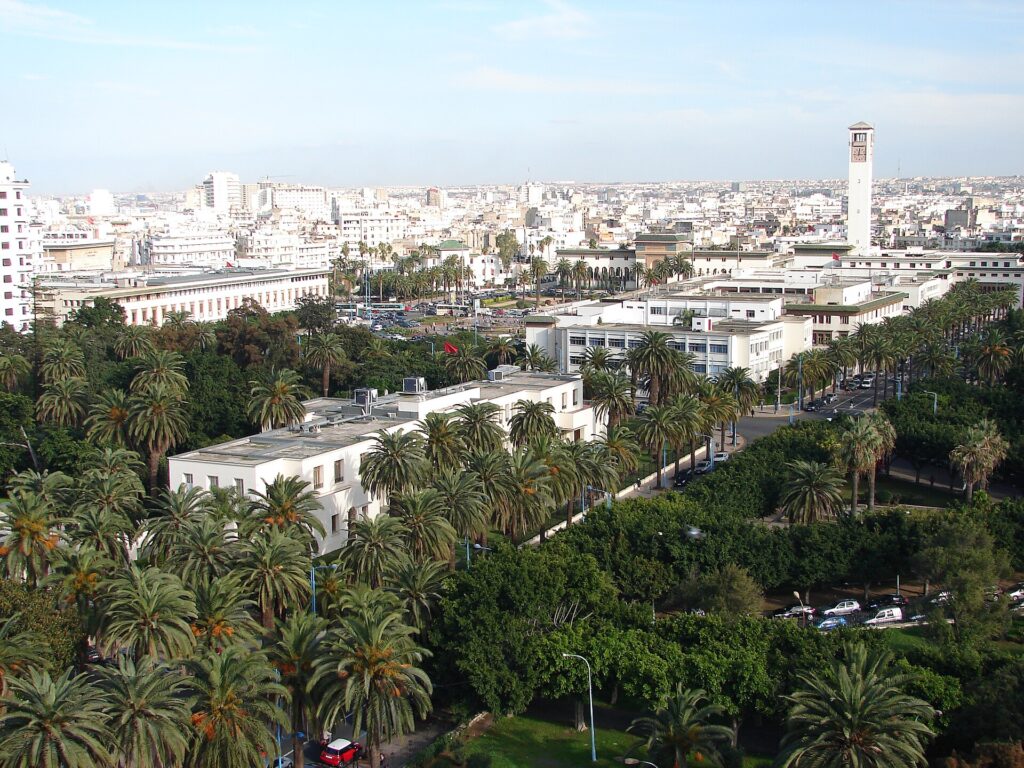

The former Sacré-Cœur Cathedral
A white cathedral of 1930 that mixes Art Deco lines with Moorish towers. It is no longer a church and is used for exhibitions and events.
Place Mohammed V
Casablanca’s grand square of the 1920s and 1930s, with the courthouse, the post office and the clock tower of the Wilaya, all built in the neo-Moorish style of the protectorate.
The Habous quarter
A “new medina” built in the 1920s and 1930s in traditional style, with arcaded lanes, a mosque and shops selling olives, pastries, books and crafts.
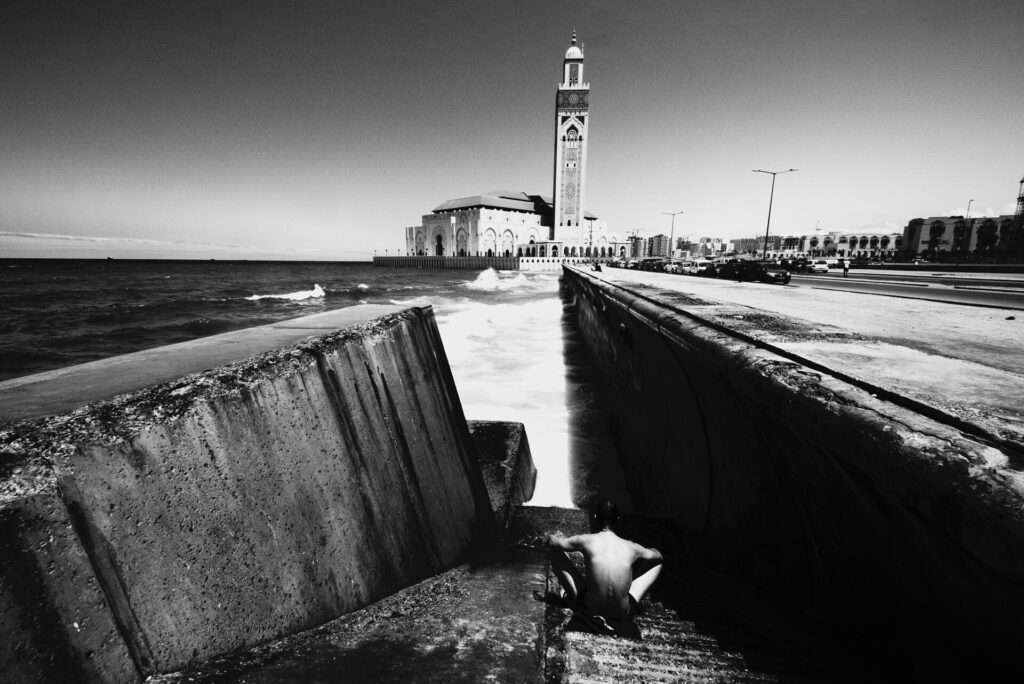

The Hassan II Mosque
Opened in 1993 on a platform over the ocean, it is one of the largest mosques in Africa. Non-Muslim visitors can join guided tours outside prayer times; check the times before you go.
Tours and activities
Compare tours and activities in Casablanca
Opening soon
Getting there and getting around
Arriving
- By air: trains run from the airport station to the city centre in well under an hour; taxis are also available outside the terminal.
- By train: Al Boraq, Africa’s first high-speed train, links Casablanca with Rabat and Tangier; other trains go to Marrakech and Fez.
Flights
Compare flights to Casablanca
Opening soon
Around the city
- Trams connect the centre with the Corniche and the main districts.
- Petit taxis (red) for short trips in the city; agree that the meter is on.
- Car hire is not needed in Casablanca, but is useful for a road trip along the coast or into the Atlas.
Car hire
Compare car hire in Morocco
Opening soon
Staying connected
An eSIM with a Moroccan data plan saves on roaming and works from the moment you land.
eSIMs
Compare eSIMs for Morocco
Opening soon
Before you go
- Entry rules: British, EU, American, Canadian and Australian passport holders can stay up to 90 days without a visa; your passport must be valid for your whole stay. Always check the latest official advice, for example GOV.UK travel advice for Morocco, or your own government’s.
- Dress: cover shoulders and knees for the mosque tour and in traditional areas.
- Languages: Arabic and Amazigh are the official languages; French is widely spoken, and English increasingly.
- Combine it: for Belle Époque Africa, see our Cairo guide and its garden city of Heliopolis.
Travel Emporium compares offers from trusted travel providers. When you book, you book and pay directly with the provider shown. Some links earn us a commission, at no extra cost to you. How we work